


Here's a copy of the Irish memo in full:
Irish have picked May 29 for voting but will delay an announcement to keep the no camp guessing (please protect). DFA's EU director gives us referendum timetable and details of the bill, to be published next week. Aim is to focus the campaign on overall benefits of EU rather than the treaty itself. Concern about the potential impact of a WTO deal and of
Sarkozy.
The draft, largely incomprehensible to the lay reader, had been agreed following lengthy consultation with government lawyers and with the political parties.
The bill would enter parliament in the second week of April and it would probably take two weeks to go through and be passed around 22 April. The minister for the environment would thus be entitled to set an order naming the date for the referendum between 30 to 90 days of the order being made. Technically, the Taoiseach and Ahern saw a slight advantage in keeping the no campaign guessing. 29 May was the assumed date in working plans.
Mulhall said a date in October would have been easier from a procedural point of view. But the risk of unhelpful developments during the French presidency - particularly related to EU defence - were just too great. Sarkozy was completely unpredictable. The only other unhelpful event the Irish thought might impact on the May vote would be a WTO deal based on agricultural concessions that could lead the powerful farming association to withdraw its support.
I ran through the UK parliamentary ratification timetable and noted that the refernedum vote on 5 March would be a particularly sensitive moment. Mulhall remarked that the media had been relatively quiet on the ratification process so far. We would need to remain in close touch given the media crossover.
Mulhall said other partners - including the Commission - were playing a helpful, low-profile role. Vice-president Margot Wallstrom, who had been in Dublin yesterday and today, had told Dermot Ahern that the Commission was willing to tone down or delay messages that might be unhelpful.
??? ??? ???...so Irish thought treaty was taken for granted...... David Miliband not going
Most people would not have time to study the text and would go with the politicians they trusted.
Visit our new website.
Monday, April 14, 2008


Irish referendum games
The front page of the Irish Daily Mail today reports on a typically cynical leaked email from the Irish Foreign Office to the British Government, which shows that ministers are planning a deliberate campaign of misinformation to ensure that the Lisbon Treaty is passed in the upcoming referendum. Foreign Minister Dermot Ahern has apparently been personally assured by Margot Wallstrom that the EU Commission will “tone down or delay” any announcement from Brussels “that might be unhelpful.”
It also says that ministers ruled out an October referendum, which would have been better procedurally, out of fear of “unhelpful developments during the French presidency – particularly related to EU defence.” The email said “the risk of unhelpful developments during the French presidency – particularly related to EU defence – were just too great. Sarkozy was completely unpredictable.”
It also suggested that the Irish Government plans to keep people from analysing the details of the Treaty, saying, the “aim is to focus the campaign on overall benefits of the EU rather than the Treaty itself.”
Until now it had been widely assumed that the date of the referendum would be June 12. However, the memo throws this into uncertainty, admitting that the Government are playing trying to fool campaigners over the date of the referendum. It says: “Irish have picked 29 May for voting but will delay an announcement to keep the No camp guessing. The Taoiseach and (Dermot) Ahern saw a slight advantage in keeping the No camp guessing.”
It also says that ministers ruled out an October referendum, which would have been better procedurally, out of fear of “unhelpful developments during the French presidency – particularly related to EU defence.” The email said “the risk of unhelpful developments during the French presidency – particularly related to EU defence – were just too great. Sarkozy was completely unpredictable.”
It also suggested that the Irish Government plans to keep people from analysing the details of the Treaty, saying, the “aim is to focus the campaign on overall benefits of the EU rather than the Treaty itself.”
Until now it had been widely assumed that the date of the referendum would be June 12. However, the memo throws this into uncertainty, admitting that the Government are playing trying to fool campaigners over the date of the referendum. It says: “Irish have picked 29 May for voting but will delay an announcement to keep the No camp guessing. The Taoiseach and (Dermot) Ahern saw a slight advantage in keeping the No camp guessing.”
Biofuels: will the Commission start listening?
We would never accuse them of lacking persistence… the EU Commission is sticking to its guns on biofuel targets, despite a wave of negative press coverage brought on by soaring food prices, and – perhaps most significantly – outbreaks of hunger-related violence in the developing world. This has so far occurred in several West African countries, Egypt and Haiti (leading to the fall of the Government there). We are also told that the Bangladeshi army has had to take control of food distribution.
Meanwhile the list of international institutions calling for the immediate suspension of biofuel targets grows ever bigger: the UN, IMF, World Bank, OECD, European Environment Agency and the EU Joint Research Centre are those we can think of (the latter two are responsible for providing scientific advice to the EU Commission).
Despite all this, the Commission still has its head in the sand on biofuels. Andrew Bounds at the FT reports that Barroso will continue to push ahead with the 10% target. Meanwhile, Energy Commissioner Andris Piebalgs, in an extraordinary blog post, attempts to make the Commission’s case:
“In Europe, we use less than 2 percent of our cereals production for biofuels, so they do not contribute significantly to higher food prices in the European context.”
This is misleading in a number of ways. A relatively small amount of cereal production may be currently diverted towards biofuels, but Europe has always been a far bigger producer of biodiesel, which is derived from oilseed plants such as rapeseed – not cereals. So the total crop production devoted to biofuel production in Europe is already far higher than 2%.
More importantly, consumption of biofuels in Europe may be very low at the moment, but the target for 2020 will change this dramatically in the future – use of these fuels would have to increase around fivefold. Academic estimates suggest 38% of current agricultural land in Europe would need to be turned over to biofuel production in order to meet that demand. The IMF note that biofuels were responsible for just under half of the increase in the consumption of major food crops in 2006–07. Of course, a great deal of this is due to the separate US targets. But the EU targets are just as ambitious as those in the US, and America has had a highly interventionist biofuel policy for the past couple of years, whilst Europe’s hasn’t really kicked in yet – meaning that much of the future escalation of demand will most likely come from this side of the Atlantic.
Piebalgs continues:
“Even if we reach our 10% biofuels target by 2020, the price impact will be small. Our modeling suggests that it will cause a 8 to 10% increase in rape seed prices and 3 to 6% increase in cereal prices.”
Exactly the same thing was being said by the farm lobby in the US prior to the introduction of biofuel subsidies over there. Moreover, the Commission’s modelling is based on the assumption that ‘second generation’ biofuels (which would be derived from wood etc, rather than food crops) will be developed in the near future, and can satisfy around 30% of demand. But this is a non-existent technology, and there is no scientific consensus as to whether these fuels can actually be produced cost-effectively on an industrial scale. The Commission also assume imports from cheaper biofuel producers (such as Brazil or Indonesia); but at the same time the EU maintains big import tariffs on ethanol. In any case, importing palm oil from South East Asia raises some serious environmental concerns – massive deforestation is already happening in this region in anticipation of future import demand from Europe.
The Commission’s figures for commodity price changes are therefore likely to be a big underestimate. But even if they are correct, this increase in price is highly significant for the world's poorest people, who already spend 50 to 80 percent of their total household income on food. Profs. Runge and Benjamin Senauer estimate that for every percentage increase in real prices of staple foods, 16 million extra people will be drawn into food insecurity. Those in the most marginal positions will starve.
The Commissioner responds with the following:
“The charge now is that EU biofuel policy will contribute to third world poverty by driving food prices up. My impression from this debate sometimes is that we the Europeans know best what is good for people in developing world. Let them speak for themselves.”
Clearly Piebalgs hasn’t been reading the news lately – the message from developing countries seems pretty clear...
“Without a good domestic production base for so called first-generation or crop based biofuels, the more innovative and efficient products will probably never take off. We need to use first-generation biofuels as a bridge to the second generation biofuels using lignocellulosic materials as a feedstock.”
Apologists for biofuels usually argue that we need targets for biofuels now in order to spur development of new and better versions of the Victorian-era first generation agrofuels we rely on now. But according to the EU’s Joint Research Centre, €33-60bn will be spent on subsidising biofuels up until 2020. To reemphasise the point: there still no viable industrial process for producing second generation biofuels – it is pure theory. Is this really the time to be throwing taxpayers’ money at something that might prove to be a mere pipe-dream? If second generation biofuels can in fact be developed, fair enough: but surely the research funding necessary to work out how would come in at a tiny fraction of this insane cost? Why does the EU continue to defy all scientific and economic logic to promote a policy which wastes such vast amounts of our money, pushes the poor towards starvation, and will harm rather than help the environment? Piebalgs in fact answers this question in the conclusion of his blog piece:
“The EU’s ambitious but realistic 10% target will provide the market pull stimulation that farmers need to face a future market based agricultural economy and less dependence on EU subsidies.”
Translation: it’s a great way of replacing the CAP. Direct farm subsidies can be scaled down and substituted with binding targets which create artificial, state-mandated demand – another mechanism of price support for EU agribusinesses. In this light, it is abundantly clear why Brussels is so determined to press ahead with its lonely campaign for the promotion of biofuels.
Meanwhile the list of international institutions calling for the immediate suspension of biofuel targets grows ever bigger: the UN, IMF, World Bank, OECD, European Environment Agency and the EU Joint Research Centre are those we can think of (the latter two are responsible for providing scientific advice to the EU Commission).
Despite all this, the Commission still has its head in the sand on biofuels. Andrew Bounds at the FT reports that Barroso will continue to push ahead with the 10% target. Meanwhile, Energy Commissioner Andris Piebalgs, in an extraordinary blog post, attempts to make the Commission’s case:
“In Europe, we use less than 2 percent of our cereals production for biofuels, so they do not contribute significantly to higher food prices in the European context.”
This is misleading in a number of ways. A relatively small amount of cereal production may be currently diverted towards biofuels, but Europe has always been a far bigger producer of biodiesel, which is derived from oilseed plants such as rapeseed – not cereals. So the total crop production devoted to biofuel production in Europe is already far higher than 2%.
More importantly, consumption of biofuels in Europe may be very low at the moment, but the target for 2020 will change this dramatically in the future – use of these fuels would have to increase around fivefold. Academic estimates suggest 38% of current agricultural land in Europe would need to be turned over to biofuel production in order to meet that demand. The IMF note that biofuels were responsible for just under half of the increase in the consumption of major food crops in 2006–07. Of course, a great deal of this is due to the separate US targets. But the EU targets are just as ambitious as those in the US, and America has had a highly interventionist biofuel policy for the past couple of years, whilst Europe’s hasn’t really kicked in yet – meaning that much of the future escalation of demand will most likely come from this side of the Atlantic.
Piebalgs continues:
“Even if we reach our 10% biofuels target by 2020, the price impact will be small. Our modeling suggests that it will cause a 8 to 10% increase in rape seed prices and 3 to 6% increase in cereal prices.”
Exactly the same thing was being said by the farm lobby in the US prior to the introduction of biofuel subsidies over there. Moreover, the Commission’s modelling is based on the assumption that ‘second generation’ biofuels (which would be derived from wood etc, rather than food crops) will be developed in the near future, and can satisfy around 30% of demand. But this is a non-existent technology, and there is no scientific consensus as to whether these fuels can actually be produced cost-effectively on an industrial scale. The Commission also assume imports from cheaper biofuel producers (such as Brazil or Indonesia); but at the same time the EU maintains big import tariffs on ethanol. In any case, importing palm oil from South East Asia raises some serious environmental concerns – massive deforestation is already happening in this region in anticipation of future import demand from Europe.
The Commission’s figures for commodity price changes are therefore likely to be a big underestimate. But even if they are correct, this increase in price is highly significant for the world's poorest people, who already spend 50 to 80 percent of their total household income on food. Profs. Runge and Benjamin Senauer estimate that for every percentage increase in real prices of staple foods, 16 million extra people will be drawn into food insecurity. Those in the most marginal positions will starve.
The Commissioner responds with the following:
“The charge now is that EU biofuel policy will contribute to third world poverty by driving food prices up. My impression from this debate sometimes is that we the Europeans know best what is good for people in developing world. Let them speak for themselves.”
Clearly Piebalgs hasn’t been reading the news lately – the message from developing countries seems pretty clear...
“Without a good domestic production base for so called first-generation or crop based biofuels, the more innovative and efficient products will probably never take off. We need to use first-generation biofuels as a bridge to the second generation biofuels using lignocellulosic materials as a feedstock.”
Apologists for biofuels usually argue that we need targets for biofuels now in order to spur development of new and better versions of the Victorian-era first generation agrofuels we rely on now. But according to the EU’s Joint Research Centre, €33-60bn will be spent on subsidising biofuels up until 2020. To reemphasise the point: there still no viable industrial process for producing second generation biofuels – it is pure theory. Is this really the time to be throwing taxpayers’ money at something that might prove to be a mere pipe-dream? If second generation biofuels can in fact be developed, fair enough: but surely the research funding necessary to work out how would come in at a tiny fraction of this insane cost? Why does the EU continue to defy all scientific and economic logic to promote a policy which wastes such vast amounts of our money, pushes the poor towards starvation, and will harm rather than help the environment? Piebalgs in fact answers this question in the conclusion of his blog piece:
“The EU’s ambitious but realistic 10% target will provide the market pull stimulation that farmers need to face a future market based agricultural economy and less dependence on EU subsidies.”
Translation: it’s a great way of replacing the CAP. Direct farm subsidies can be scaled down and substituted with binding targets which create artificial, state-mandated demand – another mechanism of price support for EU agribusinesses. In this light, it is abundantly clear why Brussels is so determined to press ahead with its lonely campaign for the promotion of biofuels.
Friday, April 11, 2008
Getting down with the kids

The European Parliament’s UK ‘Outreach’ office has today sent teachers an email full of ideas to help them decide how to celebrate “Europe Day for Schools” (no laughing at the back). This is part of a wider initiative called “Spring Day for Europe”, (which in actual fact runs from March to June), and which aims to “raise awareness about the European Union, its citizens and institutions and promote European citizenship education at school through traditional and ICT curriculum-based activities.” Every year millions of euros are thrown at this blatant propaganda exercise which aims to brainwash school children about the joys of EU "citizenship".
In case you’re in any doubt about the aims of the exercise, take a look at some of the ideas they give to teachers:
“Set up a European café in school using Euros/European currencies and arrange a European lunch provided by the canteen or the children” and “Play maths games using the Euro and other European currencies or distances from one capital to another.”
“Young people are invited to express in a picture what they think about the impact of Europe in their region and how Europe begins first and foremost in their community.”
There’s also some simple sheet music for Beethoven’s Ode to Joy – otherwise known as the EU anthem (wasn’t that supposed to have been binned?)
If that wasn't enough the theme for this year’s Spring Day is the catchy “European Year of Intercultural Dialogue”, on which the EU is spanking a tidy €7 million. We somehow doubt that phrase is going to catch on in the playground...
In case you’re in any doubt about the aims of the exercise, take a look at some of the ideas they give to teachers:
“Set up a European café in school using Euros/European currencies and arrange a European lunch provided by the canteen or the children” and “Play maths games using the Euro and other European currencies or distances from one capital to another.”
“Young people are invited to express in a picture what they think about the impact of Europe in their region and how Europe begins first and foremost in their community.”
There’s also some simple sheet music for Beethoven’s Ode to Joy – otherwise known as the EU anthem (wasn’t that supposed to have been binned?)
If that wasn't enough the theme for this year’s Spring Day is the catchy “European Year of Intercultural Dialogue”, on which the EU is spanking a tidy €7 million. We somehow doubt that phrase is going to catch on in the playground...
Tuesday, April 08, 2008
France appoints “artistic director” for EU Presidency
So now we start to see where some of the 190 million euro budget for the Presidency is going…
According to La Tribune de Geneve French Foreign Minister Bernard Kouchner has said he wants the French EU Presidency to be “very creative” and has appointed well-known French designer Philippe Starck as “artistic director for the French EU Presidency.” Starck told AFP, “Bernard Kouchner wants to mark a very, very vivid, very interesting, very creative French Presidency.” He said it was a matter of giving “the image of very modern, very creative France, using the most sophisticated technologies, and therefore not a ‘basque beret’ France but an avant-garde France.” Starck has been chosen to come up with the French Presidency merchandise. He said “There are many things which are traditionally given out to journalists, ministers, delegates… for the first time in the whole history of the EU, all that will be created with high quality”, instead of “simply sticking little logos on things.” He said he has created “many useful things”, between “ten to fifteen objects” which will be presented in June. He has also come up with “events,” and said, “there will be loads of them”, of all kinds, but mostly cultural.
Meanwhile, the Wikipedia entry for Philippe Starck quotes him telling a German newspaper last month that he plans to retire within two years because his work is "unnecessary and materialistic".
According to La Tribune de Geneve French Foreign Minister Bernard Kouchner has said he wants the French EU Presidency to be “very creative” and has appointed well-known French designer Philippe Starck as “artistic director for the French EU Presidency.” Starck told AFP, “Bernard Kouchner wants to mark a very, very vivid, very interesting, very creative French Presidency.” He said it was a matter of giving “the image of very modern, very creative France, using the most sophisticated technologies, and therefore not a ‘basque beret’ France but an avant-garde France.” Starck has been chosen to come up with the French Presidency merchandise. He said “There are many things which are traditionally given out to journalists, ministers, delegates… for the first time in the whole history of the EU, all that will be created with high quality”, instead of “simply sticking little logos on things.” He said he has created “many useful things”, between “ten to fifteen objects” which will be presented in June. He has also come up with “events,” and said, “there will be loads of them”, of all kinds, but mostly cultural.
Meanwhile, the Wikipedia entry for Philippe Starck quotes him telling a German newspaper last month that he plans to retire within two years because his work is "unnecessary and materialistic".
Monday, March 31, 2008
A diplomatic incident - or not
Peter Oborne's thesis about the emergence of an insulated "political class" is looking more and more bang on every day... now a lost bag is a "diplomatic incident."
As Richard North has pointed out, it tells you a lot about media priorities that T5 has been way higher up the bulletins than the new wave of fighting in Iraq.
--
MINISTER'S PLEA AFTER T5 'DIPLOMATIC INCIDENT'
David Miliband issued an appeal for Heathrow authorities to "get their act together" today after revealing that the Terminal 5 debacle had caused a diplomatic incident.
The Foreign Secretary said he had been approached by a furious counterpart during an informal gathering of EU ministers over the weekend.
The unnamed politician apparently lost his luggage while changing planes at Heathrow, and has been warned it may take "weeks" to locate.
Writing on his blog, Mr Miliband said he had been asked to express the man's anger to British Airways and operator BAA.
"One foreign minister I met at the informal meeting in Slovenia over the weekend has fallen victim to the Terminal 5 saga," he wrote.
"He arrived merely to transit, but his bags are nowhere to be seen and it was whispered that it might take weeks.
"He asked me to pass on a message to BA/BAA: 'For goodness' sake, get your act together'."
As Richard North has pointed out, it tells you a lot about media priorities that T5 has been way higher up the bulletins than the new wave of fighting in Iraq.
--
MINISTER'S PLEA AFTER T5 'DIPLOMATIC INCIDENT'
David Miliband issued an appeal for Heathrow authorities to "get their act together" today after revealing that the Terminal 5 debacle had caused a diplomatic incident.
The Foreign Secretary said he had been approached by a furious counterpart during an informal gathering of EU ministers over the weekend.
The unnamed politician apparently lost his luggage while changing planes at Heathrow, and has been warned it may take "weeks" to locate.
Writing on his blog, Mr Miliband said he had been asked to express the man's anger to British Airways and operator BAA.
"One foreign minister I met at the informal meeting in Slovenia over the weekend has fallen victim to the Terminal 5 saga," he wrote.
"He arrived merely to transit, but his bags are nowhere to be seen and it was whispered that it might take weeks.
"He asked me to pass on a message to BA/BAA: 'For goodness' sake, get your act together'."
Thursday, March 27, 2008
The Communique from the Franco-British love in is up.
Some of it is rather broad brush, but there are some interesting snippets.
Defence
They have signed off a whole bunch of joint funds and joint defence development projects. Apparently they will:
Cooperate to develop European military capabilities, available to both the EU and NATO, in particular in the fields of :
• Carrier Group operations: by facilitating the generation of a combined maritime strike capability when required for national, EU-led or NATO operations. This capability could be expanded to other European countries able and willing to make a contribution.
• A 400M: France and the UK will pursue a common approach to in service support for interoperability and through life cycle costs optimisation, including common configuration management with other A400M nations; our aim is to cover the requirements of both France and the UK in a single joint contract.
• Helicopters: by addressing critical shortfalls in capability which constrain the deployment of helicopters in operations. Support will be given to initiatives such as pilot operational and advanced training courses, upgrading aircraft and establishment of a trust fund that could improve the availability of helicopters to our European partners and NATO allies. Other nations are invited to contribute to this effort. We support both the EDA and NATO's role in addressing European helicopter capability shortfalls.
Climate Change
Despite the UK's opposition to "green" tariffs it has agreed to the principle of them in the absence of a Kyoto successor.
It calls on the Commission to "Urgently analyse and address the risk of carbon leakage in order for appropriate measures to be implemented in the event that other countries do not commit to taking adequate measures to reduce greenhouse gas emissions in the context of an international agreement. An international agreement remains the best way of addressing this issue."
They also agreed to "Collaborate in the development of a comprehensive EU energy security strategy for the EU" later this year.
Business
The communique calls for "an EU Small Business Act that delivers a package of measures aimed at cutting EU regulation for small businesses, including making more use of exemptions from regulations." We'll believe that when we see it working, but it's interesting nonetheless.
Some of it is rather broad brush, but there are some interesting snippets.
Defence
They have signed off a whole bunch of joint funds and joint defence development projects. Apparently they will:
Cooperate to develop European military capabilities, available to both the EU and NATO, in particular in the fields of :
• Carrier Group operations: by facilitating the generation of a combined maritime strike capability when required for national, EU-led or NATO operations. This capability could be expanded to other European countries able and willing to make a contribution.
• A 400M: France and the UK will pursue a common approach to in service support for interoperability and through life cycle costs optimisation, including common configuration management with other A400M nations; our aim is to cover the requirements of both France and the UK in a single joint contract.
• Helicopters: by addressing critical shortfalls in capability which constrain the deployment of helicopters in operations. Support will be given to initiatives such as pilot operational and advanced training courses, upgrading aircraft and establishment of a trust fund that could improve the availability of helicopters to our European partners and NATO allies. Other nations are invited to contribute to this effort. We support both the EDA and NATO's role in addressing European helicopter capability shortfalls.
Climate Change
Despite the UK's opposition to "green" tariffs it has agreed to the principle of them in the absence of a Kyoto successor.
It calls on the Commission to "Urgently analyse and address the risk of carbon leakage in order for appropriate measures to be implemented in the event that other countries do not commit to taking adequate measures to reduce greenhouse gas emissions in the context of an international agreement. An international agreement remains the best way of addressing this issue."
They also agreed to "Collaborate in the development of a comprehensive EU energy security strategy for the EU" later this year.
Business
The communique calls for "an EU Small Business Act that delivers a package of measures aimed at cutting EU regulation for small businesses, including making more use of exemptions from regulations." We'll believe that when we see it working, but it's interesting nonetheless.
Wednesday, March 26, 2008
Sarkozy: don't believe the hype
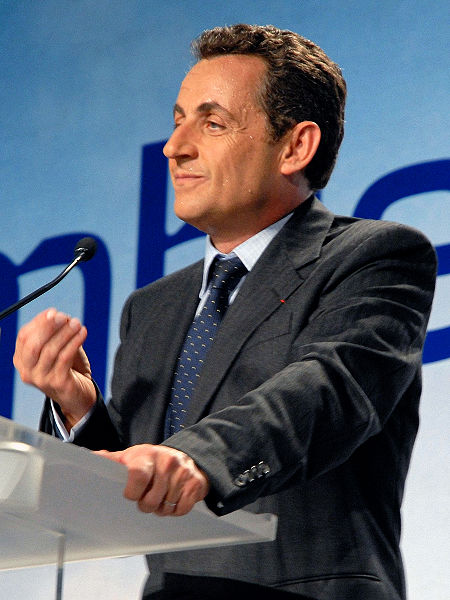
Listening to Sarkozy talking to Parliament. Lashings and lashings of Franco-British history.
But despite the warm words, as soon as you move from the general to the particular things are going to be rather more difficult. For example:
- Sarkozy talks about Britain and France leading on the environment. But is he going to let Britain out of the EU's biofuels target, which the UK now seems to have turned decisively against?
- Sarkozy says he is "open" to CAP reform he means moving from higher subsidies towards higher tariffs. Thats the opposite of what the UK wants.
- When he says "there can't be 27 different immigration" policies he causes a sharp intake of breath in Downing Street. Will Brown really agree to a single EU-wide definition of asylum?
- Sarkozy wants to have a 60,000 strong common intervention force. But that can only divert resources away from the war in Afghanistan - the last thing Brown wants.
There are plenty of other rather tricky issues too. Have a look at our briefing note for the gory details. Nonetheless it will doubtless get gushing coverage on the TV news ce soir. As usual, the devil is in the detail, which is never reported.
Wednesday, March 19, 2008
european parliament transparancy initiative

Below is an email which we have sent to all UK MEPs today.
It follows a whole series of disturbing reports over recent weeks - for example see:
Times
BBC
Sunday Times
Daily Mail
Most MEPs are away this week - so we probably won't be publishing our first summary of their responses until next week. If we get a good response from UK MEPs we will be broadening it out to all MEPs.
Let us know what you think and about where we should go with this next.
----------------
European Parliament Transparency Initiative
Following a series of damaging stories about the European Parliament in recent weeks we are writing to all UK MEPs asking for your help in restoring trust in the Parliament.
The irregularities discussed in the recent internal audit report paint a picture of widespread abuse of the current expenses system.
Our aim is to find a way to reassure voters that UK MEPs are not in any way implicated in these problems.
That is why we are today writing to all UK MEPs asking them if you will state:
1. Who is your paying agent/service provider?
2. What are his or her book-keeping or accountancy qualifications?
3. How much of the money claimed by your paying agent or service provider since your election has been paid out so far, and how much is still in his or her account?
4. Have you ever claimed less than the full entitlement, or repaid any excess?
5. Do you employ any family members?
6. Are you prepared to list the people currently in your employment (not their salary levels)?
We are not seeking to criticise Members of the Parliament for employing family members. We accept the argument that in many cases family members will work longer hours for less money than anyone else. However, it is essential to ensure that such arrangements are not abused, and we believe transparency is the best way to ensure this.
We believe disclosure of these details will help to restore trust that public money is being well spent. Our aim in this initiative is to restore confidence in the Parliament and MEPs of all parties. We will be publishing regular reports on the progress of the initiative.
We are very grateful for your help in this.
Please do not hesitate to get in touch if you have any questions about the initiative.
Many thanks
Tuesday, March 18, 2008
Black Wednesday 2008
Gordon Brown returns again and again to Black Wednesday. He is always keen to remind people of Cameron’s role in that credibility-shredding day.
As of yesterday, he might want to stop banging on about it.
As of yesterday the pound has fallen by more since the Prime Minister took office than it did on black Wednesday.
The day before Brown took over the pound bought you 1.49 euros. It is now worth 1.269 euros – a fall of about 14%.
Have a look at the graph. Norman Lamont's era is in tory blue, and Brown's is in fetching pink.


The day before black Wednesday (16 September 1992) the pound got you DM 2.78. After black Wednesday it was about 12% down, before falling to 14% down on 5 October - the low point of Black Wednesday which we have now surpassed.
Brown could argue that the real low point was long after black wednesday in March 1993. But looking at what happened after black wednesday makes the comparison worse. At the equivalent point nine months after black Wednesday the pound was back up to 2.49, or just over 10% down. It was the same after a year.
On the other hand, If the current trend continues the pound will be down about 18-20% by Brown’s first anniversary. Brown's Black Wednesday may be happening more slowly compared to Lamont's - but it could be bigger.


Is this a bad thing? Yes and no.
It certainly isn’t a huge vote of confidence in the
But on the positive side, the fact that outside the euro the
Euro member states like
They can’t cut rates, and the ECB has set its face against taking action. Fair enough: inflation in the eurozone is above target and German exports are doing fine. So the struggling member states of the periphery are on their own.
In the Telegraph Ambrose Evans Pritchard points out that the Fed taking manic action to stave off recession while the Bundesbank ECB sits on its hands is reminiscent of the conditions just before the 1987 crash.

If things do get worse it will be the first real test of the euro system. How will it fare? In the good times member states have done little to prepare for problems and run deficits at the top of the cycle.
So while the pound might be falling like a stone, this is not like 1992.
At least in 2008 the authorities have the ability to respond if things do get worse: with a free hand on fiscal policy; a flexible exchange rate; and ultimately even control over the monetary target . And if you don’t think they are doing a good job… at least you can get rid of them.
Monday, March 10, 2008
That detailed parliamentary scrutiny in action
"I went with the party leader Nick Clegg because he is an expert on Europe and I didn't want to read the 200 pages of the EU treaty myself."
- Liberal Democrat MP Lembit Opik, on the referendum debate in the Commons.
- Liberal Democrat MP Lembit Opik, on the referendum debate in the Commons.
Friday, March 07, 2008

Thursday, March 06, 2008
These are the good guys
There were slightly more MPs in favour of giving their constituents a say than people realise. A few MPs voted for one pro-referendum amendment and not the other last night. Counting the tellers too there were 252 MPs in favor of giving people a say on one or other of the options. There's a list below.
Surprising choices?
Nick Harvey has been pro referendum but sat on his hands last night. We contacted him for a quote.
"Given a free vote, I would personally have supported a referendum on the treaty. But the party line was that an In/Out referendum was a truer representation of our manifesto commitment to a referendum on the earlier Constitution. We were on a three line whip, and I correctly calculated that Liberal Democrat votes were not going to affect the outcome. It would not have served any purpose my resigning if it wouldn't change the result."
It was a shame too that Jon Cruddas didn't vote for a referendum. He has previously called for one, and is a famously principled guy. Maybe he used his "no" vote to wring some kind of concession out of the Government on rights at work, or low incomes, or some other labour issue - which, in fairness, is always his top priority. He is a canny guy and a nice man (maybe even a future Leader?) But it was a still a shame not to have him vote for a referendum, as a lot of others who look up to him would have followed him.
On the heroes side of the equation special mention has to go to the Labour MPs who took all manner of abuse from the whips: Kate Hoey, Gisela Stuart, Frank Field and Graham Stringer.
Ditto Ian Davidson who worked incedibly hard for a referendum. All the others put up with a hell of a lot of abuse for doing the right thing.
Among the Lib Dems Alistair Carmichael, David Heath and Tim Farron all gave up their their jobs to vote for their principles. You really don't get much of that these days. They are all total heroes.
So are the other 13 Liberal Democrats who did the liberal and democratic thing. The mechanics of the house were interesting. As the bulk of the Lib Dems sat there, absurdly, the honourable ones had to literally stand up and be counted. To go and vote they had to push past their colleagues like people arriving late at a cinema. It obviously required a lot of courage and good on them.
The MPs who voted against should be ashamed of themselves, but they won't be. Despite the Governments pompous and hypocritical arguments about how "detailed line by line scrutiny" is far better than giving the plebs a say, most of those trooping through the no lobby have never read the text, don't care about the issue, and are little better than Pavlogs dogs, answering to the beep of a pager. As Iain Martin has pointed out, most of them would just have been thinking about what to have for tea.
There's the list of the good guys in the post below.
Surprising choices?
Nick Harvey has been pro referendum but sat on his hands last night. We contacted him for a quote.
"Given a free vote, I would personally have supported a referendum on the treaty. But the party line was that an In/Out referendum was a truer representation of our manifesto commitment to a referendum on the earlier Constitution. We were on a three line whip, and I correctly calculated that Liberal Democrat votes were not going to affect the outcome. It would not have served any purpose my resigning if it wouldn't change the result."
It was a shame too that Jon Cruddas didn't vote for a referendum. He has previously called for one, and is a famously principled guy. Maybe he used his "no" vote to wring some kind of concession out of the Government on rights at work, or low incomes, or some other labour issue - which, in fairness, is always his top priority. He is a canny guy and a nice man (maybe even a future Leader?) But it was a still a shame not to have him vote for a referendum, as a lot of others who look up to him would have followed him.
On the heroes side of the equation special mention has to go to the Labour MPs who took all manner of abuse from the whips: Kate Hoey, Gisela Stuart, Frank Field and Graham Stringer.
Ditto Ian Davidson who worked incedibly hard for a referendum. All the others put up with a hell of a lot of abuse for doing the right thing.
Among the Lib Dems Alistair Carmichael, David Heath and Tim Farron all gave up their their jobs to vote for their principles. You really don't get much of that these days. They are all total heroes.
So are the other 13 Liberal Democrats who did the liberal and democratic thing. The mechanics of the house were interesting. As the bulk of the Lib Dems sat there, absurdly, the honourable ones had to literally stand up and be counted. To go and vote they had to push past their colleagues like people arriving late at a cinema. It obviously required a lot of courage and good on them.
The MPs who voted against should be ashamed of themselves, but they won't be. Despite the Governments pompous and hypocritical arguments about how "detailed line by line scrutiny" is far better than giving the plebs a say, most of those trooping through the no lobby have never read the text, don't care about the issue, and are little better than Pavlogs dogs, answering to the beep of a pager. As Iain Martin has pointed out, most of them would just have been thinking about what to have for tea.
There's the list of the good guys in the post below.
The full list part one
Afriyie, Adam
Ainsworth, Mr. Peter
Amess, Mr. David
Ancram, rh Mr. Michael
Arbuthnot, rh Mr. James
Atkinson, Mr. Peter
Bacon, Mr. Richard
Baldry, Tony
Barker, Gregory
Baron, Mr. John
Bellingham, Mr. Henry
Mr. Richard Benyon
Bercow, John
Beresford, Sir Paul
Binley, Mr. Brian
Mr. Crispin Blunt
Bone, Mr. Peter
Boswell, Mr. Tim
Bottomley, Peter
Brady, Mr. Graham
Brazier, Mr. Julian
Brokenshire, James
Brooke, Annette
Browning, Angela
Burgon, Colin
Burns, Mr. Simon
Burrowes, Mr. David
Burt, Alistair
Butterfill, Sir John
Cameron, rh Mr. David
Campbell, Mr. Gregory
Campbell, Mr. Ronnie
Carmichael, Mr. Alistair
Carswell, Mr. Douglas
Cash, Mr. William
Chope, Mr. Christopher
Clappison, Mr. James
Clark, Greg
Clifton-Brown, Mr. Geoffrey
Conway, Derek
Cook, Frank
Corbyn, Jeremy
Cormack, Sir Patrick
Cox, Mr. Geoffrey
Crabb, Mr. Stephen
Cummings, John
Davidson, Mr. Ian
Davies, David T.C. (Monmouth)
Davies, Mr. Dai
Davies, Philip
Davis, rh David (Haltemprice and Howden)
Djanogly, Mr. Jonathan
Dodds, Mr. Nigel
Dorrell, rh Mr. Stephen
Dorries, Mrs. Nadine
Drew, Mr. David
Duddridge, James
Duncan Smith, rh Mr. Iain
Duncan, Alan
Dunne, Mr. Philip
Dunwoody, Mrs. Gwyneth
Ellwood, Mr. Tobias
Evans, Mr. Nigel
Evennett, Mr. David
Fabricant, Michael
Fallon, Mr. Michael
Farron, Tim
Field, Mr. Mark
Field, rh Mr. Frank
Fisher, Mark
Fox, Dr. Liam
Francois, Mr. Mark
Fraser, Christopher
Gale, Mr. Roger
Galloway, Mr. George
Garnier, Mr. Edward
Gauke, Mr. David
George, Andrew
Gibb, Mr. Nick
Gidley, Sandra
Gillan, Mrs. Cheryl
Godsiff, Mr. Roger
Goodman, Mr. Paul
Goodwill, Mr. Robert
Gove, Michael
Gray, Mr. James
Grayling, Chris
Green, Damian
Greening, Justine
Greenway, Mr. John
Grieve, Mr. Dominic
Hague, rh Mr. William
Hammond, Mr. Philip
Hammond, Stephen
Hancock, Mr. Mike
Hands, Mr. Greg
Harper, Mr. Mark
Hayes, Mr. John
Heald, Mr. Oliver
Heath, Mr. David
Heathcoat-Amory, rh Mr. David
Hemming, John
Hendry, Charles
Herbert, Nick
Hermon, Lady
Hoban, Mr. Mark
Hoey, Kate
Hogg, rh Mr. Douglas
Hollobone, Mr. Philip
Holloway, Mr. Adam
Holmes, Paul
Hopkins, Kelvin
Horam, Mr. John
Horwood, Martin
Hosie, Stewart
Howard, rh Mr. Michael
Howarth, Mr. Gerald
Hoyle, Mr. Lindsay
Hunt, Mr. Jeremy
Hurd, Mr. Nick
Jack, rh Mr. Michael
Jackson, Mr. Stewart
Jenkin, Mr. Bernard
Johnson, Mr. Boris
Jones, Mr. David
Jones, Lynne
Kawczynski, Daniel
Key, Robert
Kirkbride, Miss Julie
Knight, rh Mr. Greg
Laing, Mrs. Eleanor
Lait, Mrs. Jacqui
Lancaster, Mr. Mark
Lansley, Mr. Andrew
Ainsworth, Mr. Peter
Amess, Mr. David
Ancram, rh Mr. Michael
Arbuthnot, rh Mr. James
Atkinson, Mr. Peter
Bacon, Mr. Richard
Baldry, Tony
Barker, Gregory
Baron, Mr. John
Bellingham, Mr. Henry
Mr. Richard Benyon
Bercow, John
Beresford, Sir Paul
Binley, Mr. Brian
Mr. Crispin Blunt
Bone, Mr. Peter
Boswell, Mr. Tim
Bottomley, Peter
Brady, Mr. Graham
Brazier, Mr. Julian
Brokenshire, James
Brooke, Annette
Browning, Angela
Burgon, Colin
Burns, Mr. Simon
Burrowes, Mr. David
Burt, Alistair
Butterfill, Sir John
Cameron, rh Mr. David
Campbell, Mr. Gregory
Campbell, Mr. Ronnie
Carmichael, Mr. Alistair
Carswell, Mr. Douglas
Cash, Mr. William
Chope, Mr. Christopher
Clappison, Mr. James
Clark, Greg
Clifton-Brown, Mr. Geoffrey
Conway, Derek
Cook, Frank
Corbyn, Jeremy
Cormack, Sir Patrick
Cox, Mr. Geoffrey
Crabb, Mr. Stephen
Cummings, John
Davidson, Mr. Ian
Davies, David T.C. (Monmouth)
Davies, Mr. Dai
Davies, Philip
Davis, rh David (Haltemprice and Howden)
Djanogly, Mr. Jonathan
Dodds, Mr. Nigel
Dorrell, rh Mr. Stephen
Dorries, Mrs. Nadine
Drew, Mr. David
Duddridge, James
Duncan Smith, rh Mr. Iain
Duncan, Alan
Dunne, Mr. Philip
Dunwoody, Mrs. Gwyneth
Ellwood, Mr. Tobias
Evans, Mr. Nigel
Evennett, Mr. David
Fabricant, Michael
Fallon, Mr. Michael
Farron, Tim
Field, Mr. Mark
Field, rh Mr. Frank
Fisher, Mark
Fox, Dr. Liam
Francois, Mr. Mark
Fraser, Christopher
Gale, Mr. Roger
Galloway, Mr. George
Garnier, Mr. Edward
Gauke, Mr. David
George, Andrew
Gibb, Mr. Nick
Gidley, Sandra
Gillan, Mrs. Cheryl
Godsiff, Mr. Roger
Goodman, Mr. Paul
Goodwill, Mr. Robert
Gove, Michael
Gray, Mr. James
Grayling, Chris
Green, Damian
Greening, Justine
Greenway, Mr. John
Grieve, Mr. Dominic
Hague, rh Mr. William
Hammond, Mr. Philip
Hammond, Stephen
Hancock, Mr. Mike
Hands, Mr. Greg
Harper, Mr. Mark
Hayes, Mr. John
Heald, Mr. Oliver
Heath, Mr. David
Heathcoat-Amory, rh Mr. David
Hemming, John
Hendry, Charles
Herbert, Nick
Hermon, Lady
Hoban, Mr. Mark
Hoey, Kate
Hogg, rh Mr. Douglas
Hollobone, Mr. Philip
Holloway, Mr. Adam
Holmes, Paul
Hopkins, Kelvin
Horam, Mr. John
Horwood, Martin
Hosie, Stewart
Howard, rh Mr. Michael
Howarth, Mr. Gerald
Hoyle, Mr. Lindsay
Hunt, Mr. Jeremy
Hurd, Mr. Nick
Jack, rh Mr. Michael
Jackson, Mr. Stewart
Jenkin, Mr. Bernard
Johnson, Mr. Boris
Jones, Mr. David
Jones, Lynne
Kawczynski, Daniel
Key, Robert
Kirkbride, Miss Julie
Knight, rh Mr. Greg
Laing, Mrs. Eleanor
Lait, Mrs. Jacqui
Lancaster, Mr. Mark
Lansley, Mr. Andrew
the full list part two
Leech, Mr. John
Leigh, Mr. Edward
Letwin, rh Mr. Oliver
Lewis, Dr. Julian
Liddell-Grainger, Mr. Ian
Lidington, Mr. David
Lilley, rh Mr. Peter
Llwyd, Mr. Elfyn
Loughton, Tim
Luff, Peter
Mackay, rh Mr. Andrew
Maclean, rh David
MacNeil, Mr. Angus
Main, Anne
Malins, Mr. Humfrey
Marshall, Mr. David
Mates, rh Mr. Michael
Maude, rh Mr. Francis
May, rh Mrs. Theresa
McCrea, Dr. William
McDonnell, John
McIntosh, Miss Anne
McLoughlin, rh Mr. Patrick
Mercer, Patrick
Miller, Mrs. Maria
Milton, Anne
Mitchell, Mr. Andrew
Mitchell, Mr. Austin
Moffat, Anne
Moss, Mr. Malcolm
Mudie, Mr. George
Mulholland, Greg
Mundell, David
Murphy, Mr. Denis
Murrison, Dr. Andrew
Neill, Robert
Newmark, Mr. Brooks
O'Brien, Mr. Stephen
Osborne, Mr. George
Ottaway, Richard
Paice, Mr. James
Paterson, Mr. Owen
Penning, Mike
Penrose, John
Pickles, Mr. Eric
Price, Adam
Prisk, Mr. Mark
Pritchard, Mark
Pugh, Dr. John
Randall, Mr. John
Redwood, rh Mr. John
Rifkind, rh Sir Malcolm
Robathan, Mr. Andrew
Robertson, Angus
Robertson, Hugh
Robertson, Mr. Laurence
Robinson, rh Mr. Peter
Rosindell, Andrew
Ruffley, Mr. David
Salmond, rh Mr. Alex
Scott, Mr. Lee
Selous, Andrew
Shapps, Grant
Shepherd, Mr. Richard
Simmonds, Mark
Simpson, Alan
Simpson, David
Simpson, Mr. Keith
Skinner, Mr. Dennis
Soames, Mr. Nicholas
Spelman, Mrs. Caroline
Spicer, Sir Michael
Spink, Bob
Spring, Mr. Richard
Stanley, rh Sir John
Steen, Mr. Anthony
Streeter, Mr. Gary
Stringer, Graham
Stuart, Mr. Graham
Stuart, Ms Gisela
Swayne, Mr. Desmond
Swire, Mr. Hugo
Syms, Mr. Robert
Tapsell, Sir Peter
Taylor, David
Taylor, Dr. Richard
Tredinnick, David
Truswell, Mr. Paul
Turner, Mr. Andrew
Tyrie, Mr. Andrew
Vaizey, Mr. Edward
Vara, Mr. Shailesh
Viggers, Peter
Villiers, Mrs. Theresa
Walker, Mr. Charles
Wallace, Mr. Ben
Walter, Mr. Robert
Wareing, Mr. Robert N.
Waterson, Mr. Nigel
Watkinson, Angela
Weir, Mr. Mike
Whittingdale, Mr. John
Widdecombe, rh Miss Ann
Wiggin, Bill
Willetts, Mr. David
Williams, Hywel
Williams, Mark
Wilshire, Mr. David
Wilson, Mr. Rob
Wilson, Sammy
Winterton, Ann
Winterton, Sir Nicholas
Wishart, Pete
Wood, Mike
Wright, Jeremy
Yeo, Mr. Tim
Young, rh Sir George
Younger-Ross, Richard
Leigh, Mr. Edward
Letwin, rh Mr. Oliver
Lewis, Dr. Julian
Liddell-Grainger, Mr. Ian
Lidington, Mr. David
Lilley, rh Mr. Peter
Llwyd, Mr. Elfyn
Loughton, Tim
Luff, Peter
Mackay, rh Mr. Andrew
Maclean, rh David
MacNeil, Mr. Angus
Main, Anne
Malins, Mr. Humfrey
Marshall, Mr. David
Mates, rh Mr. Michael
Maude, rh Mr. Francis
May, rh Mrs. Theresa
McCrea, Dr. William
McDonnell, John
McIntosh, Miss Anne
McLoughlin, rh Mr. Patrick
Mercer, Patrick
Miller, Mrs. Maria
Milton, Anne
Mitchell, Mr. Andrew
Mitchell, Mr. Austin
Moffat, Anne
Moss, Mr. Malcolm
Mudie, Mr. George
Mulholland, Greg
Mundell, David
Murphy, Mr. Denis
Murrison, Dr. Andrew
Neill, Robert
Newmark, Mr. Brooks
O'Brien, Mr. Stephen
Osborne, Mr. George
Ottaway, Richard
Paice, Mr. James
Paterson, Mr. Owen
Penning, Mike
Penrose, John
Pickles, Mr. Eric
Price, Adam
Prisk, Mr. Mark
Pritchard, Mark
Pugh, Dr. John
Randall, Mr. John
Redwood, rh Mr. John
Rifkind, rh Sir Malcolm
Robathan, Mr. Andrew
Robertson, Angus
Robertson, Hugh
Robertson, Mr. Laurence
Robinson, rh Mr. Peter
Rosindell, Andrew
Ruffley, Mr. David
Salmond, rh Mr. Alex
Scott, Mr. Lee
Selous, Andrew
Shapps, Grant
Shepherd, Mr. Richard
Simmonds, Mark
Simpson, Alan
Simpson, David
Simpson, Mr. Keith
Skinner, Mr. Dennis
Soames, Mr. Nicholas
Spelman, Mrs. Caroline
Spicer, Sir Michael
Spink, Bob
Spring, Mr. Richard
Stanley, rh Sir John
Steen, Mr. Anthony
Streeter, Mr. Gary
Stringer, Graham
Stuart, Mr. Graham
Stuart, Ms Gisela
Swayne, Mr. Desmond
Swire, Mr. Hugo
Syms, Mr. Robert
Tapsell, Sir Peter
Taylor, David
Taylor, Dr. Richard
Tredinnick, David
Truswell, Mr. Paul
Turner, Mr. Andrew
Tyrie, Mr. Andrew
Vaizey, Mr. Edward
Vara, Mr. Shailesh
Viggers, Peter
Villiers, Mrs. Theresa
Walker, Mr. Charles
Wallace, Mr. Ben
Walter, Mr. Robert
Wareing, Mr. Robert N.
Waterson, Mr. Nigel
Watkinson, Angela
Weir, Mr. Mike
Whittingdale, Mr. John
Widdecombe, rh Miss Ann
Wiggin, Bill
Willetts, Mr. David
Williams, Hywel
Williams, Mark
Wilshire, Mr. David
Wilson, Mr. Rob
Wilson, Sammy
Winterton, Ann
Winterton, Sir Nicholas
Wishart, Pete
Wood, Mike
Wright, Jeremy
Yeo, Mr. Tim
Young, rh Sir George
Younger-Ross, Richard
Wednesday, March 05, 2008
Look over there!
Isn't it a wee bit obvious, announcing an increase in the National Minimum Wage at PMQs on the day of the Commons referendum vote?
As a piece of news management, it's slightly cack-handed...
As a piece of news management, it's slightly cack-handed...
Tuesday, March 04, 2008
Why we should get rid of Euronews
The creepy EU-funded TV station "Euronews" is a menace. Admittedly, not much of a menace because almost no-one watches its hours of dreary euro-coverage. But nonetheless, it is not an organisation with particularly high news values.
It was the only news organisation to say that "I want a referendum" was behind the recent crane stunt (wrong). Having been woken up several times between 3 and 4 AM yesterday by journos who actually wanted to check who was responsible before writing, it was then a bit dissapointing of "Euronews" to nonetheless say that IWR was responsible for what they are calling "operation squirrel". (See report below.)
EuroNews - English Version
March 3, 2008
'Squirrel' action for EU treaty referendum
SECTION: Europa
LENGTH: 151 words
Two members of the 'I Want a Referendum campaign' group (or IWR), in Britain, have staged a protest up a crane near the houses of parliament in Westminster.
They called it 'Operation Squirrel'.
'All we want is a referendum on the new EU treaty, like the govenment promised,' they said.
IWR is a cross-party campaign.
Prime Minister Gordon Brown argues the Lisbon treaty is much less far-reaching than the EU constitution which was rejected by French and Dutch voters in 2005, and so it does not need to be put to a referendum vote.
The crane-climbing comes just a couple of days before the Conservative opposition is due to make a formal proposal for a referendum.
Meanwhile, the IWR are very excited about an unofficial poll they conducted in ten Labour and Liberal Democrat constituencies in February.
The group hailed the response as substantial, and said some 88 percent of the respondents wanted a referendum.
It was the only news organisation to say that "I want a referendum" was behind the recent crane stunt (wrong). Having been woken up several times between 3 and 4 AM yesterday by journos who actually wanted to check who was responsible before writing, it was then a bit dissapointing of "Euronews" to nonetheless say that IWR was responsible for what they are calling "operation squirrel". (See report below.)
EuroNews - English Version
March 3, 2008
'Squirrel' action for EU treaty referendum
SECTION: Europa
LENGTH: 151 words
Two members of the 'I Want a Referendum campaign' group (or IWR), in Britain, have staged a protest up a crane near the houses of parliament in Westminster.
They called it 'Operation Squirrel'.
'All we want is a referendum on the new EU treaty, like the govenment promised,' they said.
IWR is a cross-party campaign.
Prime Minister Gordon Brown argues the Lisbon treaty is much less far-reaching than the EU constitution which was rejected by French and Dutch voters in 2005, and so it does not need to be put to a referendum vote.
The crane-climbing comes just a couple of days before the Conservative opposition is due to make a formal proposal for a referendum.
Meanwhile, the IWR are very excited about an unofficial poll they conducted in ten Labour and Liberal Democrat constituencies in February.
The group hailed the response as substantial, and said some 88 percent of the respondents wanted a referendum.
Friday, February 22, 2008
Brown in Brussels: in the footsteps of John Major

Gordon Brown was in
This story is depressing in a number of ways.
(2) Brown’s remarks are basically defensive. He seeks to persuade us that that there will be no further transfer of power to the EU for a bit after the Constitution. But Sarkozy’s “wise men” will soon start discussing the next round of integration. And the incremental centralisation which the Laeken Declaration condemned will accelerate. Brown seeks to defend the status quo with scaremongering – and argues that jobs are at risk if the status quo in
(3) For example: Brown wants “economic dynamism” – but as soon as ratification is “out of the way” the EU will pass the Agency Workers Directive and hugely damage our economy. He wants “global stability” – but as soon as ratification is out of the way Sarkozy will press for an EU intervention force which can do nothing but divert resources away from the wars we are really fighting, to what is essentially an EU vanity project. He wants the EU to help developing countries – but has done nothing to bring to an end EU policies which do the exact opposite. He wants the EU to lead the fight against climate change – but has acquiesced in policies like the biofuels target which may well increase emissions.
This is utterly vacuous.
Tuesday, February 05, 2008
Hold the front page
Honestly.
According to the Press Association the latest
Tonight, in a statement acknowledging that she had "declared open war on one of her own party", she explained: "I think the Conservative Party should withdraw the whip from Mr Hannan.
Blimey.
We fear editors won't be holding the front page though. To be honest Hannan is one of the few MEPs that anyone has ever heard of.
As far as we can see, the current row seems to have less to do with any comments Hannan has made and a lot more to do with the inability of MEPs to stand any kind of criticism coming from within the European Parliament.
For many years the Tory MEPs have muddled through by basically splitting the difference between (a) the party's domestic stance and (b) the federalist European People's Party which they are members of in the Parliament.
However, over recent years a few younger MEPs have managed to sneak in, and the chill wind of political reality has blown in the door after them. Long serving MEPs seem to have found it hard to swallow the news that not everyone back home is favour of every closer union - and indeed not absolutely everyone is 100% impressed with the performance of the EU institutions.
Worse still, some of the younger members seem to have eschewed the enormously heavy traditional
Mild as it may seem, this intolerable combination seems to lead to eye popping apoplexy among the old guard.
On this particular occasion the real trigger for this MEP “outburst” seems to have been Hannan complaining that the European Parliament was ignoring its own procedures, and refusing to allow MEPs to vote on the Constitutional Lisbon Treaty. How unreasonable can you get? Clearly he should be sacked on the spot.
Wednesday, January 30, 2008
globaloney
Us no understand:
Barroso tells EU leaders to avoid protectionism
By George Parker in London, Tony Barber in Brussels and,Bertrand Benoit in Berlin
European leaders meeting in London were warned yesterday not to succumb to the temptations of protectionism or the irresponsible pump-priming of their economies in response to global financial market turbulence.
José Manuel Barroso, European Commission president, made the appeal ahead of a "credit crunch summit" last night in Downing Street of the leaders of Britain, France, Germany and Italy.
Mr Barroso warned against knee-jerk reactions to the global downturn, urging action that was "both targeted and proportionate".
"We must not be tempted into protectionism."
Eh?
Is this the same José Manuel Barroso who last week published a proposal for enormous green tariffs against China? Prompting a massive trade war? Ring any bells?
It seems that political leaders increasingly don't give a monkeys about what they are saying. Its just a load of blah blah blah tailored to whatever audience they are speaking to.
Barroso tells EU leaders to avoid protectionism
By George Parker in London, Tony Barber in Brussels and,Bertrand Benoit in Berlin
European leaders meeting in London were warned yesterday not to succumb to the temptations of protectionism or the irresponsible pump-priming of their economies in response to global financial market turbulence.
José Manuel Barroso, European Commission president, made the appeal ahead of a "credit crunch summit" last night in Downing Street of the leaders of Britain, France, Germany and Italy.
Mr Barroso warned against knee-jerk reactions to the global downturn, urging action that was "both targeted and proportionate".
"We must not be tempted into protectionism."
Eh?
Is this the same José Manuel Barroso who last week published a proposal for enormous green tariffs against China? Prompting a massive trade war? Ring any bells?
It seems that political leaders increasingly don't give a monkeys about what they are saying. Its just a load of blah blah blah tailored to whatever audience they are speaking to.
Tuesday, January 29, 2008
coward brown
Angela Merkel, Nicolas Sarkozy, Romano Prodi and Jose Barosso are in town for talks with Brown.
Also around westminster today...

... at Downing Street...

...and Cowley Street too
Also around westminster today...

... at Downing Street...

...and Cowley Street too
Monday, January 28, 2008
The stitch up (continued)
Jim Murphy has been explaining the noddy series of "debates" that the Government plans to allow MPs over the Lisbon Treaty.
He told MPs: "The motion enables members to debate the benefits of the Lisbon treaty for the UK and the international community through a series of themed debates."
That particular formulation about debating "the benefits" tells you everything about the Government's approach - what little time it will allow is going to be filled up with vapid debates about motherhood and apple pie.
With the first four hours of the eight days taken up with discussion of the Government motion, there will be one and half hours for real amendments.
That's twelve hours of free debate in total. Remember that the consolidated version of the Treaty is 63,000 worlds long. Even just reading out the Lisbon Treaty - without making any comment on it - would take around five and a half hours.

Moreover, with priority for ex-ministers and select committee chairs, there may well be no chance for Labour rebels to get their amendments even discussed.
Even europhiles are unimpressed:
John Gummer said it was "very difficult for us to argue that this is proper Parliamentary scrutiny".
Kenneth Clarke complained about "general topics chosen by the Government taking up the lion's share of the time" and said the arrangement was a "radical change" from the normal way legislation is scrutinised.
Liberal Democrat Simon Hughes insisted the Government had got off to a "bad" start and was "alienating" even supporters of the legislation with its timetable.
So there you have it: despite all the magisterial blether about how "detailed line by line Parliamentary scrutiny" is far superior to discussion by the hoi polloi in a referendum, the Government really doesn't want any discussion. As we have said before - they are cowards.
He told MPs: "The motion enables members to debate the benefits of the Lisbon treaty for the UK and the international community through a series of themed debates."
That particular formulation about debating "the benefits" tells you everything about the Government's approach - what little time it will allow is going to be filled up with vapid debates about motherhood and apple pie.
With the first four hours of the eight days taken up with discussion of the Government motion, there will be one and half hours for real amendments.
That's twelve hours of free debate in total. Remember that the consolidated version of the Treaty is 63,000 worlds long. Even just reading out the Lisbon Treaty - without making any comment on it - would take around five and a half hours.
Moreover, with priority for ex-ministers and select committee chairs, there may well be no chance for Labour rebels to get their amendments even discussed.
Even europhiles are unimpressed:
John Gummer said it was "very difficult for us to argue that this is proper Parliamentary scrutiny".
Kenneth Clarke complained about "general topics chosen by the Government taking up the lion's share of the time" and said the arrangement was a "radical change" from the normal way legislation is scrutinised.
Liberal Democrat Simon Hughes insisted the Government had got off to a "bad" start and was "alienating" even supporters of the legislation with its timetable.
So there you have it: despite all the magisterial blether about how "detailed line by line Parliamentary scrutiny" is far superior to discussion by the hoi polloi in a referendum, the Government really doesn't want any discussion. As we have said before - they are cowards.
Sunday, January 27, 2008
A spot of footer
Because its a "vital cog in the process of social and cultural integration for Europe."
Isn't that why everybody goes to watch the football?
We're sure people at Anfield or St James' Park etc think of little else.
And people say these guys are out of touch...
Isn't that why everybody goes to watch the football?
We're sure people at Anfield or St James' Park etc think of little else.
And people say these guys are out of touch...
Wednesday, January 23, 2008
Green thoughts
There is so much going on already - and now the Commission decides to drop its energy plans on the world.
No time for anything other than some quick thoughts:
1) "Green inspired" -protectionism. The Commission's proposal for green tariffs marks the true start of the battle over (supposedly) green-inspired protectionism. The phoney war is over.
The
There is a certain inevitability about a resort to protectionism if you have a trading system. The EU Emissions Trading Scheme means a highly visible cost, focused specifically on large, mobile international businesses.
The problem is that far too little thought in
The EU has done too little of this kind of thinking in general - and has not explored tax at all – as the EU doesn’t have direct tax powers and so such policies would have to be run nationally. That means taxes are not therefore interesting to those who mainly see environmental issues as a way to promote greater EU integration.
Some of the more federally minded people in Brussels would be likely to see this as something of a beneficial crisis – plant closures would be an excuse to impose EU green tariffs, which in turn boost the idea of a European identity and bolster the importance of the EU. That might sound a bit twitchy – but there really are (important) people in
Or, as Barosso (more subtly) said today: "If some people in
One fundamental issue is that all emissions reducing policies involve some kind of economic cost - though some have a much bigger cost than others. In public the EU generally accepts that there should be different levels of effort from different countries, so isn't it inevitable that any emissions reducing policies will have an impact on relative competitiveness?
2) Biofuels survive for now, but for how long? It's amazing how the scientific / economic evidence has piled up against biofuels recently – particularly Andy Bounds’ FT report last week on a leaked document showing that the EU’s own scientists don’t believe in biofuels.
There are about a million problems with biofuels, but the one the Commission seems to feel most keenly is that they will lead to deforestation. Hence the Commission has responded with proposals for criteria for "sustainable" biofuels. Some problems with this include, but are not limited to:
(1) "Sustainable" biofuels here means that you didn't burn down rainforest after 31/12/07 to plant them. A lot of the land clearance for predicted demand has already happened.
(2) How enforceable is this? The EU can't control agricultural fraud in Europe, never mind monitor what is going on in the depths of
(3) Even if we could solve problems one and two, the whole idea rests on an illusion. Even if you could make the biofuels "sustainable", the huge target the EU is setting (roughly equal to
3) Are today's targets just a fantasy, or is there a cunning plan? Are we really going to build two giant windmills every day between now and 2020? It seems unlikely somehow. Or is the Council going to redefine nuclear as a “renewable?” That sounds more like the likely euro-compromise.
4) Running the ETS from the centre = taxation without representation. Speaking of beneficial crises, the EU has decided to respond to the failure of phase one of the ETS (and likely failure of phase two) by demanding that it is allowed to determine member states ETS targets from the centre.
This may just be politically completely unrealistic - we don't know. Certainly many member states only take part in ETS, and other green policies, safe in the belief that they won't actually have to do anything, and will probably be able to make some money out of it. Few will be keen to be definitively told how much effort to make.
Nonetheless, assume it were eventually to happen. ETS is basically a (disguised) tax. Central control over the level of scarcity determines the value of this tax. In other words a centrally controlled ETS would be the first true EU direct tax. Is that what we want?
(5) The path not taken. Another way to do run a European emissions policy - or any other international emissions policy - is to have states set themselves demanding targets with legally binding fines. (Funnily enough, the EU members have turned own the option of making the
Given that the Commission's micro-management involves pushing members towards policies that are either sub-optimal (renewable subsidies) or actively damaging (biofuels), the need for a different approach seems more urgent than ever.
***Update***
Well, at least some of the papers have picked up on our use of BERRs own numbers to suggest that the Commission's estimate for how much its grand proposal is going to cost is rather an underestimate. BERRs methodology suggests up to 730 pounds for a family of four every year.
There are some bits in the Mail , Sun, Telegraph Express , and Evening Standard .
There is a good leader in the FT too: "Most damagingly, the privileged status of renewables takes the focus away from energy efficiency, by far the lowest-cost means of reducing emissions…"
Also, as if to confirm the point we were making about the danger of a highly visible price focussed on highly mobile firms, there is a piece in the IHT about how workers at a Belgian steel plant have gone on strike to protest against the EU Emissiosn Trading Scheme. A union leader says "You could call this the first carbon dioxide industrial action". Doubtless it won't be the last - as long as the EU's green policies are designed in a way that practically encourages companies to relocate.
Tuesday, January 22, 2008
join the dots
Lib Dems may be offered PR as part of power-sharing deal
By Colin Brown, Deputy Political Editor
Published: 21 January 2008
Independent
Gordon Brown will extend an olive branch to the Liberal Democrat leader Nick Clegg this week by setting out options for replacing the first-past-the-post voting with a fairer system for Westminster elections.
The publication of a government paper on proportional representation by Jack Straw, the Justice Secretary, is seen by senior cabinet ministers as a move to prepare Labour for power-sharing with the Liberal Democrats if there is a hung parliament after the next election.
Mr Straw will not set out any hard proposals, but it is known he favours the additional vote system, which he introduced for elections to the European Parliament when he was Home Secretary. "Jack would support AV, if there is a hung Parliament," said a senior minister. "It could be discussed after the next election."
The Jenkins Commission proposed a new AV "top-up" system in January 1999, but it was never acted upon by Tony Blair. Under the plan by the late Lord Jenkins, the former leader of the SDP, 80 to 85 per cent of MPs would have remained directly elected on a constituency basis but the Commons would have been "topped up" with 100 to 120 MPs chosen from regional party lists, proportionately reflecting the votes cast in the general election.
------------> And now...
Lib Dems back Labour on EU treaty
Roxanne Escobales
Tuesday January 22, 2008
Guardian Unlimited
Nick Clegg, the Liberal Democrat leader, today accused the Tories of "playing games" over the EU treaty, as he defended his decision not to call for a referendum on the issue.
Clegg spoke out after Labour saw off the first of many expected Eurosceptic challenges last night, when the government won a preliminary vote on the treaty with a majority of 138.
In a blow to Conservative hopes of scuppering the bill, Clegg said: "We would support the government by not voting for a referendum.
By Colin Brown, Deputy Political Editor
Published: 21 January 2008
Independent
Gordon Brown will extend an olive branch to the Liberal Democrat leader Nick Clegg this week by setting out options for replacing the first-past-the-post voting with a fairer system for Westminster elections.
The publication of a government paper on proportional representation by Jack Straw, the Justice Secretary, is seen by senior cabinet ministers as a move to prepare Labour for power-sharing with the Liberal Democrats if there is a hung parliament after the next election.
Mr Straw will not set out any hard proposals, but it is known he favours the additional vote system, which he introduced for elections to the European Parliament when he was Home Secretary. "Jack would support AV, if there is a hung Parliament," said a senior minister. "It could be discussed after the next election."
The Jenkins Commission proposed a new AV "top-up" system in January 1999, but it was never acted upon by Tony Blair. Under the plan by the late Lord Jenkins, the former leader of the SDP, 80 to 85 per cent of MPs would have remained directly elected on a constituency basis but the Commons would have been "topped up" with 100 to 120 MPs chosen from regional party lists, proportionately reflecting the votes cast in the general election.
------------> And now...
Lib Dems back Labour on EU treaty
Roxanne Escobales
Tuesday January 22, 2008
Guardian Unlimited
Nick Clegg, the Liberal Democrat leader, today accused the Tories of "playing games" over the EU treaty, as he defended his decision not to call for a referendum on the issue.
Clegg spoke out after Labour saw off the first of many expected Eurosceptic challenges last night, when the government won a preliminary vote on the treaty with a majority of 138.
In a blow to Conservative hopes of scuppering the bill, Clegg said: "We would support the government by not voting for a referendum.
Monday, January 21, 2008
The stitch up begins


From Gallery News comes info that the Speaker has decided not to allow the Labour rebels reasoned amendment for a referendum to be discussed.
EUROPE: Speaker denies vote on amendment
The Speaker has decided not to select the amendment calling for a referendum in tonight's 2nd Reading debate on the European Treaty Bill
A vote on the whole Bill is due at about 10pm. The Conservatives will vote against and the Liberal Democrats in favour.
MPs are not allowed to criticise such decisions - or even talk to the amendment which has not been selected.
However, we aren't bound by any such rules - if Speaker Martin is going to manage this debate in a biased way (he personally is not keen on a referendum) then he will face increasing criticism. We are watching you.
News management (part 3234)
Compare and contrast.
One minute the Government is banging on about how it believes in "detailed line by line scrutiny in parliament" (to avoid a referendum).
Then when it comes to a debate what happens? Brown makes sure he is out of the country and the Government makes sure the debate happens late in the day so the evening bulletins can't cover it. We can't help thinking that the Northern Rock announcement is an example of using bad news to bury bad news...

Would you buy a used Treaty from this man?
PS - Also on the Northern Rock front - apparently the beleaguered bank has come out in support of the Lisbon Treaty (well - they need the EU to let them off state aid rules).
We're not sure they are really in a position to start telling us how to run the country - but hell, with enemies like these...
One minute the Government is banging on about how it believes in "detailed line by line scrutiny in parliament" (to avoid a referendum).
Then when it comes to a debate what happens? Brown makes sure he is out of the country and the Government makes sure the debate happens late in the day so the evening bulletins can't cover it. We can't help thinking that the Northern Rock announcement is an example of using bad news to bury bad news...
Would you buy a used Treaty from this man?
PS - Also on the Northern Rock front - apparently the beleaguered bank has come out in support of the Lisbon Treaty (well - they need the EU to let them off state aid rules).
We're not sure they are really in a position to start telling us how to run the country - but hell, with enemies like these...
just what are the lib dems up to?
The speccie blog reported last week that the Lib Dems have hit a snag with their plan to push for an "in or out" referendum to cover their tracks as they back out of their manifesto commitment to a referendum. The Clerks say such a referendum has nothing to do with the Lisbon Treaty (ha!) and so it can't go down.

So what are they going to do? Lib Dem intelligence "chatter" suggests that they might abstain in the key vote in the committee stage. It sounds like this evening they are encouraging people simply not to turn up...
One interesting number to watch as the committee stage goes on is whether the Government majority goes below 63 at any point - as that will make it clear that it is the Lib Dems blocking a referendum.
That might be the point at which people start peeling off. A lot of the MPs are not happy with the current position because (a) they know the Lisbon treaty is not "completely different" to the Constitution (b) they don't particularly want to lose their seats and (c) as Lib Dems they didn't go into politics just to spout a disingenuous party line.
But will they stand up and be counted? Watch this space.
So what are they going to do? Lib Dem intelligence "chatter" suggests that they might abstain in the key vote in the committee stage. It sounds like this evening they are encouraging people simply not to turn up...
One interesting number to watch as the committee stage goes on is whether the Government majority goes below 63 at any point - as that will make it clear that it is the Lib Dems blocking a referendum.
That might be the point at which people start peeling off. A lot of the MPs are not happy with the current position because (a) they know the Lisbon treaty is not "completely different" to the Constitution (b) they don't particularly want to lose their seats and (c) as Lib Dems they didn't go into politics just to spout a disingenuous party line.
But will they stand up and be counted? Watch this space.
Tuesday, January 15, 2008
even philip stephens admits it...
Even the most hardcore europhiles can't bring themselves to spout the Government line:
"The government did promise a referendum on the now defunct constitutional treaty; and, rhetoric and legal form aside, the Lisbon document is substantially the same as that rejected by the electorates of France and the Netherlands. British voters want the same opportunity."
Thanks for that.
"The government did promise a referendum on the now defunct constitutional treaty; and, rhetoric and legal form aside, the Lisbon document is substantially the same as that rejected by the electorates of France and the Netherlands. British voters want the same opportunity."
Thanks for that.
Monday, January 14, 2008
you are feeling very sleepy...
Jim Murphy is obviously keen on recycling. On his tedious blog he bangs on about how "Over 3 million British jobs – tens of thousands of jobs in every region of the UK – are directly linked to our membership of the EU".
Ugghhh.
Quite apart from the fact that this is a huge load of balls; and apart from the fact that it is merely intended to steer discussion away from exactly how much the Government want to sign away through the revived EU Constitution; and apart from the fact that we have heard it about a million times before... the striking thing is that the Government can't even be faffed to find any new evidence. Murphy simply blows the dust off a vintage 1997 economic study to back up his "argument".
Likewise today Gordon Brown is also reaching out to the public... by speaking to a Foreign Office organised event stuffed with cronies from "Business for New Europe". He too drones on about 3.5 million jobs etc etc.
"What is clear is that at this time of global economic uncertainty, we should not be throwing into question our future membership of the EU - risking trade, business and jobs..."
And so on blah blah blah. There is no attempt to make an argument for the Constitution. No Milliband-style nonsense about why we need it or should want it.
The truth is that neither of them care. They are perfectly happy to trot out all this tired old rubbish because it is part of their overall strategy. The government calculates that by using the most powerful forces in politics - apathy and boredom - it can get away with its ludicrous, outrageous decision to back out of a referendum. Only time will tell if they are right.
Ugghhh.
Quite apart from the fact that this is a huge load of balls; and apart from the fact that it is merely intended to steer discussion away from exactly how much the Government want to sign away through the revived EU Constitution; and apart from the fact that we have heard it about a million times before... the striking thing is that the Government can't even be faffed to find any new evidence. Murphy simply blows the dust off a vintage 1997 economic study to back up his "argument".
Likewise today Gordon Brown is also reaching out to the public... by speaking to a Foreign Office organised event stuffed with cronies from "Business for New Europe". He too drones on about 3.5 million jobs etc etc.
"What is clear is that at this time of global economic uncertainty, we should not be throwing into question our future membership of the EU - risking trade, business and jobs..."
And so on blah blah blah. There is no attempt to make an argument for the Constitution. No Milliband-style nonsense about why we need it or should want it.
The truth is that neither of them care. They are perfectly happy to trot out all this tired old rubbish because it is part of their overall strategy. The government calculates that by using the most powerful forces in politics - apathy and boredom - it can get away with its ludicrous, outrageous decision to back out of a referendum. Only time will tell if they are right.
Subscribe to:
Posts (Atom)