• Facebook
  • Facebook
  • Facebook
  • Facebook

Search This Blog

Visit our new website.

Thursday, March 10, 2011

A Portuguese bail-out won't be enough

Over on Europe’s World we have a post on the future of Portugal. We argue that a bailout now looks inevitable but that it will do little to solve Portugal’s problems due to:
- Funding requirements topping €39.4bn this year alone, equal to 25% of GDP.
- Unsustainable borrowing costs both in the short term and the long term, as we have already noted.
- Over reliance on ECB funding - both the state and the banking sector
- Massive lack of competitiveness as well as few policy options to facilitate economic reforms and foster growth
Given the mountain of issues facing Portugal, a bailout might give the appearance of providing help in the short term, but restructuring debt and tackling the problem at its source - high debt to GDP ratio and massive amounts of private debt - will provide a much better long term solution for both the country and the eurozone. However, even so, in the absence of some serious reforms to boost the country's competitiveness, going far beyond those that we're seeing at the moment, Portugal may find itself in this position again before too long.

You can check out the full article here.

The Arbitrary World of EU judges

As we've noted before, the EU is in desperate need of a single patent - virtually overnight, such a patent would boost competitiveness and growth and attract innovation, not least by cutting costs for SMEs. It's currently around 15 times more expensive to obtain a patent across the EU than obtaining patent protection in the US. Or to illustrate using other estimates: a patent validated in 13 EU countries costs as much as €20,000, of which nearly €14,000 arises from translation alone (according to the European Commission).

So it was welcome news when EU leaders agreed to press ahead with an EU patent, despite the silly opposition from Spain and Italy.

But apparently, the ECJ - the omnipotent (or so it thinks) EU court seated in Luxembourg - has different ideas. It now says that establishing a new court to judge patent litigations - which was part of the proposal for a single EU patent - is incompatible with EU law.

The ECJ is worried that giving some judiciary powers over patents to a 'non-EU institution' raises questions over....wait for it...checks and balances.

We don't suggest that EU law is arbitrary (not that we would), but let's see if we got this straight. Establish three new EU financial supervisors - through a qualified majority vote - with binding powers over national supervisors in seven broad areas, and the mandate to interpret (i.e. quasi-judicial powers), apply and enforce provisions in over 20 separate EU laws (including initiating dawn raids against individual firms in the case of credit rating agencies) is no problem. But it's not okay to establish a Court looking only at patents? Meanwhile, it's okay to switch legal bases in various ways (data retention magically becomes a Single Market issue, eliminating national vetoes, working time becomes a health & safety provision, etc.).

There's a huge amount of arbitrary government in the ECJ's reasoning. If the Luxembourg judges were consistent, we would applaud their new found appreciation for checks-and-balances, but they're quite clearly not.

Sadly, it's the European economy and recovery that will suffer.

Now, if it is indeed the case that the ECJ is concerned about a body whose status as a non-EU institution is unclear, and about the absence of clear guarantees about how it would be bound by EU law and what kind of checks and balances would apply to it - which were all concerns flagged by the ECJ - then such concerns must apply to other bodies with similar a status as well, correct?

As it has turns out, the European Financial Stability Facility - the eurozone's €440 billion bail-out fund - is a non-EU institution, it's unclear whether it's bound by EU law (i.e. the no bail-out clause) and it's even more unclear what checks and balances apply to it (for certain no Parliamentary control).

So the EFSF must be illegal too right? Or are we missing something?

Wednesday, March 09, 2011

The cost of dignity

Yesterday, Portuguese Prime Minister Jose Socrates said:
"[Portugal] would lose its prestige and (its) dignity of being able to present itself to the world as a country that succeeds in solving its problems [if it asks for a bailout]."
Today, Portugal auctioned off €1 billion in 2 year government bonds, but the Portuguese really had to pay this time. The interest rate was 5.99% which, for 2 year borrowing, is an exorbitantly high cost. Keep in mind that even with the punitive interest rates of 6% for 3 years, the current bailout loans now look relatively good value for the Portuguese.

Oh, and just in case you thought things looked better down the line: 5 year rates reached 7.82% and 10 year hit 7.70%.

The 10 year rate has been above 7%, the threshold widely accepted as being unsustainable, for 24 consecutive days; Greece and Ireland lasted 13 and 15 days respectively before asking for a bailout. The real question now is not if Portugal needs a bailout but when, and will it be enough? Surely a restructuring would do more for its long term economic stability at this point.

In any case it looks like prestige and dignity are going to hit the pockets of Portuguese taxpayers hard until a decision is made.

EU green fatigue

An increasing number of countries in Europe are beginning to suffer from what can best be described as 'green fatigue'. In fact, the mood has changed radically since March 2007 when EU leaders agreed to their ambitious green targets.

This is particularly obvious in Germany, Europe's industrial powerhouse and paymaster.

Over recent days, the EU's directive on biofuels (soon to be overtaken by the Renewables Directive) has been absolutely hammered in the German press. As it stands, the Directive requires gas stations to sell fuel with 10 percent ethanol content - which has triggered boycotts, due to drivers’ fears that the new fuel will harm their vehicles.

Der Spiegel notes:
"All EU countries were supposed to have introduced E10 by the end of 2010, but only France and Germany have complied. And problems have not been limited to Germany. Because of slight differences in the E10 biofuels used in France, the ADAC, Germany's largest automobile association, is recommending that German drivers avoid E10 fuels should they cross the border into France."
In a comment, Handelsblatt criticises the Directive, arguing that due to rising food prices and environmental concerns "In 2008, EU Energy Ministers opposed extending the share of biofuels to beyond 10 percent". But, it notes:
“That isn't the end of the story however...Stable or falling prices for farm products, about which the agricultural lobby - led by France - is complaining, will be a thing of the past. The ones who need to pay, are consumers. In Europe, but especially in developing countries."
It concludes: "to burn food in order to obtain fuel is just a crazy idea."

We've warned against the EU's biofuel policies on several occasions, for example in January 2008, when we wrote that allocating more resources to biofuels would be a serious mistake:
"Biofuels are only likely to achieve between 0.9% and 1.1 % reductions in total EU emissions. This is a serious misallocation of resources. If the huge expense of achieving the miniscule reduction in greenhouse gases through biofuels were to be redirected towards reforestation projects, almost 28% of the EU’s total emissions would be saved. Even if it were to be redirected towards (relatively cost inefficient) renewables (at current costs), these funds would deliver a 2 – 5% reduction."
Meanwhile, the European Commission has just announced that EU climate policy will cost €270 billion annually, over the next 40 years. This is a massive amount. But the Commission is still intent on raising the EU's targets from the current levels of 20%.

FAZ comments:
"The ability of European industry to compete internationally will be undermined as a result of unilateral climate change targets. Energy-intensive production, for example of metals, is merely being transferred to third countries (...) without improvements to the world's climate. The Commission doesn't ask itself these fundamental questions."
To be fair, Germany's Commissioner in charge of the energy brief, Günther Oettinger, has been very critical of his own institution's attempt at raising CO2 targets. "I believe 20 percent is the right, middle way," he said, warning that if the EU would go it alone, "than we not only lose jobs, taxes and social contributions. We will also have no reduction of CO2 levels."

He seems to have lost, though, as the Commission has just announced that it will be pushing for a 25% target, up from 20% compared to 1990 levels.

Still, opposition to the EU's green agenda - agreed at a time when Europe's economy was booming and the EU was looking for a new role for itself (the 'world peace' theme was getting a bit dated) - is clearly growing.

Tuesday, March 08, 2011

The Robin Hood tax: take from everyone and give to the EU

The European Parliament today backed calls for an EU financial transaction tax (FTT). MEPs say that their version of the FTT comes with at least two great merits:

- it’s a simple way to raise revenue
- it brings the financial sector to account and deter short selling.
    MEPs, we suspect, feel that targeting greedy bankers is the only way to sell an EU tax to an increasingly sceptical public - EU tax proponents is a minority cult. So in the minds of MEPs, two negatives equal a positive. Right?

    Wrong.

    First, the idea that an EU financial transaction tax could feed straight into the EU budget, as MEPs propose, is fiction. For one, the complexity of financial transactions and the difficulties involved in working out a sensible burden sharing arrangement between member states with massively different levels of financial activity - as well as a fair methodology for deciding what, exactly, should be taxed - make it wholly inappropriate as a tool for funding the EU budget. This is particularly true as greater simplicity and transparency are often cited as key reasons for introducing an EU tax (as opposed to the current - and admittedly complex - system, which combines VAT receipts, contributions based on GDP and 'own resources').

    In the absence of a burden sharing mechanism, the impact of an EU financial transaction tax on the UK will be absolutely massive, given the City of London. Both directly, but also indirectly, as many financial transactions taking place outside the UK, are still linked to activities in the City in one way or another.

    MEPs say that they hope to raise £20bn in the UK through a transaction tax, but this estimate seems, quite frankly, to be plucked out of thin air. Using MEPs' own methodology (which isn't really a methodology at all to be honest) the burden on the UK is more likely to be between £40bn and £180bn.

    Data on financial transactions are as patchy and opaque as the EU institutions themselves, which make it very difficult to nail down what kind of figures we're talking about.

    But the World Federation of Exchanges, for example, put the level of financial transactions in the UK at £600tr (for 2009). This would put the impact of the tax at between £60bn (at an incidence of 0.01%, which is the lower end rate proposed by MEPs) and £300bn (at 0.05%, which is the higher end rate proposed by MEPs). If we limit the tax to just derivative, equity and bond trades – which MEPs have proposed - the impact falls to £40bn - £180bn (at same rates).

    So, without any adjustments or burden sharing arrangements, the UK would send up to £180bn to the EU's coffers under this proposal! This will of course never ever happen, but it should serve as an illustration of how poorly thought through MEPs' proposal is.

    Equally important, contrary to what MEPs seem to believe, this will not be an exclusive tax on rich Londoners or bad bankers. Instead, the cost will be passed straight down to consumers and the real economy (through higher borrowing costs and higher commodity prices, for example) - everyone will have to cough up.

    Better regulation and carefully targeted taxes from national governments – or via global coordination – are much better options. As even the European Commission has admitted, with EU taxation commissioner Algirdas Semeta saying:
    "With regard to a financial transactions tax at EU-level only, I firmly believe that it is premature to commit to such an option. In fact, taking into account the potential impact that this could have on European competitiveness, it would be irresponsible to proceed with such a tax"
    There is also the significant question mark over where, how and why this additional money will be spent. Somehow we don't take huge comfort in the thought of MEPs all of a sudden having billions in extra cash to play around with.

    In any case taking from a large tax base and redistributing the money to a very small EU elite - which operates several levels removed from citizens - doesn't sound very Robin Hood-like.

    Friday, March 04, 2011

    Caviar For Eurosceptic Palates

    Why doesn't this strike us as a surprise? MEPs have asked for more of taxpayers' cash, although this time the money will not end up directly in their pockets. The European Parliament's Committee on Budgets voted yesterday to increase MEPs' monthly staff allowance by a further €1,500 - which, multiplied by 12 months and 736 MEPs, amounts to an annual increase of €13.2 million.

    Not exactly a wise decision given the wave of austerity that national governments (and taxpayers) are facing across Europe. MEPs already gave themselves a €1,500 office allowance increase last year, following claims that new duties brought in by the Lisbon Treaty had increased their workload. What's more, they already receive a generous monthly allowance of €19,709 to cover staff and other office expenses.

    In the words of Italian journalist Marco Zatterin, this really is "caviar for eurosceptic palates".

    NB: It's a bit disappointing to see German MEP Ingeborg Grässle (a member of the EP Budgets Committee who has been saying a couple of sensible things in the past, for example on the EU's new diplomatic service budget) saying, "I cannot do the political or control work I have to do if I don't have more staff."

    Now who was it who said "where you stand depends on where you sit?"

    Thursday, March 03, 2011

    "She cannae take it Captain": ECJ ruling testing EU's PR machine to breaking point

    We have been quick to criticise the EU's vast efforts dedicated to 'improving it's image' with citizens in the past but we're almost starting to feel sorry for the 'communications team' behind them.

    Well not really, obviously, but when the ECJ makes daft decisions, like it did this week when it ruled to impose unisex insurance rates, increasing costs for consumers in the process, you really do have to wonder whether the EU's taxpayer-funded PR machine can cope.

    With some exceptions, the public and media reaction across Europe has been a mixture of anger and bewilderment . Yesterday, picking up on our briefing on the ruling, a leader in the Times argued:
    Many great changes have been made in the name of equality. Forcing women drivers to pay higher car insurance premiums is not one of them. It is extraordinary that the European Court of Justice has decided that what women drivers pay, for the simple act of getting behind the wheel, is a supranational issue. But having done so, it will have made many ordinary people aware for the first time of just what a complex web of issues is increasingly decided by a remote court that is suffering acutely from mission creep.
    Unlike the prisoners' votes furore that was limited to the UK, this case has also stirred others across Europe to speak out against the judicial activism of Europe's supranational courts.

    FAZ argued that:
    Rarely has a court intervened so deeply into contractual freedom as the European Court of Justice has now...In this judgement the ECJ takes up the role of lawmaker in an astonishing way.
    Czech business paper Hospodářské noviny:
    Insurance premiums are based on statistics. Women cause fewer traffic accidents than men do, and so they pay lower premiums. Men, by contrast, have shorter life expectancies, and so they receive higher monthly pensions. That's all reasonable and logical. The European Court of Justice's decision to ban differentiations between men and women is unreasonable and illogical.
    Spain's Cinco Dias wrote:
    As [the Spanish insurance association] Unespa explained yesterday, putting this decision into practice will mean that both women and men have to pay more. This leads us to the conclusion that equal treatment won't result in lower insurance premiums and that it will be the consumers who end up paying for the consequences of this ruling.
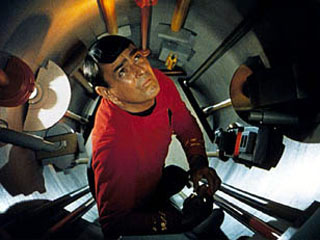
    In the immortal words of the man pictured, "She cannae take it Captain!"

    Wednesday, March 02, 2011

    Ashton's bureaucratic empire


    This is the complex spider's web that constitutes Catherine Ashton's new EU Foreign Office. A larger version of the organisation chart is available here. Make what sense of it you can.

    Hat-tip "Migrants at sea"

    The EU's fisheries policy gets battered


    If there ever was a competition for the worst EU policy, the Common Fisheries Policy would probably end up on top. The policy simply has to go.

    So it's encouraging that the EU’s Fisheries Commissioner Maria Damanaki yesterday did the right thing and called for an end to the CFP-mandated practice of throwing back dead fish overboard if fishermen's quotas have been exceeded:

    "I consider discarding of fish unethical, a waste of natural resources and a waste of fishermen's effort. But I would like to go further – since our stocks are declining, these figures are not justifiable anymore. If we continue with our policy, then we will soon face a situation where the production capacity of marine ecosystems is at risk”.

    This is of course hardly a revelation; groups from across society and the political spectrum have been warning about the economic, social and environmental catastrophe that is the CFP for a long time.

    To give only a couple of examples of what Europe's fishing industry has come to under the CFP :

    · 80% of Europe’s fisheries are considered to be overexploited or in danger of collapse

    · 1.3 million tonnes of seafood are thrown back every year in the North Atlantic alone, including two out of every three haddock caught to the west of Scotland

    · The value of fish that thrown back every year by the Scottish fishing fleet alone was estimated at £40m, resulting in higher prices for consumers.

    Momentum against the CFP is building, and the recent “Fish Fight” campaign fronted by TV chef Hugh Fearnley-Whittingstall has brought the issue to a much wider audience, helping to put pressure on the EU for reform. While Damanaki’s pledge is good news, this time it must be followed by concrete action. After all one her predecessors, Joe Borg, called the discards policy “morally wrong” and pledged root-and-branch reform back in 2007, but to no avail.

    The common sense void in which the CFP exists is a big reason why hostility to the EU is growing, exemplifying Brussels’ painful inability to reform its policies as the circumstances around it changes (on this one, it's not the Commission's fault as a handful member states, most importantly Spain, continue to block reform). It is so detested that it even managed to unite such diverse groups as climate change sceptic Conservative MPs and Greenpeace activists.

    Although dumping the discards policy will not solve all Europe’s fishing problems, it's certainly the right place to start.

    Tuesday, March 01, 2011

    The Charter of Fundamental Rights: It's alive!

    Today’s ECJ ruling on insurance premiums, which will mean insurers can no longer offer different products and prices to men and women based on their sex from December 2012 (since that constitutes discrimination in the ECJ's eyes), has thrown up an interesting discussion about the Lisbon’s Treaty Charter of Fundamental Rights. It has passed under the radar of the media, which understandably have focused on the consumer angle.

    The discussion on the Charter could appear boring but it’s actually very important.

    This is because the UK negotiated a protocol on the Charter when the Lisbon Treaty was agreed, amid concerns that the Charter would take on a life of its own and impact on British rights legislation in ways that were deemed disproportionate or detrimental, either directly or indirectly. In fact, the protocol was one of the reasons cited by the previous government in support of not giving people a referendum on the Lisbon Treaty.

    The Protocol states that the Charter “does not extend” the ability of the ECJ to find that UK law is inconsistent with the rights and principles elucidated in the Charter. Originally, the UK Government claimed to have an ‘opt-out’ from the Charter, but this was never accurate. Indeed then Europe Minister Jim Murphy eventually admitted: “It is clear that the UK does not have an opt-out on the Charter of Fundamental Rights.”

    That’s history, unfortunately, but what isn’t history is today’s ruling. It’s clear that the ruling bases a significant chunk of its reasoning on the Charter of Fundamental Rights. It’s also clear that the ruling will have direct impact on the UK. In fact, the ruling will have a disproportionately large impact on the UK given that Britain is home to Europe’s largest insurance industry.

    But despite drawing heavily from the Charter, there are no references to opt-outs for the UK in the ECJ’s ruling, or protocols or anything else. None.

    And just to set this straight – in the ruling, the ECJ does base its reasoning on the Charter. The 2004 Gender Directive is the main driving force, but the Charter provides plenty of ammunition as well. Over on his Economist blog, Bagehot claims that we’re “not quite correct to say that the ruling was based on the Charter of Fundamental Rights, from which Britain supposedly has an opt-out. The court instead looked at a 2004 Gender Directive...”

    This is just wrong. Looking at the full text of the ruling, it becomes clear that the ECJ rules that the insurance industry’s derogation from the Gender Directive is incompatible with both the spirit of the Directive itself AND articles 21 (non-discrimination) and 23 (equality between men and women) of the Charter of Fundamental Rights. Clauses 17 and 32 of the ruling put this beyond doubt:
    “17. Articles 21 and 23 of the Charter state, respectively, that any discrimination based on sex is prohibited and that equality between men and women must be ensured in all areas. Since recital 4 to Directive 2004/113 expressly refers to Articles 21 and 23 of the Charter, the validity of Article 5(2) of that directive must be assessed in the light of those provisions (see, to that effect, Joined Cases C 92/09 and C 93/09 Volker und Markus Schecke and Eifert [2010] ECR I 0000, paragraph 46).”
    And,
    “32 Such a provision, which enables the Member States in question to maintain without temporal limitation an exemption from the rule of unisex premiums and benefits, works against the achievement of the objective of equal treatment between men and women, which is the purpose of Directive 2004/113, and is incompatible with Articles 21 and 23 of the Charter.”
    Now, we can argue about whether the Charter is creating "new legal rights" or is in fact the ultimate basis of the ruling (as opposed to the Gender Directive) . But this only shows why the UK's protocol on the Charter never was credible. Anyone who can read can see for himself that the Charter is inspiring the ECJ to rule the way it does on gender-based insurance premiums - which in turn has a huge impact on the UK.

    In other words, the Charter is alive and well - also in Britain.

    A blueprint for doing nothing?


    ‘Enhanced economic co-ordination in the euro area’ is the long winded title for the new watered down version of the Franco-German ‘pact for competitiveness’ - the blueprint for saving the eurozone (well...).

    Following the massive hostility towards the initial proposals the pact was pawned off onto Herman Van Rompuy, the European Council president, in an attempt to find a compromise. The result is a four page document that outlines some nice ideas but, scratch the surface, and it has very little substance.

    The pact focuses on: fostering competitiveness, fostering employment and enhancing the sustainability of public finances. It feels as if we've heard this before, i.e. the Lisbon Agenda (or the new Europe 2020 strategy, same difference) with a pinch of the original Stability & Growth Pact.

    All admirable aims and definitely issues which need to be tackled, especially if the eurozone is to avoid a similar crisis in the near future.

    In most areas the actual policy specifics (specifics being pretty much every aspect of the policy other than the general overarching aim) will be left to member states, bringing into question the actual need for this document at all. Between the new macroeconomic monitoring and the increasing acceptance in member states for the need to enhance competitiveness on the national scale, what value is this pact supposed to add in real life? The lukewarm reception it received seems to support this, and casts further doubts over the chances of an agreement which contains something new and convincing being produced at the March summits.

    An interesting question is how the German Bundestag and Bundesrat will respond to a proposal which quite clearly give national government quite a bit of discretion in defining their own caps on debt levels and wage setting arrangements.

    At best the new pact looks to be a set of guidelines for member states to follow and to show a unified approach. That is fair enough, but it should not be treated as more.

    Combining everything that is wrong with the EU's judicial system

    Over on Conservative Home, we take a look at today's ECJ ruling on insurance premiums, we argue:
    This morning, the European Court of Justice ruled to scrap the insurance industry's opt-out from the EU's 2004 Gender Directive, which will mean insurers can no longer offer different products and prices to men and women based on their sex from December 2012.

    This may appear like an everyday consumer story, but it's not. In fact, it's difficult to find an example which better illustrates why EU judges need to be reined in and David Cameron needs to revisit his election promise to limit the jurisdiction of the ECJ and the application of the Charter of Fundamental Rights, entailed in the infamous Lisbon Treaty.

    Of the two European courts - the ECJ in Luxembourg and the European Court of Human Rights in Strasbourg (ECHR) - the former is clearly the one with the most influence. On occasion, the ECHR rules on highly symbolic and emotionally charged issues such as prisoners' right to vote - rulings which rightly get a lot of attention. But the influence of the ECJ creeps in to a whole range of areas, striking deep into British society and the economy, from working time for junior doctors to the governance of the UK's most important national industry - the City of London.

    The ECJ's ruling this morning combines virtually everything that is wrong with the EU's judicial system. And there's a lot going on. Here goes:

    Unnecessary cost of EU laws to individual consumers: Open Europe estimates that the insurance industry will have to raise nearly £1 billion extra to cover itself against the uncertainties created by the ruling - a large chunk of which is likely to be passed on to individual consumers. Moreover, taking motor insurance as an example, a 17 year old female driver will now have to pay an extra £4,300 in insurance premiums by the time she reaches the age of 26 as a consequence of the ruling. In a worst case scenario, women drivers' cumulative insurance costs between the ages of 17 and 26 could increase by as much as £9,300. Young male drivers would on average save an estimated £3,250 over the same period of time (despite displaying riskier behaviour behind the wheel), but the cost to consumers taken as a whole will clearly increase (and men will in turn lose out on their pensions, as a consequence of the ruling).

    The unintended consequences of EU laws: Just as was the case with the Working Time Directive - which the ECJ has extended on eight separate occasions, imposing a huge cost on the NHS and the UK economy - the ruling shows how an EU law can change in the most unpredictable way after the UK government has signed up to it (lesson: don't sign up to EU laws without first thinking through all possible unintended consequences).

    The EU's endemic democratic deficit: No one in the UK ever objected to the practice of charging men and women different insurance premiums, not individuals, not consumer groups, not UK judges and certainly not democratically elected MPs. And yet, this practice has been scrapped by judges that no one ever voted for, based on a case brought before the courts in a different country (Belgium).

    Human rights legislation out of control: The ECJ argued that using gender to differentiate between male and female insurance policies is in violation of EU law on human rights, meaning that despite the fact that roughly 95% of driving offences causing death or injury are committed by young men, the judges could rule that - perversely - taking such evidence into account violates young men's rights. Is this really what human rights law should be about?

    The blurring of the line between the ECJ, the Commission and the ECHR: In its ruling, the ECJ made references to both the European Convention on Human Rights, overseen by the Council of Europe (and not an EU institution) and the EU's Charter of Fundamental Rights. This sounds techy, but illustrates the complex web of European human rights law that is now in the hands of European judges at both the Council of Europe's ECHR in Strasbourg and the EU's ECJ in Luxembourg.

    In other words, the case law of the ECJ and the ECHR is becoming progressively more blurred as EU judges continually make references to the European Convention on Human Rights in their rulings. In a lecture last year, the Lord Chief of Justice Lord Judge noted that, "The [EU's] European Court of Justice is beginning to acquire jurisdiction over matters that would normally be regarded as matters not for Luxembourg but for Strasbourg." This hugely confusing fudge raises a range of questions about accountability.

    The UK government does NOT have an opt-out from the Lisbon Treaty's Charter of Fundamental Rights: Do you remember the claims that the UK had won an "opt-out" from the Lisbon Treaty's Charter of Fundamental Rights (supposedly one of the Labour Government's "red lines" on the Lisbon Treaty and an alleged reason why the promised referendum wasn't called)? Well, as we've argued again and again, there never was such an opt-out and this case clearly illustrates why. The Court draws heavily from the Charter in its ruling - and there's no question whatsoever of the UK not being affected by it. In fact, it impacts on the UK the most, as it is home to Europe's largest insurance industry.

    The Conservative election manifesto promised to negotiate a firm opt-out from the Charter before Coalition politics became one of the new realities of life. It also promised to tackle virtually all the other problems so clearly illustrated by this ruling. The Coalition has taken some positive steps on EU reform, but how much longer can they dodge this key issue?

    Monday, February 28, 2011

    One challenge down, many to go

    EU member states have today agreed to impose sanctions on the Gaddafi regime. The decision follows on from a UN Security Council Resolution adopted over the weekend.

    Italy, who only a few days ago strongly rejected talk of sanctions, has apparently backed down with Italian Foreign Minister Franco Frattini saying that the Libyan crisis has reached “a point of no return”. It is “inevitable” that Gaddafi steps down, he added.

    The sanctions agreed by EU leaders consist of the following:
    • a ban on the supply to Libya of arms, ammunition and "equipment which might be used for internal repression".
    • a ban on 26 individuals from entering the EU, including Gaddafi, his closest family and a handful other people associated with the regime.
    • a freeze on the assets of Gaddafi, members of his family and ten other individuals.
    EU Foreign Policy Chief Catherine Ashton also said that the "complex issue" of creating a no-fly zone over Libya is being explored by EU and world leaders. UK PM David Cameron just gave a statement before the House of Commons, setting out the UK's role in the sanctions.

    In other words, following a slow start EU countries are now picking up the pace. The pro-democracy protests in Libya and the subsequent violent crack-downs by Gaddafi, kicked off on 15 February. It took the EU roughly two weeks to reach a common position on some form of concrete measures.

    That isn't exactly acting with the speed of lightening, but given the complexity of the situation, it could've taken them a lot longer as well (after all, EU member states are still disagreeing fundamentally on how to deal with Cuba).

    What's clear is that the EU institutions themselves - such as the External Action Service - have added very little value to Europe's response to the unrests in North Africa. As ever, what was needed was political will, not institutions.

    Now, a common EU policy isn't a goal in itself - a fallacy that EU federalists consistently commit (see Romano Prodi in today's Handelsblatt for an example). What matters is real policies and outcomes. And these sanctions could hurt Gaddafi in a real way if implemented in full, though we shouldn't overestimate their importance either.

    Cutting off the links to what quite clearly is a Mugabe-type dictator shouldn't be that controversial (we're not talking intervention after all). A bigger challenge, however, might be around the corner if the violence in the region escalates and there are calls for something more.

    A separate, but related, challenge is the growing calls for a common EU policy on immigration and asylum, in the wake of the unrest in North Africa and the potential flow of people from that region. This is an uber-controversial policy area which in the past has split Europe right down the middle.

    One challenge down, many to go.

    The EU won the Olympics, the World Cup...and now an Oscar

    The EU won the 2006 and 2010 World Cups in football (at least according to Romani Prodi and Jean-Claude Trichet, so it has to be true).

    It also won the 2008 Olympics, according to highly credible EU-funded sources.

    Now, it has upped its game yet another notch and raked in the film world's greatest prize - an Oscar.

    The "King’s Speech”, which won several Oscars at last night's ceremony, apparently received €562,000 in “distribution support” from the EU’s Media Programme. Stopping just short of "there are a few people that I want to thank...", Androulla Vassiliou, the European commissioner in charge of cultural issues, wasted little time in claiming the EU's share of the credit (in what the FT Brussels blog labels "an acceptance speech"),
    "What a great night for the European film industry and the Media programme. Europe loves cinema and the world loves our films. This shows that the European film industry can compete with the best."
    After such an accomplishment, all eyes now turn to Euro 2012 (the football tournament, not the currency), where we're told the EU has an excellent chance of repeating its record of success.

    Friday, February 25, 2011

    The EU's Gaddafi "memory hole"


    Everyone who has read George Orwell's novel 1984 is familiar with the concept of "memory holes", which the Ministry of Truth used to get rid of inconvenient documents and photographs. Well, it seems as if the EU has picked up on the idea.

    Apparently, a picture (see above) hanging in the European Council's Justus Lipsius builiding in Brussels, featuring a grinning Moammar Gaddafi (the Libyan leader) happily walking alongside a smiling Javier Solana (the former High Representative for EU foreign policy), has now been removed (hat-tip: Italian journalist Marco Zatterin and his Straneuropa blog).

    We suspect that the Dictator's rambling speeches and brutal attacks on his own people made the photograph lose some of its appeal. Why in the world it was considered so appealing in the first place so as to merit a place on the wall of one of the EU's most sacred buildings is of course an interesting question in itself.

    At least Solana didn't try to imitate Italian Prime Minister Silvio Berlusconi, who once was caught on camera kissing the Libyan Rais's hand.

    We suspect that the EU might be forced to employ its memory hole again before this episode is over...

    Thursday, February 24, 2011

    Studying the cost of Greece leaving the euro

    The "European Economic Advisory Group", CESifo, is a joint venture by two of Germany's most respected research institutions. Earlier in the week, it published an interesting report examining the various potential policy responses to the eurozone crisis.

    One of the authors is CESifo Director and heavyweight economist Dr. Hans-Werner Sinn (pictured). When he speaks, Germany listens.

    Here are some of the key points in the report:

    On establishing a permanent "transfer union" - in which taxpayers in stronger economies subsidise weaker countries, such as happened between Western and Eastern Germany - the report notes:
    The persistent flow of public funds has in the end helped eastern Germany only a little, if at all. It has made it another European Mezzogiorno – a region stuck in a low-development equilibrium.

    (...)

    Whether the EU budget should be expanded for this purpose is a distributional question that will have to be decided by the political process. Politicians should not overlook, however, that there is the risk of Greece becoming addicted to the transfers, since it seems to have become addicted to the capital flows of the past.
    It warns against the harmonisation of wages across the EU, citing regional differences in Italy as an example:
    The Italian Mezzogiorno has been caught in such an equilibrium for half a century and more. Its GDP per capita is about 60 percent of that of the rest of Italy and does not show any sign of convergence. In Italy, the causes for this situation can be sought in a common wage policy, mainly dictated by the conditions of the North, which has always resulted in wages that were way too high for the South and resulted in persistent mass unemployment.

    The under-development has forced the state to help out with transfers from the North. These transfers have provided an alternative income source in the South to which the political system and the economy have grown accustomed, perpetuating the situation, as it seems, even more.
    They also explore the alternative to a transfer union - devaluation.

    There's a distinction between internal and external devaluation. The former means tough austerity measures and squeezes on wages and jobs at home, as in Latvia (whose economy, as CESifo notes, shrunk by 19 percent in 2009).

    The other option is external devaluation, which would involve Greece leaving the eurozone. From page 118 onwards, the report looks at such a scenario, with special focus on Greek banks. They note that if Greece did decide to leave the eurozone there would undoubtedly be a bank run, amongst other problems, therefore the ECB would probably need to guarantee all Greek bank deposits.

    After demonstrating that Greece would take a big hit should it embark on external devaluation and head for the exit, they make an important observation: Greek banks might suffer just as much if no devaluation occurs, while private sector companies would be clear winners in the case of an external devaluation:
    As Greek banks are net borrowers abroad and net lenders at home, the external depreciation will probably hurt them by shrinking the eurovalue of their assets more than shrinking the eurovalue of their liabilities.

    However, this analysis forgets the additional write-off losses on claims against the companies of the real economy that will be driven into bankruptcy after an internal depreciation. If these write-off losses are taken into account, it is not clear whether banks fare better after an internal depreciation than after an external one. It is only clear that companies of the real economy will fare better after an external depreciation.

    In view of these uncertainties in the analysis, the EEAG has decided not to opt for a particular policy alternative but only to inform policymakers of the relevant arguments. Definitely, there is no alternative that clearly dominates the other in all dimensions.
    This is not a call for Greece to leave the eurozone, but the distinguished economists are clearly toying with the idea - though stressing that every scenario involves huge costs.

    Meanwhile, FAZ today reports today that more than 200 German Professors, amongst them Dr. Sinn, have warned in a petition to the German Government, against extending the eurozone bailout. They call upon the German government to prepare
    for a possible failure of the eurozone aid scheme and (...) prepare a detailed insolvency plan for eurozone countries with excessive debt
    This is the only way, they argue, to avoid
    collectivising the debt of member states, which leads to higher taxes and higher inflation in the EU as a whole.
    It's not getting any easier for Angela Merkel.

    " A step backwards for transparency"

    The bulk of the cost of regulations in both the UK and Europe stem from the European Union, as we've showed in our extensive research on the subject. But this isn't even the end of the story.

    Many key decisions on the actual substance of EU laws and regulations are being taken during an uber-opaque process called “Comitology”. As we've noted before, Comitology involves special committees consisting of Commission and national experts deciding on how EU legislation should be implemented - usually behind closed doors - after the proposal has been agreed by national governments and the European Parliament.

    The Lisbon Treaty - the document, if you remember, that would lead to more transparency in Europe - is introducing new rules for the Comitology procedure, effective from 1 March 2011. The new rules were meant to improve and simplify the system, but are now universally acknowledged to have made the situation even worse (we explain why here).

    Political consultant Daniel Guégen, who is one of the foremost experts on this topic, makes the slightly worrying observation that as a result of the reform, power in Brussels “is shifting from the political level to the bureaucratic level.”

    Even the European Commission concurs. Mario-Paulo Tenreiro, who is responsible for institutional questions at the Secretariat General of the European Commission (exciting job), says:
    I must admit that for the general public the new rules are a step back for transparency...Hundreds of thousands of decisions will be taken by these Treaty articles every year.
    Apart from the complexity and opaqueness of the new rules, Euractiv reports that the reforms are also causing legal uncertainty. According to Wolfgang Heusel, director of the Academy of European Law (ERA), this means that "courts will have to have the last word" on how EU legislation should be implemented.

    Does this matter? Absolutely! As much as 50% of the actual substance of all EU rules is decided during the comitology stage after the law has already been agreed by Ministers and MEPs, according to Dutch academic research. So we're not talking about fixing little details.

    Are the Coalition and other governments around Europe keeping up? We fear not.

    Ahead of the last General Election, Ken Clarke (then Shadow Business Minister, now Justice Secretary) managed to give an entire key note speech on regulation and how to improve it, without mentioning the EU once.

    Il faut le faire
    , as the French say.

    Wednesday, February 23, 2011

    The EU should impose sanctions on Gaddafi

    Over on the Spectator's Coffee House blog, we set out the case for imposing sanctions on Gaddfi's regime (while also looking at the difficulties EU member states are facing in coming up with a common policy on Libya, in what is a painfully familar story).

    We argue,
    The EU spends €460 million a year in operational costs alone on its new foreign policy department, the External Action Service, headed up by Catherine Ashton. This body - created by the Lisbon Treaty - was Europe’s ‘great white hope’ for the global stage, finally allowing it to speak with one voice and therefore giving it leverage where it previously had none.

    It hasn’t quite worked out that way. Caught between Cairo and Tripoli, the EU has received yet another reminder that its bureaucracies and institutions cannot magically replace 27 individual foreign policies, as EU leaders continue their bickering over what to do.

    The EU’s response to the turbulence in Libya has been fragmented at best, and contradictory at worst. Italian PM Silvio Berlusconi – one of the few EU leaders with some clout in Libya – initially said that he didn’t wish to “disturb” Colonel Gaddafi since the situation was “evolving”. Czech Foreign Minister Karel Schwarzenberg maintained that the EU should not "get involved too much" because, "If Gaddafi falls, then there will be bigger catastrophes in the world”, though he later said he had meant something else.

    In stark contrast, Finland, France – and in more careful language also Germany – have called for sanctions to be imposed on Gaddafi, including a travel ban and a freeze on his and his family’s assets, something categorically rejected by Italy and a few other countries. Still others have spoken in terms of general condemnation but proposed no concrete action, a group including Britain so far. Meanwhile, no one is paying much attention to the EU’s alleged foreign policy chief, Catherine Ashton. It all feels awfully familiar.

    Does the absence of a common EU stance matter? I believe it does. While it’s true that the EU’s leverage in Libya and some other parts of Northern Africa and the Middle East is very limited, when Europe does pull together it can actually exert influence in its backyard. Enlargement remains the EU’s greatest foreign policy achievement made possible through a mix of aid and trade incentives.

    So what should be done?

    The UK should throw its full weight behind German, French and Finnish calls for sanctions, including an EU-wide travel ban on Gaddafi and his family, as well as a freezing of their assets across the bloc. Other possible responses, such as imposing a no-fly zone over Libya, should also be explored. The Colonel’s delirious speech yesterday – and his son’s comments that the family will fight “to the last bullet” – have confirmed that Gaddafi ranks amongst the Mugabes of this world (if anyone for a second thought otherwise).

    Finnish Foreign Minister Alexander Stubb put it best when he said that "How can we on one side look at what's going on in Libya, with almost 300 people shot dead, and not talk about sanctions or travel bans, and at the same time put travel bans and sanctions in Belarus?". EU-wide sanctions could hurt Gaddafi – financially and politically – but waiting for too long will lessen their impact.

    In terms of responding to the challenges in the wider region, David Cameron is absolutely correct in calling for radical reform of the EU’s neighbourhood policy, which together with other European programmes (such as the European Investment Bank), has dished out billions to the region, with few strings attached. In future, no reform on the human rights front should mean no cash.

    At the same time, the EU needs to use other incentives and tools to promote long-term democratic and economic transformation in the region. For example, the EU should consider opening up its markets to more goods from North African countries on the path towards democracy. This should include agricultural products, which at the moment face a patchwork of tariffs in various guises before they can enter Europe. These barriers are contributing to rural poverty in North Africa and therefore instability. The UK is in a strong position to spearhead such trade reforms.

    To give with aid on the one hand and take away through trade restrictions with the other makes no sense. Alas, it’s symptomatic of the inconsistency that too often characterises the EU’s relations with the outside world.

    The Libyan protesters’ push for change presents an opportunity for Europe to put this right.

    Tuesday, February 22, 2011

    Ostrich banking tests

    Remember the EU's banking "stress tests", which were supposed to determine the health of the key financial institutions across Europe? The tests, that were published last summer, infamously cleared all Irish banks. Only a couple of months later, two of these banks were forced too seek help from the Irish state to avoid bankruptcy, which in turn forced Ireland to apply for a bail-out.

    To say that this episode exposed some deep flaws in the stress tests is an understatement.

    One problem was clearly that the tests weren't stringent enough. Banks were deemed by regulators to need only €3.5 billion of new capital - about a 10th of the lowest estimates that were out there.

    Now a new round of stress tests is due to begin, and European Commissioner Michel Barnier has just informed us that the EU will announce the methodology next week.

    In November, in the midst of the embarrassment about the Irish crisis, his Director-General Jonathan Faull declared that next time, it's going to be serious. He maintained that the new round of stress tests would be “demanding”, with the European Commission pushing for the tests to also assess liquidity of financial institutions (which seems like a pretty fundamental criterion).

    This is actually a hugely important excercise. Europe will never get out of its euro-fuelled slump unless its banks come clean on their exposure to debt in various forms.

    So what lessons have been learnt?

    Well, there are crucial details of the tests that aren't known yet, but EU leaders and regulators haven't inspired confidence so far.

    The European Banking Authority, that will carry out the stress tests, has already declared that the results of the liquidity checks (which will not be part of the stress tests but of separate risk assessments) "will not be published". The German government and Bundesbank have also resisted transparency, with Finance Minister Schäuble warning that "to prevent stress tests from producing more damage than good, we are ready to consider and discuss what of the tests will be published and what not."

    This is of course a tricky balancing act - you can easily foresee an immediate run on a bank following stress tests results that aren't favourable. But then again, trying to hide the problem isn't a solution either.

    And here we see the most contentious and problematic issue of them all - should a possible future restructuring or sovereign default involving, for example, Greece, be one of the test scenarios for banks?

    European Central Bank President Jean-Claude Trichet appears to say NO, it shouldn't.

    Financial Press Agency MNI suggests that

    distinguishing between the trading and the banking books could mean that the tests will ignore the majority of banks' holdings of sovereign debt, since most Eurozone government bonds are held on the banking books.

    This is critical since the debt and solvency crisis facing the eurozone is so intimately linked to the fate of Europe's banks that it's now impossible to separate the two. Clearly, one of the main fears of a possible eurozone default - or even break-up - scenario is the losses that European financial institutions would suffer, which in turn could take Europe right back to 2008 (or in the case of Ireland, 2010). Taxpayers would again be forced to step in to avoid a complete meltdown of the financial world as we know it.

    The lesson from the most recent crash must clearly be that financial institutions and governments alike need to plan for the worst.

    Even if EU leaders don't believe that a default or break-up is desireable or likely, the worst thing they could do is not to consider it.

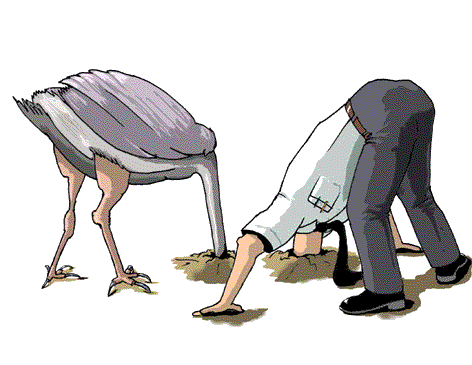
    Kicking the can down the road isn't a policy. Nor is burying your head in the sand.

    Monday, February 21, 2011

    Mean journalists ganging up on Brussels

    An internal commission newsletter reveals what European Commission President José Manuel Barroso thinks about criticism of the pay and perks enjoyed by EU staff.

    In what is seen as a direct response to revelations that 2,000 EU officials, earning between €124,000 and €185,000 a year, were also entitled to three months off work on full pay last year, Presidente Barroso said:
    "The European civil service is often attacked for its apparent 'privileges' when this is not the case and I am always defending this."
    Adding that he "cannot accept populism against the European civil service", while paying tribute to EU officials, describing them as a "great asset to Europe".

    Sure, EU officials can do a good job but please! Not a week goes by without media across Europe lamenting the various excessive ways in which EU officials are compensated for their work. In Barroso's world, one is led to believe, this is just a case of mean journalists ganging up on Brussels (despite the Commission spending around €8 million a year on entertaining, training and 'informing' journalists. What has the world come to when you can't even buy some decent coverage?)

    Only today, Danish newspaper Politiken reported that on average, salaries across Europe have fallen by 5% since 2008, while for EU officials they have increased by 4% during the same time period. One in five EU officials has an annual salary of around €135,000, or more - which seems high even to us. Between 1,100 and 1,600 make more than the Danish PM.

    It would be strange if media did not report on this.

    Barroso should take a stroll down the hallway in the Berlaymont building and have a chat with his colleague, Budget Commissioner Janusz Lewandowski, who understands the need to cut at least some of the EU institutions' expenditure.

    Friday, February 18, 2011

    Labouring under a misconception

    Over on Comment is Free, blogger Joe Litobarski has written a piece on the recent murmurings that Labour is considering backing a straight in/out referendum on Britain’s EU membership (an idea the Lib Dems committed to at the last election).

    Leaving aside Litobarski’s discussion about the referendum, he makes a glaringly flawed assumption in his argument that Brits aren’t inherently eurosceptic but are really just, in his view, apathetic:
    “The latest YouGov poll on UK voter priorities…shows the EU languishing at the very bottom of the table. Only 6% identified the EU as one of their top priorities – just above the oh-so-sexy issue of "transport" at 5%. In contrast, the most important issues for voters were the economy (82%) and immigration (a distant second at 43%). These were not atypical results – the EU regularly appears as the lowest priority in such surveys – and when people vote in a referendum they rarely make a decision based on their least important priority”
    The fact is that while the EU’s institutions seem remote, their decisions have a significant impact on many of these areas:

    • The EU’s raft of economic regulations has had a huge economic impact on the UK; Open Europe’s research has shown that complying with EU regulations has cost the UK £124 billion (£4,912 per household) since 1998. In the context of the perilous state of the public finances this is an exceptionally heavy burden.

    • EU initiatives in the field of crime, immigration and asylum, clearly affect UK citizens; as we have pointed out here.

    • Another example of how EU regulations can directly affect the lives of ordinary citizens is the EU’s Common Fisheries Policy. The great fish fight campaign broadcast recently on Channel 4 showed how the CFP has simultaneously been an environmental catastrophe, endangered the livelihoods of fishermen and pushed up food prices for consumers; hardly a glorious hat-trick and one that people clearly responded to.

    We could of course go on, but this ought to be sufficient proof of the disingenuous claim that Europe is a distant concern to the majority of people in the UK.

    Thursday, February 17, 2011

    Beware of "government by judges"

    It looks like the UK is not the only country where the confusing and expanding powers of the European Court of Human Rights and EU's European Court of Justice are testing nerves.

    Marc Bossuyt, the President of Belgian Constitutional Court, has, for the second time, fired a warning shot at both the ECHR in Strasbourg and the EU's ECJ.

    In a speech welcoming his Francophone colleague, he laments that the two European courts are taking on more and more powers by extending their competences, and warns that this is creating a serious threat of a "government by judges".

    With the EU set to sign up to the ECHR this issue is only going to get more confusing (as we have already commented). With the wide variety of rights legislation at the European level continuing to expand, the inevitable overlap and possible conflict between the two courts will make the job of national governments and judges across Europe much harder. Collisions such as the one seen over prisoners' voting rights will become increasingly frequent, and it is not just the UK that is coming to this realisation.

    Lords blast EU's Afghan police mission

    The House of Lords EU Committee has strongly criticised the EU's police training mission in Afghanistan in a fairly damning report released yesterday. The report concludes:
    This was an opportunity for Europe to pull its weight in Afghanistan in a discipline and skills area where it had great expertise. In this, despite the dedication and risks taken by those on the ground, the EU’s Member States have not yet succeeded. Not only was the resource allocation of 400 staff in practice woefully inadequate for this important task, the fact that even those numbers have never been met has undermined the reputation of the mission.
    It is the same familiar story of the EU's inability or reluctance to meet its rhetorical commitments on foreign policy with boots on the ground or adequate resources.

    The mission, which is due to cost €54.6 million in 2010-11, is at serious risk of failing to meet its aims with 70% of Afghan police remaining illiterate. There also appears to be little or no cooperation with Nato and a lack of a strategic timetable: despite deadlines for military withdrawal set at 2014-15, the EU's policing mission is expected take another 5 to 10 years to achieve its objectives. It is far from clear that such a mission could continue after the bulk of troops have returned home.

    The Lords argue that, "The planned size of the EU mission of 400 was always too small to make a major difference to civilian outcomes in Afghanistan." But even this modest commitment of man-power "has never been met, with numbers in the high 200s being typical." The result, argue the Lords, is that the mission "illustrates EU weakness rather than strength."

    As we have noted before, building institutions and making empty commitments an EU foreign policy does not make.

    Wednesday, February 16, 2011

    Progress?


    UK Chancellor George Osborne yesterday refused to sign off the EU budget for 2009 in a routine vote in Brussels. This was a purely symbolic - but still important - gesture to protest wasteful spending in the EU. A spokesperson for the Treasury said that
    The Chancellor has put Europe on notice that we can't afford not to put Europe's house in order.
    The UK government is talking up EU budget reform, which can come back and bite them if they fail to deliver (remember the budget freeze promised by Cameron, which sort of back-fired?), but is also showing political will to get something done. That's a good sign.

    Osborne was joined by Sweden and the Netherlands in abstaining in the vote. The reason for the Dutch absention was, as the country's Finance Ministry bluntly put it, that "€2 billion has disappeared" from the EU budget, which strikes us as a pretty valid reason.

    Last year only the Netherlands abstained from the budget vote, meaning that we're looking at progress this year.

    With this rate, all member states will refuse to sign off the annual budget by 2022 or 2016 (depending on how optimistically you count).

    We're not exactly holding our breath though.

    Tuesday, February 15, 2011

    A two-speed EU patent


    EU ministers and MEPs have done something very sensible: agreed on an EU-wide patent.

    According to the Commission, obtaining a patent protection for all member states in the EU is currently around 15 times more expensive than obtaining patent protection in the US. And for a change, their estimate might actually be about right.

    The absence of an EU-wide patent is a massive obstacle to growth and innovation in Europe - and a barrier for fledgling SMEs in particular. Given all the regulations pumped out by Brussels every year - many far from essential - it's surprising that it has taken so many years for EU leaders to agree on something that instantly can have such a positive impact on Europe's economy and competitiveness. But it's welcome nonetheless.

    Not everyone is happy though. Spain and Italy oppose the proposal, feeling snubbed as the EU patent will primarily be translated into English, German and French (who cares about competitive disadvantages for Europe against the rest of the world, eh?).

    Spanish and Italian opposition means that other member states will press ahead with a patent under so-called structured cooperation (which allows at least nine member states to take a proposal forward even if some other countries oppose it).

    The benefits of this proposal aside, we now await a rash of media comments on how Spain and Italy will be stuck in the EU's "slow lane" on innovation. Because, surely, media's two-speed Europe analogy cannot only apply to the euro?

    The Italian government seems to have few regrets, however. El Pais quotes a fuming spokesperson for the Italian government saying that the proposal has been approved "in a worrying and surprising way." Referring to a pending court case at the ECJ (lodged by Spain and Italy on discrimination gounds), he goes on,
    It's a failure of respect between the EU institutions.
    As ever, there's more to two-speed Europe than what meets the eye.

    Regardless, well done EU ministers and MEPs for finally pulling your fingers out.

    The ECB's herculean assumptions on Greece

    An interesting presentation given in London last week by Italian ECB Board Member Lorenzo Bini-Smaghi, titled "Sovereign Risk and the Euro", looked at two possible scenario's for the eurozone: Plan A and Plan B (ECB board members aren't known for their imagination)
    Plan A: Fiscal adjustment Plan B: Default / Restructuring & Exit / Split the euro
    First, Mr. Bini-Smaghi showed how plan B would create direct "wealth effects, a credit crunch, social/political repercussions", etc. None of that is disputed.

    Hardly surprising, he expressed his preference for plan A, claiming it "is painful, but most likely it is less costly than the alternative." (emphasis added - it's interesting to note how he qualifies that statement).

    He described Plan A, which is the official EU / IMF strategy, as follows:
    In the case of Greece, the primary surplus required to stabilise and reduce the debt after 2013 is ± 6%
    That's assumption 1.

    That Greece would be running a massive 6 percent budget surplus after 2013 isn't plausible, which Mr. Bini-Smaghi also himself sort of admitted:
    if the primary surplus needed to achieve sustainability is considered too high because the market interest rate is high, there are two ways to restore sustainability:
    - reduce the interest rate burden (and lengthen the maturity), while keeping it non-concessional
    - haircut on debt
    So if the necessary budget surpluses cannot be achieved then debt must be ‘reduced’, assuming this can be done successfully is assumption 2.

    He went on to say that the proposal for a bond buy-back program - under which the eurozone's permanent bail-out fund is used to buy back Greek bonds directly or indirectly - could be a way to cut debt:
    Under discussion: buy back at market prices (lower than nominal), by the member state or through the EFSF, subject to strict conditionality
    We commented in our recent briefing on a possible Greek default that this, in turn, rests on two sub-assumptions:

    1 – Although a large number of bonds are being held by the ECB (around €60 billion nominal value) just buying these bonds back at a discount will only reduce Greece’s debt burden by at most 4.15%. Not to mention the fact that the ECB has stated that it plans to hold all bonds to maturity.

    2 – Therefore bonds would have to be purchased on the secondary bond market or in reverse auctions. It also seems that many banks are holding bonds to maturity to avoid declaring losses on already fragile balance sheets. But even if they were willing to sell it might not help. As we have already said: "the sudden increase in demand for Greek bonds, as a result of Greece itself having a €50 billion pot of money with which to purchase its own bonds, could actually lead to an increase in prices".
    However, Bini-Smaghi himself admitted that having assumption 2 (reduced debt) might not be enough if assumption 1 (budget surpluses) isn't also realized, saying:
    If the debt were cut by one-third, the primary surplus would still be relevant.
    In other words, the ECB is relying on two pretty heroic assumptions. Greece needs find around €148.6 billion to refinance its debt by the end of 2014(not including the cash needed for interest payments), according to the Greek Ministry of Finance. Dreaming the debt away won't work.

    Bini-Smaghi went on to say that in any case, "growth is key", noting that in order to restore competitiveness, this will need to happen "mainly through domestic adjustment".

    He makes a list of all kinds of laudable measures that are needed for the Greek economy to grow again, ranging from" deregulation of transport and energy sectors" and "opening up of closed professions" to "increase in retirement age to 65".

    Assuming that this is economically and politically feasible in Greece is assumption 3; in this case he adds no caveats. Given the well documented political unrest in Greece and the significant strength of vested interests this seems like a very large assumption as well. The country has no doubt come some way - but it still has a massive distance left to travel if it wants its economy to become sustainable.

    And as an indication of the difficulties ahead, over recent days, we've heard of pretty stiff opposition from the Greeks to the proposed EU-IMF privatization plan (which could free up around €50 billion in an ideal world). A spokesman for the Greek government captured the mood: “We asked them for help...not to meddle in our internal affairs” (more on this here).

    Even if the first three assumptions were proved right, and all their goals achieved there is still one more implicit assumption to this whole discussion. It is that once this is all done, the eurozone (specifically the one-size fits all monetary policy which could facilitate boom-and-bust cycles or wipe out achieved competitiveness gains) will not lead Greece down this road again.

    Assuming that all of these measures will solve Greece’s long term problems within the confines of a monetary union is
    assumption 4.

    Interestingly, Bini-Smaghi gave another speech recently commenting on precisely this issue, labelling moves towards a political union of eurozone countries "risky". Instead, he said, stronger financial supervision should be pursued in order to stop boom and busts cycles.


    However, Bini-Smaghi demonstrates the enormity of his fourth assumption with the fact that he sees this new financial order as
    a system of rules and procedures which binds the financial system, in the same way as the Stability and Growth Pact binds national fiscal policies.
    The SGP has proven, shall we say, difficult to implement in practice, begging the question why a system for financial supervision based on the same model should be any more succesful.

    The point here is that the ECB is throwing around a huge number of assumptions. A business plan being this speculative would never make it past the board in any company (well, perhaps a few). But in the eurozone this is apparently called Plan A.

    If the ECB was to re-consider its assumptions, would it also have to re-consider whether plan B might actually be an alternative?