• Facebook
  • Facebook
  • Facebook
  • Facebook

Search This Blog

Visit our new website.
Showing posts with label coalition govenrment. Show all posts

Friday, October 26, 2012

Never mind the Tories – What will Labour do about Europe?

Over on the Guardian's Comment is Free section, we argue:

When talking to diplomats, policymakers and journalists from around the EU, by far the most common question I get is: "What do you think the Tories will do on Europe?"
That question may soon have to be revised. It may not be the Tories, but the Labour party that will decide Britain's place in Europe – possibly even pushing it out altogether.
Much can happen before 2015, but there is a possibility that the Tories could suffer defeat at the polls at the next elections. Then Brussels' biggest fear – a sweeping Tory-led renegotiation of the UK's EU membership terms – will not materialise, at least not any time soon. Instead, either as part of a Lib-Lab pact or majority government, the ball will be in Labour's court. So what will Labour do?
In its 2015 election manifesto, the Conservative party could well promise renegotiation followed by a referendum on the result. It's far from set in stone, but increasingly likely. Tory scepticism on Europe as an issue may not allow David Cameron to get away with less. Labour effectively has two choices in how to respond:
Option one: Gamble on Europe not being an electoral issue.

The thinking is that the EU always ranks low on the list of voters' concerns. National elections are never fought over Brussels. This is only partially true. Europe is a low priority if presented as a single issue – but the fact is, it's not. To varying degrees, it permeates other issues such as the economy, general trust in politicians and, most importantly, immigration (which consistently ranks high) – something that is likely to be established by the current government's "balance of competences" review. Labour could try ducking the question in a campaign, but if the Tory party manages to successfully tap into the public's growing hostility towards the EU status quo – and with the eurozone's demands for greater integration unlikely to go away – it could really hurt Labour.
Option two: Promise a referendum of their own and so neutralise the Tories' pledge.

The Labour party is unlikely to promise a public vote on a renegotiated EU deal – in large parts, they have already rubbished the idea – so it will have to be a straight in/out vote. The plan would be to call a referendum shortly after the elections, campaign for a yes, win the vote and move on to other business.
This would be a massive gamble. The experiences of François Hollande in France and Mariano Rajoy in Spain show that political honeymoons are rare in today's EU politics. And heaven knows what Europe and the British economy will look like in 2015/2016, with the Greek bailout package set to expire, for example. If the referendum coincides with, say, a major new drive for more EU integration, with fresh demands put on the UK; and with a large number of Tories campaigning to leave (more likely in opposition), the British public may be pushed over the edge. It would then be Labour that unintentionally pulls the UK out of Europe.
There may be some options in between, such as promising a referendum on forthcoming treaty changes – or pledges to pursue some milder reforms – but that will not sound overly convincing. And even leaving aside the referendum issue, Europe could hit Labour like a steam train: in a few years' time, the free-standing "fiscal treaty" is meant to be incorporated into the EU treaties. Will Labour nod that through, given that it effectively codifies the Bundesbank-style austerity, much criticised by Ed Balls and co? Will it veto Germany's plans for a fiscal discipline commissioner, if they materialise? How will it relate to the evolving eurozone banking union and potential accompanying treaty changes? Will it tear up the coalition's EU "referendum lock"? The more the eurozone agrees to do in common, the harder it will be for the UK to stand still. In fact, the eurozone crisis means that the status quo is no longer an option for Britain.
The problem is that, fundamentally – and much like the Tory leadership itself – it does not yet appear that Labour knows what it wants for the UK in the multi-tier Europe that is developing. The previous Labour administration's policy of simply sitting in the "euro waiting room" and hoping the public would come along for the ride is no longer credible. However, the wing of the party that said it always opposed euro membership has yet to articulate what its alternative plan is.
There are a lot of good and clever people on Labour's front benches. So far, it has suited Labour to treat Europe as a coalition piñata. Not for much longer. Labour now has the chance to develop a coherent and positive European vision and a plan of its own – designed around a flexible model for EU co-operation, in which Brussels does less in the UK, but does it better. Bank on the status quo or Tory splits, and both the party – and Europe – may be in for some unexpected surprises.

Tuesday, January 24, 2012

Off target: The case for bringing regional policy back home


In a weighty new report published today we take a critical look at the EU’s structural funds which are the means through which the EU implements its regional policy. We estimate that over the course of the current 7 year EU budget, the UK will pay in around £30bn to the EU’s so-called structural and cohesion funds, but will get back just under £9bn.

In our press release, we argue that:
“Limiting EU regional spending to poorer countries would be a win-win situation for both Britain and Europe. It would channel more cash to the newest member states and allow the UK to spend exactly the same amount on its regions as it does now, with the option of adding the several billion that it would save from streamlining the structural funds. It would also eliminate a range of additional costs and allow the Government to radically improve the targeting of funds towards poorer areas and to viable projects.”
What exactly is the problem?

The EU aims to reduce regional disparities but under the current system, every region in every member state receives at least some financial support, regardless of how wealthy it is. This means a significant part of the UK’s contribution goes to member states with a comparable level of income. According to our calculations, of the UK’s overall contribution, 70% goes to other member states, 25% is redistributed within the same UK region in which the funds were raised, and only 5% is redistributed between richer and poorer regions within the UK.

This recycling exercise is fundamentally economically irrational, and even the Commission has recognised that it creates “considerable administrative and opportunity costs.”

It also means that most UK regions, even the most disadvantaged, are short-changed because they pay in more than they get out. For example, the West Midlands, which has the lowest disposable income per capita in the UK, pays £3.55 into the structural funds for every £1 it gets back. Other regions that do badly from the current set-up include the North-East, Merseyside, Lincolnshire, Northern Ireland and parts of inner London.

While there is a strong case for having an EU regional policy to assist the poorer member states that have joined the EU since 2004, there is literally no “added European value” – the criteria for justifying EU-level as opposed to national-level decision making – to keeping all member states locked in.

So what can be done?

Our proposal would see the implementation of an eligibility threshold of 90% of EU average income, above which member states would no longer receive any support. This would on one hand enable the remaining funds to be focussed exclusively on the poorer member states, while allowing richer member states to still make significant savings and regaining control over their regional policies and spending. This is broadly in keeping with the position adopted by the previous Labour Government.

What impact would this have?

Such a measure would create a whole range of winners, and a handful of ‘losers’. To illustrate, if this policy had been adopted for this EU budget period (2007-2013):
  • France would have emerged as the biggest winner from focussing the funds on the poorer states, cutting up to €12.8bn from its net contribution to the EU budget over seven years.
  • The UK comes second, with a net saving up to €5.1bn (£4.2bn) over seven years.
  • Importantly, all new Central and Eastern European member states would see a rise in the amount of subsidies they receive (except for Slovenia under one possible scenario), with Poland gaining the most.
  • Italy, Spain and Greece would all lose out substantially, but they are already set to get a smaller share of EU subsidies as recent enlargements continue to erode their net receipts. More importantly, to cope with the eurozone crisis, these countries need far more responsive and targeted support than is currently being offered by the structural funds.
The way ahead for the Coalition

It appears the Coalition has opted for a ‘safety first’ approach with regards to negotiations over the EU’s next long-term budget (focussing on keeping the overall amount down and protecting the UK rebate). However, pushing for a more ambitious reform along the lines of our proposal would see a significant reduction in the size of the budget and would be better suited to building alliances with like minded member states.

Devolving regional policy from the EU would be a good move for the Coalition if it is to come good on its commitment of ‘rebalancing’ the UK economy away form its reliance on the South-East and financial services, and place to start. The UK could then launch a revamped regional and re-generation policy which would start with the £8.7bn that the UK currently spends via the structural funds, and then re-invests the additional £4.2bn saving from the reform. This would mean virtually all UK regions would experience a rise in the amount of subsidies they receive by around 45%.

In 2003, then Chancellor Gordon Brown argued that:
“the economic and social, as well as democratic, arguments on structural funds now and for the future so clearly favour subsidiarity in action, there is no better place to start than by bringing regional policy back to Britain”
Almost a decade later, this statement still points out the path ahead for the UK.

Friday, November 11, 2011

Is a new "Ioannina" compromise the answer?


Today's Telegraph quotes EU diplomatic sources saying that Britain is fighting France and Germany in order to resurrect the "Ioannina compromise." This would not only have the effect of resurrecting an obscure piece of EU legal history, but it could also be an encouraging sign that the UK government is starting to think creatively about how to protect itself against potentially shifting power dynamics in the EU, should a more integrated eurozone bloc start to vote as a caucus.

So what could a new EU voting"compromise" look like?

By way of background - the Ioannina compromise was an European Council decision of 29 March 1994 concerning qualified majority voting (QMV) in what was soon to be an enlarged 15-member Community. The compromise laid down was that if states representing between 23 votes (the old blocking minority threshold) and 26 votes (the new threshold) expressed their intention of opposing the taking of a decision by the Council by QMV, the Council would do 'everything within its power' to reach a satisfactory solution that could be adopted by at least 68 votes out of 87. The compromise disappeared when Tony Blair agreed to the Nice treaty.

In our recent report we explained that in 2014 (or possibly 2017) new voting rules buried within the Lisbon Treaty will come into force, which will result a permanent majority for the eurozone block on the Council, meaning they could outvote non-members even if they all combined in order to block the law.

Clearly, this is a pretty big gamble for non-eurozone countries to take. So could Cameron seek to to resurrect the old Ioannina compromise?

It's not a bad idea but does come with two drawbacks:

Problem 1: Under the current rules (as shown below) the eurozone are already close to having a majority. These rules expire in 2014/17 when the new Lisbon Treaty rules come in giving the eurozone a permenant majority. If the concession the UK is potentially requesting is to allow the current rules to continue permenantly (even after 2017) if requested - it would not make it any easier than at present to form a blocking minority and so would not decisivly deal with the problem of eurozone caucusing.

Problem 2: But the Ioannina compromise was never legally binding (it was a political declaration) meaning that there is no guarantee that it'll actually be invoked (also making the threat of it less effective). Given the unhappy EU history of political declarations, this may not be a watertight solution - far from it. For the UK this problem is compounded by the fact that of the 10 states not in the euro most are legally obliged or even want to join. So the compromise will need to be set at a higher level, so that those states that are not obliged to join (Denmark and the UK) can have some sort of way to block proposals that stem from caucusing.

The idea of a new voting safeguard is certainly worth exploring but the UK government must set the bar higher than a mere political declaration. Spending a lot of political capital on something that won't be effective would be the worst of both worlds.


Monday, November 07, 2011

The Lisbon Treaty's ticking time bomb


This should send alarm bells ringing in No 10: As the Sunday Telegraph noted, in a forthcoming report this week, we'll be pointing to the concerning fact that, in future, the UK and other non-eurozone members could be left in a permanent minority in the Council of Ministers - the EU's key forum for decision-making.

This time bomb will detonate as early as 2014, potentially allowing the Eurozone to bulldoze over the interests of those outside the Single Currency. This could have a major impact on the UK’s ability to influence, for example, EU rules affecting the City of London or the wider single market.

Here is how it could happen:

The Lisbon Treaty, in addition to expanding qualified majority voting (QMV), substituted the current voting weights in the Council with new ones based on the population sizes of the member states. These new rules are not yet in force – they come into force in November 2014 (with an option for a state to request a vote follows the old rules until April 2017 - which the UK may well want to take). In addition to changing the voting weights, to the benefit of the larger more populous states, the rules also reduce the qualified majority required to pass an EU law from 71% to 65%.

These two measures mean that the UK will no longer be able to muster a blocking minority with the help of smaller non-eurozone states if the 17 eurozone members vote as a 'caucus'.

Under the new rules a group of states needs votes from countries representing 65% of the EU population – the eurozone as a whole already have 66% on their own, giving them a permanent inbuilt majority if they vote together as a caucus (not accounting for Croatia joining the EU, or Greece leaving the euro, for example). Now, it may be that the eurozone will not be able to pull together and vote as one - will the Dutch and Slovaks, for example, agree with the Greeks or Portuguese?

But, given the horse-trading and backroom deals that form an integral part of EU decision-making - and the incentive for the eurozone to reach a common position on a number of issues, as it integrates further to deal with the eurozone crisis - clearly, this is worrying for the UK and other 'outs'. Due to moves towards further fiscal integration in the eurozone, this could prove particularly relevant to eurozone measures relating to financial regulation.

As we've noted before, the status quo is not an option for the UK government.

Eurozone reaches the bar for a permanent majority (click to enlarge):

Thursday, October 27, 2011

Cool heads and clear minds

Former British PM John Major has a very interesting piece in today's FT.

For the UK, these paragraphs are instructive:
"A more integrated eurozone will also provoke non-euro members of the EU by driving them further away from core decision-making. They will react adversely – which is why an early announcement of fiscal union is unlikely. Instead, judicially enforceable controls over deficits, early harmonisation of corporate taxes and a permanent chairman of the eurozone are likely early moves. We are drifting towards full fiscal union: only the timescale is flexible.

This has consequences: non-euro members will not wish to be marginalised and may sniff suspiciously at euro-core proposals, rendering decision-making even more of a hurdle. If the eurozone integrates and co-ordinates policy, non-euro members may co-ordinate too. Confrontation looms. Deeper eurozone integration may encourage non-euro member states to seek to repatriate key policies they can’t influence. The UK will not be alone in this. In the next decade, a federal eurozone will change Europe’s mosaic. Within the eurozone it will become more prescriptive; outside, a looser union could emerge. A pattern of variable alliances is likely. EFTA countries may move closer to non-euro members. One thing is certain – the EU will not remain the same.

In the UK, and elsewhere, many are pressing for their nation to leave the EU. This is an extreme option that would throw up far more problems than it would solve. For the UK it would be a dangerous mistake but, even so, our relationship within the EU will shift. Cool heads and clear minds are needed: our future depends on it."

Sunday, October 23, 2011

The EU summit - our take

So the eurozone crisis talks go on, but for those of you interested, the conclusions from this week's EU summit can be found here. There were no surprise statements as most decisions were deferred to the extra meeting on Wednesday, though most EU leaders did their best to give assurances at their respective press conferences that they're making "good progress". A few points:


- It was agreed that a full European Council meeting will precede Wednesday's eurozone meeting - a concession to the UK, Poland, Sweden and other 'outs'.


- How to leverage EFSF still needs to be resolved, with two options reportedly under discussion - none of them, thankfully, involving the ECB (according to Merkel).


- No agreement on what to do with Greece.


- EU leaders seem to have reached a preliminary agreement on bank recapitalisation, with most reports stating that leaders see a need for a €100bn capital injection (add or take away a few billions) into the EU's banking sector, first coming from private funding, then governments and finally EFSF as a last resort.


- Viewed from London, it's interesting that that draft conclusions state that any EU treaty change must be agreed by all 27 member states. This is of course the case per definition for an EU Treaty change but could also be an attempt by the UK and others to steer the eurozone away from pursuing a eurozone-only Treaty (similar to Schengen), effectively stripping the UK and other non euro-members of their veto over changes that could have an indirect, but significant, impact on them.


At his press conference, David Cameron also said that any EU Treaty change could be used to "advance British interests", which is interesting. Cameron is probably playing to sceptics at home ahead of tomorrow's vote in the Commons on a motion calling for an in/out referendum. But by upping the game like this, it will be difficult for him not to deliver some sort of safeguard or even powers back when EU Treaty changes or further eurozone integration are put on the table (a first discussion over Treaty change can be initatied as early as December). That pressure will be there even if that change technically impacts on the eurozone only.


As we've argued before, the eurozone crisis is changing the way Europe operates, which has all kinds of implications, for example steering the EU in a more "inter-governmental" direction. The implication for the UK's Coalition government is clear, however: Cameron and Clegg simply can't freeze the EU as an issue during this parliament, as was its original strategy. The status quo is no longer an option, whether they like it or not.


Now, at his press conference, Cameron flagged up the risk of an integrated eurozone effectively taking bloc-decisions with a profound impact on the UK economy, but without the UK having a presence at the negotiation table, for example in trade and financial services. He's absolutely correct to highlight this potential risk.


But he is wrong to say, as he also did at the press conference, that we shouldn't 'get ahead of ourselves' on a potential EU treaty change, as such changes "take years". It's true that Treaty changes will be slow-moving, but the key to set the agenda in EU negotiations is to get in early and get in with clear objectives, meaning that now is the exact right time for the Coalition to develop a game plan for how to achieve reform in Europe. Not through grand posturing or meaningless symbolic demands, but a concrete, credible and positive blueprint, forming a part of the constitutional and political settlement that is likely follow in the wake of the eurozone crisis, whatever turn that crisis takes. And just for the record, there's a crucial difference between the immediate crisis, which is wholly inappropriate to seeking to exploit and the long, political discussion that will follow afterwards, where the UK has little choice but to engage with its own sets of demands (like everyone else).


Following tomorrow's vote in UK parliament on an in/out referendum, this is where the debate on EU reform probably needs to move on to.

Friday, September 30, 2011

How to lose support for EU free movement and alienate people

The European Commission just made it a lot more difficult to defend free movement in Europe. Free movement and open borders (two separate but related EU issues) are very difficult things to sell to the public, witness the Bombardier row (which had complicated causes, but partly flowed from competition rules designed to uphold free movement/the EU single market), the Danish restrictions on the Schengen agreement or the Lincolnshire strikes back in 2009.

In public opinion, free movement is usually bundled together with other complex issues such as immigration, the 'British jobs for British workers' debate, welfare and potential wage dumping. Economically, we would argue that free movement is on the whole beneficial, but politically, due to its society-changing potential, it's potentially explosive.

Therefore, free movement has to be treated with silk-gloves, with constant attention paid to national sensitivities. If Europe wants to keep it, national governments simply need to be given some discretion, within reason.

Clearly, this isn't something that the Commission understands. This week, the Commission threatened to take legal action against the UK's "right to reside" test on EU nationals, arguing that it violates EU law. Under UK rules, British citizens automatically qualify for benefits such as child benefit, child tax credit, state pension credit, jobseekers' allowance and unemployment support. But nationals from other countries have to pass a right to reside test before they can qualify for such benefits. The Commission argues that this practice indirectly discriminates against nationals of another member state, in turn breaching EU rules on social security co-ordination. The Commission insists that existing EU rules on who qualifies as a resident of a different member state are already strict enough to make sure that "only those persons who have actually moved their centre of interest to a member state (other than their own) are considered habitually resident there".

The Commission's statement was met with a barrage of criticism in the UK.

Employment Minister Chris Grayling said, "This is a very unwelcome development...I’m really surprised the European Commission has chosen to go into battle on this very sensitive issue, when there are clearly far more pressing problems to solve in Europe."

Work and Pensions Secretary Iain Duncan Smith wrote in the Telegraph:
"These new proposals pose a fundamental challenge to the UK's social contract. They could mean the British taxpayer paying out over £2 billion extra a year in benefits to people who have no connection to our country and who have never paid in a penny in tax. This threatens to break the vital link which should exist between taxpayers and their own Government."

"France, Germany and Denmark have all spoken out against the commission's insistence on issuing this week's provocative decision on benefit payments. This decision confirms the worry that the EU is pulling more areas of national competence into its fold. Yet these are decisions taken outside of national democratic processes by unelected and unaccountable institutions."
Given the recent statements from various prominent Labour party figures, apologising for "getting it wrong" on EU immigration, the Commission is likely to face more or less united UK opposition.

Even supporters of free movement will find it hard to see how the UK's "right to reside" tests are unreasonable. The Commission is now picking a fight with several EU countries, on the hugely sensitive issue of "welfare tourism" at a time when populist parties are on the rise across Europe.

Either the Commission backs down, or it risks facing a massive backlash.

As we've mentioned before, if the Commission wants to squash all public support for the EU, it's doing a pretty good job.

Tuesday, August 30, 2011

An un-makeable eurobond, Part II

In yesterday's FT we had the following letter, responding to the idea of the UK issuing eurobonds - as suggested last week by Chris Giles, a columnist for the paper:

Sir, Chris Giles’ argument that “Britain should bite the bullet and back a eurobond” (Comment, August 25) is thought-provoking but politically and economically flawed. Total eurobond issuance would probably be in the region of £1,000bn-£2,000bn a year, depending on the proportion of national issuance retained – a £34bn UK share as suggested by Mr Giles would hardly be enough to give Britain substantial influence over the eurozone under his “pay to play” logic. Due to this small share, the UK’s participation would not do much to boost the rating of eurobonds either; nor would it act as an effective inflation deterrent.

In order to have the suggested effects, the UK’s share would have to be far larger, which in turn could increase its debt to gross domestic product and its own borrowing cost, while also exposing the UK to unacceptable exchange rate risks. In addition, even if it can be achieved legally and politically, it is far from clear that the half-hearted mix between eurobonds and national bonds that currently is being discussed will actually end the crisis. Such an arrangement would discourage fiscal discipline while possibly even increasing overall borrowing costs for indebted economies, as the national share of the bonds would face alarmingly high rates if eurobonds were implemented on existing debt.

Monday, August 22, 2011

"Europe" won't leave the Coalition alone

The weekend's papers saw several interesting articles on the Coalition's Europe policy in the wake of the eurozone crisis.

Here's Tory MP Dominic Raab, hitting the nail on its head in the Sunday Times:
"This fluid geopolitical landscape opens opportunities for a third choice for Britain — between integration and withdrawal. And it is popular. YouGov found 50% want to halt or reverse integration; it would win over many of the 37% who favour withdrawal.

What would such a plan look like? Britain should ditch its ideological baggage in favour of a pragmatic euro-realism. Take the free movement of goods, services, capital and people — a potent force for good, promoting business growth and jobs. The single market is not perfect. Some aspects won’t get better unless the UK negotiates at the table to liberalise services and curtail state aid and agricultural subsidies. There is no economic reason why Britain could not opt out wholesale of the EU social and employment regulations, which cost our economy an estimated £148 billion between 1998 and 2008. Likewise, Britain could insist on immigration controls on prospective members such as Turkey.

The crossroads ahead offers Britain a unique opportunity to come up with a positive blueprint for our relationship with Europe."

Meanwhile, the Sunday Telegraph looked at the formation of a new group of Tory MPs, which is gaining traction, due to the initiative of Chris Heaton-Harris, George Eustice and Andrea Leadsom (amongst others) aimed at reversing European integration. In his Sunday Telegraph column, Tim Montgomerie made this very astute observation:

"...there are two good reasons why [Tory MPs] shouldn’t be in a rush to renegotiate the relationship with Brussels. First, any deal that happens soon will have to be signed off by Nick Clegg. The Liberal Democrats are Britain’s most Europhile party, and they won’t allow a big departure from the status quo. Renegotiation will be more substantial if it happens at the end of the parliament, and David Cameron can turn the terms of a deal into an election issue. Second, there is no plan for renegotiation. Tory Eurosceptics are large in number, but there’s a People’s Front of Judea quality to their organisation."

We hasten to add that, in general, Tory Eurosceptics also need to develop a better understanding of exactly how fluid and fast-moving the situation in Europe is - and of the various forces at work - if they want to achieve a strategic vision of how to capitalise on the shifting politics. Sounds obvious, but Europe can no longer be reduced to some sort of black-and-white struggle between 'federalists' and 'eurosceptics' (it probably never could but even less so now), nor a sceptical Britain vs. the Rest.

Looking at the Franco-German deal last week, we note over on Guardian Comment is Free that,
"aside from the disappointing content, the latest Sarko-Merkel political charge is very interesting for wider reasons – particularly for the UK. Alas, it has been widely misunderstood in Britain and beyond. First, it is not part of some sort of German grand plan to again become the dominant force in Europe – no one in Germany is interested in "colonising" countries in any form."
We go on to argue - and this is important:
"Second, the Franco-German proposal is not a step towards "EU federalism" per se. In fact, the letter circulated by the two leaders envisages a limited role for the European commission in the eurozone's economic governance, with the eurogroup's 17 members instead meeting separately.

In Brussels speak, this is known as intergovernmentalism, often described as the opposite to federalism...Why does this matter? Because British reflexes tend to favour intergovernmentalism modelled around decisions made by sovereign states rather than the Brussels-based institutions. Far from counteracting British thinking, this Franco-German proposal seems to reinforce it."

There is another reason, we note,
"why the agreement seems in line with what many Brits would instinctively argue for: European variable geometry. Responding to the opposition this proposal generated in many capitals, German foreign minister Guido Westerwelle said in private (according to Financial Times Deutschland) that any member states that don't implement the Franco-German plans "shouldn't be allowed to stop the rest" from doing so, adding that "there should be more differentiated co-operation", presumably both in the EU and eurozone.

This is an acknowledgement that, in order for it to work, the EU simply needs to be broken down into smaller units. It's the type of flexible approach to European co-operation which many in the UK would feel most comfortable with – and also a reminder to those who argue a two-speed Europe is defined by euro membership alone (with Britain in the slow lane) that such a division is simplistic.

If the EU, in the wake of this crisis, is heading towards a more intergovernmental, variable approach to European co-operation – sometimes merging policies and institutions, at others keeping them separate, as national democratic preferences dictate – this could well be in Britain's interest."

This is not an endorsement of the content of the Franco-German deal (which we hopefully have made abundantly clear) nor an endorsement of the greater role envisioned for Council President Herman Van Rompuy. It's merely a reflection on the fact that, when European policy strikes at the heart of national democracy (the eurozone crisis has now fully entered the domain of taxation and spending as opposed to regulations, complex treaties or judicial cooperation), intergovernmentalism is still king.

Although we shouldn't read too much into it, the subtext of the Franco-German summit may prove to be a turning point.

Friday, July 08, 2011

So what are you saying Nick?

In a speech to business leaders in Paris today (at the Mouvement des Entreprises de France ), Nick Clegg had some interesting things to say about the eurozone. The speech was seen in the UK media as "contrasting" to the comments David Cameron made in the Spectator the other day, where he suggested that Britain should use the eurozone crisis to re-shape its relationship with Europe ("Nick Clegg and David Cameron split over Europe" as the over-excited Independent put it).

The truth is that Clegg's speech was a mixed bag - some very sensible remarks combined with others whose logic wasn't always as easy to follow.

He started off with the usual government line that the UK must resist "finger-wagging" and that there is "no room for schadenfreude" over the problems that have hit the single currency.

He made the good point that,
"Events both inside and outside of the eurozone have demonstrated the irrefutable need for all European states to pursue deep-seated economic reform, individually and together, because without it there will be no lasting success - no matter what happens to monetary union...If Europeans now take the right action in fiscal policy, financial policy, structural reform, we can correct the mistakes of the past. We can lead a new era of prosperity for our continent."
Then he made the arguably even more important point,
"We have also had to look very carefully at the functioning and structure of our banks to ensure they can never again take our economy to the edge of a precipice...[banks must be] properly capitalised and able to withstand future shocks"."
Clegg rightly noted that
"we may have different coins in our pockets, but our fates are intertwined...We all have an interest in a strong European economy...There are problems in the eurozone and they are important, not just to members of the single currency, but to all Europeans."
This is absolutely correct as we forcefully state in our recent briefing assessing the second Greek bailout. But then it gets a bit confused and hard to follow.

He said,
"Countries like the UK should not see ourselves as spectators, watching from the wings, triumphalist, complacent, as if Europe's economic woes are a eurozone problem, rather than a problem for all of us - as if it is enough to put your own house in order, but then stand by and let the neighbourhood crumble."
What, exactly, does this mean? Is it "not let the neighbourhood crumble", as in not allowing governments to default? Seems like it. But that's not the policy that the UK government is pursuing. Since it isn't participating in a second Greek bailout, it is, in fact, standing by and letting a country in the neighbourhood crumble (or at least relying on others to 'save' it).

So is he criticising his own government's policy on the Greek crisis?

It gets more confused:
"On the one hand, some people, including senior members of the previous UK government [read Jack Straw], are predicting collapse and doing so with short-sighted relish, given it would do lasting damage to the UK economy. On the other hand, some people are now arguing that only complete fiscal union can work."
He said that "It's not my role, or the role of the British government, to predict the future of a currency union we're not a part of", but then, interestingly, goes on to make a prediction:

"I expect – as is usually the case – things will end up somewhere in between these extremes."

Hold on a minute. So Clegg firstly goes to great length to explain how the fate of the euro is linked to the UK economy (which is true) only to say that it's, however, not his role to predict the outcome of the euro since the UK isn't part of it. Adding then that predicting its collapse is irresponsible, while predicting a full fiscal union is incorrect since, lastly, he's predicting that the euro will end up somewhere between the two.

But if the UK is so horribly affected by any movements in the eurozone even though it's not part of it, isn't it exactly his role to predict where the eurozone is heading so as to make preparations for whatever will occur down the line, given his position as the second most senior person in the government?

What's more, is he saying that a fudge is the best outcome for the UK, since a collapse is a disaster and a full fiscal union won't happen?

We've had a fudge for 18 months and the eurozone crisis hasn't exactly gone away. Can he say with confidence say that a fudge (whatever that involves, more bailouts? stronger EU budget rules?), isn't in fact increasing the political and economic cost of the eurozone crisis, therefore leaving the UK even more exposed to meltdowns in future (as the cost of a Greek default, for example, only increases the longer you wait to restructure)?

We're confused. To Predict or not to predict? Part of or not part of? More UK-backed bailouts or no more? Does the UK have a eurozone crisis policy or doesn't it?

Wednesday, April 06, 2011

A bizarre evening in the House of Lords


In case you missed it (and chances are that you did), last night's debate in the Lords on the Government's proposed EU Bill and 'referendum lock' was a bizarre affair, with many of the peers literally being all over the place. For a while there, it reminded us of some of the debates we've come across in the European Parliament - in many cases, what was said didn't actually correspond to anything taking place in the real world, nor any shade of public opinion.

We have looked at the 'referendum lock', which we're broadly in support of, on several occasions and argued that it would have been a much better 'lock' if it had incorporated the transfer of crime, justice and immigration laws - the Coalition has said it will continue to make its decisions to 'opt in' to these new laws on a case-by-case basis (and it continues to do so in roughly two-thirds of the cases it has the opportunity), rather than via a formal mechanism that could give MPs and the electorate some control over these transfers of power.

But back to the debate. A sign that something is broadly hitting the right note is when it is attacked from both sides. The Bill has been attacked for both preventing any future EU integration and as a sell-out by those who feel it won't stop the transfer of powers to Brussels (many of these people's real problem with the 'referendum lock' is that it doesn't roll back the existing transfers of power, which it was never designed to do) . Now, surely, both cannot be right.

Former Tory Minister and Conservative peer Lord Deben was seemingly having a particularly bad day, suggesting that the Government was pandering to "head-bangers". He added that he was "ashamed" of the Government's plans to hold referendums on whether to approve new EU treaties or major changes to existing ones and promised to vote against the legislation "again and again and again" unless changes were made.

The irony of an unelected peer being "ashamed" to consult the British people on major transfers of power to the EU (including the unelected Commission and unelected ECJ) - seems to have been lost on the noble Lord Deben. This is the full quote:
I do not believe in referenda in any circumstances. They are wholly unsuitable in a parliamentary democracy; they are a foreign invention used by people for ulterior motives; and they have never been part of the sort of society in which we live. I am ashamed that my Government have brought this forward.
Er, out of touch? The argument that the Bill would lead to referenda being held on every minutiae of EU policy seems to have gained credence amongst the peers discussing it yesterday. The only problem is, this argument is absolute nonsense, which anyone who has followed just a bit of EU politics over recent years would realise.

The Bill only covers transfers of competence under a new treaty or through changing the existing treaties - some of the major the "passerelle" clauses will also trigger a referendum. But there are a lot of stuff that won't trigger a public vote, because of what the EU already can do within its existing legal framework.

To get an idea of the kind of action that the EU can take without touching the Treaties, take the creation of the eurozone's €60bn temporary bailout fund, the EFSM. The hugely controversial decision to reinterpret EU law, through a qualified majority vote, and ignore the existing "no bail-out" clauses in the Treaties did not require a treaty change and therefore wouldn't have been caught by the lock. Or take the creation of three new EU financial supervisors, with binding powers over national authorities - again, that decision was taken by a qualified majority vote. A Treaty change wasn't even on the cards.

Rather than trading in hyperbole, Peers should focus on the meat of the Bill and seek to improve it, so that some trust can be restored in politics. Realising that European and British politics have moved on since the 70s/80s/90s (take your pick) would be a good place to start.

Incidentally, if ever you thought that the Lords were more mature than their counterparts in the Commons and less susceptible to ‘Punch and Judy’ knockabout, check out these comments from Lord Kinnock (whose family we’d point out earned a tidy £10m at taxpayers' expense during and after its stint in Brussels) directed at UKIP peer Lord Pearson:
My Lords, when the noble Lord, Lord Pearson of Rannoch, says that he wants to stick to his guns, I am inclined to hope that he goes very near to the muzzle of those guns-indeed, just in front-because that would be a suitable location.
Now that’s not very nice, is it Neil?

Friday, March 18, 2011

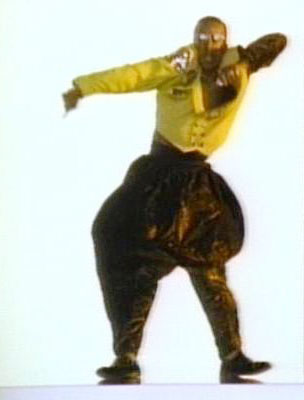
'Can't touch this': Vince's MC Hammer moment

Business Secretary Vince Cable today announced a plan to ease the burden of regulation on small businesses in a bid to boost the economy. The plans would include a three-year break for small businesses from new regulation in addition to scrapping plans for extending parents' right to request flexible working and scrapping new rights for time off to train. The government has also vowed to review some 22,000 existing government regulations on business, with ministers forced to justify maintaining any that are challenged.

Now this is all welcome stuff, but the government has managed to completely ignore the regulation factory numero uno - that is Brussels - instead opting for a "can't touch this" approach.

When it comes to business, the EU is the main driver of regulatory cost in the UK. EU regulations do come with benefits, we don't deny that. But a lot of it is unnecessary or overly burdensome.

We can argue about the counterfactual (i.e. would the regulations have existed in the UK anyway), but what becomes clear during exercises like these is the extent to which the UK (and other member states) have lost control over their own regulatory reform agendas, as a huge number of laws are now locked in at the EU level. Changing an EU law requires re-negotiation and agreement amongst 27 different member states and the regulation-obsessed bunch that is the European Parliament.

Despite the fact that scrapping or amending unnecessary EU regulations could save the UK billions of pounds each year, and generate billions more in various dynamic effects, the Coalition has chosen to look the other way.

The problem with this approach is the familiar dilemma: you can leave EU regulation alone, but EU regulation will never leave you alone. The recent extension of the Gender Equality Directive by the ECJ to ban price differentiation between men and women should serve to illustrate this point (a ruling expected to cost the UK insurance industry an additional £1 billion).

We've been looking at the cost, proportion and impact of EU regulation in greater detail than most (see here, here, here, here, here, here for example). Just a reminder of our latest report on the topic: based on 2,300 of the Government's own regulatory impact assessments we've estimated that in 2009, 59% - or £19.3 billion - of the total cost of economic regulation (introduced since 1998) in this country stems from EU legislation. Cumulatively since 1998, EU laws account for £124 billion, or 71%, of the total cost.

And here are a few graphs showing the regulatory cost stemming from the EU to the main departments dealing with business regulation:


It's hard to better illustrate why any attempt to tackle regulation that doesn't focus on the EU level simply isn't credible. We would be lying if we said that the Coalition's refusal to engage with EU regulation doesn't frustrate us. In fact, we'll soon publish a list of EU laws that the Coalition must seek to re-negotiate. So do watch this space.


Monday, February 14, 2011

Waking up to 'Europe'

Parliament’s stance against the ruling by the European Court of Human Rights to give prisoners a vote has again inspired UK commentators to take a closer look at ‘Europe’.

The right of prisoners to vote is an ECHR issue – not an EU one (the ECHR is not an EU institution as we're always keen to point out). However, it’s right to consider the influence and mission creep of the ECHR in the same discussion as the influence of the EU itself - for a whole range of reasons. As we’ve argued before, on rights legislation the two are now linked and both suffer from an inherent tendency to expand their own powers into new areas. And in terms of the politics and perception of it all, for most people in Westminster and beyond, there’s little difference between the EU and the ECHR, making it extremely difficult to unbundle the issues in media and political discussions (and given that even senior judges have a difficult time unpicking the patchwork of human rights legislation that exists in Europe today, the blurring of the ECHR and the EU in public perception is more rational than what EU communication-types and others realise).

And there has been no shortage of hard-hitting commentary.

Here’s James Forsyth in the Mail on Sunday:
The Tories try to keep their newly hardened Euroscepticism under wraps when dealing with their Lib Dem colleagues, who remain committed to the European project. But even the Lib Dems have been shocked at how much influence Brussels has on decisions that should be taken at a national level. Nick Clegg was appalled when officials told him that the EU wouldn’t allow VAT to be set at a local level.
And here’s Fraser Nelson in a strong post on the Spectator’s coffee house blog:
Europe was easier to characterise as a fringe issue, not so now….Cameron thought he’d have to play along, even though it made him “physically sick”. But in perhaps the most useful thing the House of Commons has done for two decades, it decided otherwise last week in a free vote. And what are the judges of Strasbourg going to do? Invade?
A healthy precedent was established last week. Britain has rejected that old argument that we have no choice. We do. Parliament is sovereign. We can reject as many Euro laws as we like: from Brussels, Strasbourg or both.
Meanwhile, Tim Montgomerie takes a swipe at Ken Clarke on Conservative Home:
The fact is the Conservative Party is largely united on Europe. The vast majority of Tory MPs and activists, from the Prime Minister down, believe that unelected European judges and bureaucrats have too much power. Given the nature of the Coalition and the economic priorities, significant repatriation of powers may not be possible in this Parliament but we must prepare a manifesto for the next General Election that attempts to address that. So long as Ken Clarke is a significant player in the Conservative Party there is little chance of that happening. I sometimes wonder if he stays in government to prevent the party fulfilling its Eurosceptic instincts
Inevitably, there will be more court rulings from the ECHR and the ECJ (one coming up on pensions for example) - in addition to new Directives and Regulations from the Commission - which will be percieved as interfering in national areas where they don't belong. This isn't the last clash we'll see, but it's a signifcant one.

And hats off to Parliament. This time, MPs did their job.

Tuesday, January 25, 2011

This is why the EU Bill should be amended

The Government on Friday published an annual report that reveals which, and how many, EU crime, justice and immigration laws the UK signed up to between December 2009 and December 2010.

The report states (p4) that the Coalition Government has opted in to eight new EU justice and home affairs laws since coming to power in May 2010, including the hugely controversial European Investigation Order, a new "IT Agency" to oversee the EU's vast crime and immigration databases (with start-up costs of around €113m), and granting United States' authorities access to European citizens' banking data under the so-called SWIFT agreement.

These are all transfers of power from the UK to the EU but Ministers were free to sign up to them without any democratic checks - Parliament had no say.

The Coalition has said it wants to operate a case-by-case policy of deciding whether to opt in to new EU justice and home affairs laws. Well last week's report shows what that policy amounts to in practice. Of 13 decisions whether to 'opt in' or not, the Government opted in 8 times. That's an opt in percentage of 62%.

The Government's record so far would suggest then that the UK will continue to play a major part in the EU's ever-expanding role in justice and home affairs. But under the current EU Bill, Parliament and voters have no say over the steady steam of laws that are transferring power over British justice and immigration policy to the EU level.

This is why amending the EU Bill is so important. Allowing the status quo to continue simply widens the democratic deficit between the Government and the general public on these crucial issues. Crime, justice and immigration are important to people and voters do not expect their Government to have free reign to hand over powers to the EU in these areas.

We hope that as many MPs as possible make their voices heard when these issues are debated tomorrow and that they impress on the Government the need for Parliament and voters to have more say over this crucial aspect of the UK's relationship with the EU.

Monday, January 24, 2011

Is the Miliband amendment a trap?

The EU Bill's referendum lock is today coming before Parliament, with its different parts debated and voted on between today and Wednesday (see here, here, here, here, here, here and here).

At the eleventh hour, Labour leader Ed Miliband has tabled an amendment that would effectively remove the opportunity for a judicial review of any decision taken by Ministers and Parliament, amid concerns that the power of Parliament might in future be weakened at the hands of judges.

We can certainly see the appeal of this amendment from MPs' point of view, as it appears to strengthen Parliament. However, the bigger risk is that it - for all practical purposes - simultaneously waters down the referendum lock. MPs should therefore think twice before supporting this amendment.

For what it's worth, here's our take:

- Ed Miliband’s amendments to the EU Bill centre on the creation of an “EU referendum committee”.

- This Committee of 19 members would be comprised of MPs and Lords (but not Ministers) who would make recommendations on whether to hold all referenda provided for in all the various sections of the Bill.

- The recommendations would be put to both Houses of Parliament for approval of the Committee’s decision on whether to hold a referendum or not.

- While the creation of an ‘independent panel of Parliamentarians’ to decide on referenda may sound appealing, the Committee’s recommendations would override the Bill’s clauses which would automatically provide for referenda on decisions identified in the Bill, which are the key safeguards against power being handed over from Westminster to Brussels. Only “significant transfers” as decided by the committee and voted on in Parliament would qualify.

- Therefore Labour’s amendments could well have the effect of raising the threshold for holding referenda on transferring powers to the EU.

- Should the government of the day hold the balance of power in the proposed “EU Referendum Committee”, there would be nothing stopping a new EU treaty or treaty change being pushed through Parliament by the government. This could see a repeat of what happened to the Lisbon Treaty, which, as we all remember, was pushed through Parliament, without a public vote, despite the three major parties pledging a referendum on the treaty.

Thursday, January 20, 2011

Update on the EU Bill - the Government's response to JHA opt ins

Earlier today, the Government released a statement setting out what it intends to do on the Justice and Home Affairs 'opt-ins' and the crucial 2014 choice between more or less EU control (see here, here, here and here for more from us on this).

On the 'opt-ins' the Government seems determined not to include any language in the actual EU Bill that would require it to get Parliamentary approval before it can opt in to a new EU law in crime, policing and immigration. Instead, it says that this should be addressed separately with the details to be decided at a later stage. Crucially, only the proposals generating a "particularly strong" interest could, possibly, be put to Parliament. In the Government's words:
in circumstances where there is particularly strong Parliamentary interest in the Government’s decision on whether or not to opt in to such a measure, the Government expresses its willingness to set aside Government time for a debate in both Houses on the basis of a motion on the Government’s recommended approach on the opt-in.
From the looks of it, this is not a strong enough safeguard. The big question is who decides what counts as "particularly strong" interest. We remain convinced that in order to avoid situations where future EU proposals in Justice and Home Affairs are debated at the convenience of the Government (which is the case at the moment), all opt ins should be subject to Parliamentary approval (there are pragmatic ways to deal with minor proposals, without throwing the baby out with the bathwater).

On the crucial 2014 choice, the Government clearly commits to putting this to a vote in both Houses. This is encouraging, though again, they should put that into writing in the EU Bill, so that it would be beyond doubt. A political agreement/commitment can be altered, which we all know too well when it comes to EU matters. The statement reads:
Parliament should have the right to give its view on a decision of such importance. The Government therefore commits to a vote in both Houses of Parliament before it makes a formal decision on whether it wishes to opt-out. The Government will conduct further consultations on the arrangements for this vote, in particular with the European Scrutiny Committees, and the Commons and Lords Home Affairs and Justice Select Committees and a further announcement will be made in due course.
In other words, there's much to play for here. Are MPs paying attention?


More on the referendum lock

Some more from us on the referendum lock...

On Conservative Home, Open Europe chairman Lord Leach argues in favour of tweaking the EU Bill to strengthen democratic controls over the key areas of EU law that we've highlighted.

We also have a piece on the Spectator Coffee House blog.

Just one quick additional thought: the "more or less EU" choice that the Coalition will face in 2014 potentially involves some 100 or more EU laws and measures. The Government must decide to either accept or reject these en bloc. 100 laws! Imagine if the government had to decide in one go whether to adopt 100 domestic laws, regulations and measures. And if we then were told that this was not going to be debated in Parliament...?

You can see why this choice matters and the EU Bill needs to be amended to allow for this to go through Parliament.

When will this register in Westminster?

Monday, January 17, 2011

Your new man in Brussels


The UK will soon have a new man in Brussels - Jon Cunliffe who will take over from Kim Darroch - to represent the country in the endless behind-the-scenes negotiations that form the backbone of EU decision-making.

In the Mail on Sunday James Forsyth commented:
...it is encouraging that David Cameron is about to make the tough- as-teak Jon Cunliffe Britain’s new ambassador to the EU.

Intriguingly, Cameron is appointing someone who has never worked in the Foreign Office.

Cunliffe is not your typical Sir Humphrey. He didn’t go to Oxbridge and took his economics degree at night-school. Even more unusually, he enjoys saying No to foreigners.
But Douglas Carswell isn't impressed. On his blog, he writes:
Predictably, the spin behind Cunliffe’s appointment is that he is “tough as teak”, a man who likes saying “no” to foreigners. Those who brief the press attach great importance to the fact he’s not from the overtly federalist Foreign Office.

Yet the idea Cunliffe’s appointment means a change of approach is balls. If anything, it confirms that it’ll be EU business as usual.

It was Cunliffe who negotiated the Stabilisation Mechanism deal leading to the ECOFIN meeting in May, whereby Britain accepted enormous liabilities to try to prop up the Euro. He thereby managed to make us part of the Euro debt union, if not the currency union.
What's clear is that the importance of this position - the UK's Permanent Represenative to the EU - hardly can be overestimated...

Tuesday, November 02, 2010

When the driving force of policy is not to cause a fuss

Over on his blog, the WSJ's Iain Martin is today making clear what he thinks of Cameron's performance at the EU summit last week, and the Coalition's Europe policy more widely:
Cameron’s priority on Europe has been, as it has been throughout his leadership, that it shouldn’t flare up and cause him a problem. In coalition with the Lib-Dems, he now has even more reason to avoid the issue. Around him are former Euroskeptics, such as William Hague, who are prepared to go along with the European project (as currently constituted) in return for a quiet life and the perks of office.

But it’s been obvious for a while that the tectonic plates are shifting in the EU. The sovereign-debt crisis was only dealt with because Germany agreed to underwrite the temporary arrangements put in place to allow for a bailout. Angela Merkel was always going to come back and demand that permanent arrangements be put in place, and that other members of the single currency start to play by German rules...

...Last week Cameron indicated that Merkel could get the changes she wanted to Lisbon, etc., in return for… er, nothing. This is what happens when the driving force of a policy is the desire to not cause a fuss.

Tuesday, October 26, 2010

A one-year cash freeze to EU budget won't cut it Mr. Cameron

The news in today's Guardian and Mail is that David Cameron is thinking of doing a deal on the proposed new EU treaty. The reports suggest that Cameron will back the new treaty in return for his demands for a cash freeze to the 2011 budget.

We're not convinced that Treaty-change-for-less-cash is a line that the Government will pursue in the end. But if true, Cameron and his Government risk a mutiny not only from the Tory backbenches but the public at large. And it would be completely justified.

The prospect of a new treaty is rightly seen (and not just by us) as a once in a generation opportunity to renegotiate the UK's relationship with the EU and actually repatriate some of the powers the Conservatives promised they would less than a year ago, or pursue a number of other reforms - for example giving real powers over EU policy to national parliaments.

A one-year cash freeze on the EU budget simply doesn't cut it. Sure, the European Parliament's demands for a 6 percent increase are outrageous and have understandably attracted the headlines recently. But what about 2012 and 2013? There is nothing stopping MEPs, the Commission or even other member states demanding similar increases in these years and there would be little the UK could do about it.

And even the next EU budget period, the the one that starts in 2014, is best negotiated seperately. The UK already has its rebate as leverage in those negotiations. Making horse-trades involving Treaty changes is giving EU partners a 'two for the price of one' deal.

But besides this practical reason, the prospect of yet another 'behind closed doors' EU deal could be politically disastrous. After promising to repatriate powers, Cameron cannot shirk the first, and possibly only, realistic opportunity to do so.

It would certainly make his accusations of "betrayal", levelled at Labour and the Lib Dems for their backtracking on a referendum on Lisbon, look pretty hypocritical.