• Facebook
  • Facebook
  • Facebook
  • Facebook

Search This Blog

Visit our new website.

Monday, March 21, 2011

Is the European Parliament reformable?

The European Parliament seems to stumble from one scandal to another. Be it the misuse of allowances, for example by claiming for daily subsistence to work in Brussels only to jet off for the weekend, their second pension schemes, or their junkets to island paradises, MEPs too often make the headlines for the wrong reasons.

But the Sunday Times' investigation published yesterday, now dubbed the 'cash-for-laws' scandal, leaves three MEPs standing accused of outright corruption. The article is behind the paywall, and well worth reading in full if you get the chance, but here are the key details:

- Three MEPs, Adrian Severin, the 56-year-old former Romanian deputy prime minister, Zoran Thaler, the former Slovenian foreign minister, and Ernst Strasser, a former interior minister in Austria, were all caught agreeing to propose amendments to EU laws believing they would be paid for this work with a €100,000 (£87,300) annual salary, a consultancy fee or both.

- The meetings with undercover journalists were secretly filmed and took place in bars, restaurants and the parliament’s two buildings in Brussels and Strasbourg. Severin later emailed the reporters saying: “Just to let you know that the amendment desired by you has been tabled in due time." Then sent an invoice for €12,000 for “consulting services concerning the codification of the Directive 94/19/EC, Directive 2009/14/EC and the amendments thereto”.

- The amendments were intended to dilute directives supposed to protect customers’ deposits after scandals such as the collapse of the Icelandic banks.

The sting has already claimed the heads of two of the MEPs, with Austrian MEP Strasser resigning immediately but claiming this was to avoid "damage" to his Austrian People's Party rather than because he'd done anything wrong.

Severin and Thaler, said that they knew it was a set-up and merely wanted to see where the exchange of emails would lead and initially refused to resign but, according to the latest reports, Thaler has now also done so. Severin has quit his job as deputy chairman of the Romanian Social Democracy Party, but so far held onto his seat at the European Parliament. The Group of European Socialists in the EP has however ordered him to Brussels to explain himself.

As the Sunday Times argued in its leader, this comes at a time when:
"The European parliament and its 736 members matter more now than at any time in its 53-year history. We live in an era when much of British law and a high proportion of the regulations that control our lives are determined in Europe. MEPs have the power to amend those laws and directives in a way that affects everybody."
The EP is launching its own investigation but, if they're found guilty and perhaps even if not, this particular story is shocking enough to engrain the 'gravy train' image of MEPs in the public's mind's eye for good. Various attempts to 'reform' the EP (back in 2009 there were some harmonisation of rules on pay and a ban on hiring family members as staff) have clearly done nothing to stop the rot.

One can't help thinking that the real root of the corruption and general money-grabbing behaviour of many MEPs is the fact that the EP still thinks that it can behave like a banana republic assembly without anyone noticing.

Perhaps MEPs should forgive people for taking the view that the EP, at the end, is not a 'real' Parliament. This was the conclusion of the German Constitutional Court, which said in its ruling on the Lisbon Treaty that:
"Measured against requirements placed on democracy in states, its election does not take due account of equality, and it is not competent to take authoritative decisions on political direction in the context of the supranational balancing of interests between the states. It therefore cannot support a parliamentary government and organise itself with regard to party politics in the system of government and opposition in such a way that a decision on political direction taken by the European electorate could have a politically decisive effect. Due to this structural democratic deficit, which cannot be resolved in an association of sovereign national states (Staatenverbund), further steps of integration that go beyond the status quo may undermine neither the States’ political power of action nor the principle of conferral."
Unfortunately, with the implementation of the Lisbon Treaty in particular, the EP now has extensive powers over laws that impact on people's everyday lives.

Scandals such as these will prompt more people to suggest that it's time to move on from the argument about getting rid of just one of the EP's extra seats in Strasbourg and consider scrapping the entire thing...

Socrates needs to get philosophical

Looks like Portugal could be asking for a bailout by the end of the week.

Pedro Passos Coelho, Leader of the main opposition party, said on Saturday:
“We need external aid. The Prime Minister does not want to admit that, but the whole country has already understood it.”
He also said he will continue to oppose the new austerity measures, which are due to be voted on by the Parliament tomorrow or Wednesday.

Portuguese Prime Minister, Jose Socrates, announced that:
“Should the Parliament vote against, then the government would no longer have the means to act.”
With massive public protests against austerity in Portugal over the weekend, there seems less and less political incentive for the opposition to cave in and support the new measures. The only thing that everyone seems to agree on is that if the new austerity measures are voted down, Portugal will be forced to ask for a bailout.

However, given Socrates stance the government may fall if he fails to garner the support he needs.

That does not bode well given the EU summit at the end of the week. Socrates needs to get his thinking cap on…as going into summit negotiations without a government cannot be a good strategy.

Friday, March 18, 2011

What conclusions should we draw from Germany's abstention on no-fly zone?

Last night's UN resolution authorising the creation and enforcement of a no-fly zone over Libya, and Germany's abstention in the Security Council's vote in particular, is stirring quite a debate.

Iain Dale has been quick to denounce the German abstention as "shameful" and an act of "cowardice".

The Spectator's Alex Massie has countered that:
Having doubts is not shameful and I don't see why we are supposed to think that Germany should have supported the resolution simply because Britain, France and other countries were doing so.

Perhaps I'm missing something, but if sovereignty means anything it must permit sovereign, friendly nations to disagree on matters of major international importance. (And if the Germans are bad europeans for preventing a common EU approach doesn't that just mean they're fulfilling the traditional British role? Which in turn means they must, from the eurosceptic position, be the Good Guys in this instance.)
Germany's aloofness when it comes to matters of foreign policy and military action can be extremely frustrating. Take its unwillingness to get fully involved in Afghanistan, despite providing the third largest contingent of NATO troops, as an example. The legacy of the Second World War still looms large in the German psyche and that is somewhat understandable.

But, whatever one's views about the merits of Germany's perceived pacifism, Massie makes surely the most important point: that countries should be free to make up their own minds and, if they disagree with each other, so be it.

The real problems arise when you try to force these different views through the funnel/sausage machine that is the EU in the hope of a single common position.

At last week's summit, we should remember, it was Germany that blocked EU endorsement of a no-fly zone. This, in the words of the Independent, left France and the UK "isolated" in their call for intervention. This was, of course, nonsense because, as we have seen, it was never going to be the EU that decided on the use of force. The Franco-British defence pact, agreed last year outside the auspices of the EU, was an admission - however small - on the part of France that to get things done militarily, the EU is just too slow, indecisive and unwieldy.

And it was the Frankfurter Allgemeine Zeitung that today noted "the tensions in foreign policy between France and Germany are remarkable," adding that the lack of Franco-German consensus was "paralysing the EU".

The Franco-German relationship will always be the most important in the EU (they share a border, a turbulent history and the same currency), but on more and more issues, be it defence or the future of the euro, as France and Germany get up close and personal, the more they start to grate with each other. The FAZ article started by noting that newly appointed French Foreign Minister Alain Juppe's first visit to Berlin was cancelled, albeit with the "plausible excuse" that he had to fly to the UN in New York.

Alright, it's only in one area, and hopefully it won't come to the use of force, but if France begins to see the benefits of a flexible approach to European cooperation, sometimes outside the EU, this could prove to be important in breaking down the EU's monolithic approach to many other issues.

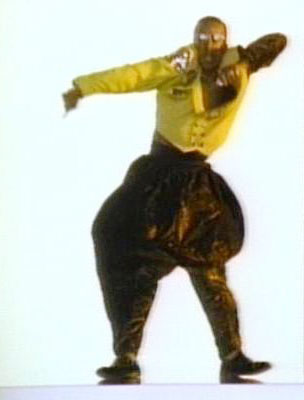
'Can't touch this': Vince's MC Hammer moment

Business Secretary Vince Cable today announced a plan to ease the burden of regulation on small businesses in a bid to boost the economy. The plans would include a three-year break for small businesses from new regulation in addition to scrapping plans for extending parents' right to request flexible working and scrapping new rights for time off to train. The government has also vowed to review some 22,000 existing government regulations on business, with ministers forced to justify maintaining any that are challenged.

Now this is all welcome stuff, but the government has managed to completely ignore the regulation factory numero uno - that is Brussels - instead opting for a "can't touch this" approach.

When it comes to business, the EU is the main driver of regulatory cost in the UK. EU regulations do come with benefits, we don't deny that. But a lot of it is unnecessary or overly burdensome.

We can argue about the counterfactual (i.e. would the regulations have existed in the UK anyway), but what becomes clear during exercises like these is the extent to which the UK (and other member states) have lost control over their own regulatory reform agendas, as a huge number of laws are now locked in at the EU level. Changing an EU law requires re-negotiation and agreement amongst 27 different member states and the regulation-obsessed bunch that is the European Parliament.

Despite the fact that scrapping or amending unnecessary EU regulations could save the UK billions of pounds each year, and generate billions more in various dynamic effects, the Coalition has chosen to look the other way.

The problem with this approach is the familiar dilemma: you can leave EU regulation alone, but EU regulation will never leave you alone. The recent extension of the Gender Equality Directive by the ECJ to ban price differentiation between men and women should serve to illustrate this point (a ruling expected to cost the UK insurance industry an additional £1 billion).

We've been looking at the cost, proportion and impact of EU regulation in greater detail than most (see here, here, here, here, here, here for example). Just a reminder of our latest report on the topic: based on 2,300 of the Government's own regulatory impact assessments we've estimated that in 2009, 59% - or £19.3 billion - of the total cost of economic regulation (introduced since 1998) in this country stems from EU legislation. Cumulatively since 1998, EU laws account for £124 billion, or 71%, of the total cost.

And here are a few graphs showing the regulatory cost stemming from the EU to the main departments dealing with business regulation:


It's hard to better illustrate why any attempt to tackle regulation that doesn't focus on the EU level simply isn't credible. We would be lying if we said that the Coalition's refusal to engage with EU regulation doesn't frustrate us. In fact, we'll soon publish a list of EU laws that the Coalition must seek to re-negotiate. So do watch this space.


German Parliament flexes its muscles


As we've highlighted before, a bust-up in Germany over the fate of the eurozone's bail-out schemes could be imminent, both on the EFSF and its permanent successor.

As if Merkel didn't have enough on her hands, the Bundestag yesterday approved a motion that explicitly demands that the German government bans the EFSF from buying government bonds from troubled eurozone countries. In effect, the Bundestag is asking Merkel to backtrack on last weekend's agreement between eurozone leaders which would have given the EFSF the mandate to buy bonds directly. That's a pretty big set-back for the Chancellor.

The motion isn't binding for the government, but still hugely problematic since the Bundestag needs to approve any deal to increase the scope and size of the EFSF.

The vote illustrates the growing gaps between Angela Merkel and parliamentarians belonging to all three coalition parties (CDU, CSU and the FDP). If this happend in the UK it would be labelled an outright "rebellion" against the government.

According to Märkische Allgemeine, the Bundestag gave its consent to a permanent eurozone bail-out fund, a European Stability Mechanism (ESM), which would take over from the EFSF in 2013. However, it attached a number of strings, including:
- strengthened stability and growth pact
- guarantees for the independence of the ECB
- safeguards that the ESM would only be activated in emergency cases
- a mechanism which would involve private creditors in the rescue fund (unclear how this would work)
- a restructuring procedure which would include private creditors
- a guarantee that the eurozone would not turn into a transfer union.
If you think about it, those are not small thing to ask for in the current climate. This one could be interesting.

Wednesday, March 16, 2011

Will this make countries keener on joining the euro?

Negotiations on the shape and form of the eurozone's permanent bailout scheme - the "European Stability Mechanism (ESM)" - are entering a crucial phase. The fund is meant to be up and running by mid-2013 and is likely to have €500bn available. Of this amount, between €80bn and €100bn will be up-front cash from member states - the rest will come in the form of guarantees.

People are naturally getting nervous about this arrangement, particularly in Germany. Sueddeutsche suggested the other day that German taxpayers will need to contribute between €18bn to €25bn to the scheme in paid up cash (in addition to the guarantees).

Chancellor Angela Merkel isn't too keen on discussing how much Germany might have to contribute in the end. "She doesn't want to talk about this now", a diplomat reportedly said.

We can see why. A direct €25bn liability on Germany's books could increase the country's borrowing costs and hamper efforts to consolidate its budget.

To avoid this, the German government is pushing only for countries without a triple A rating to contribute paid-up cash, as triple A countries - so says Merkel - are lending their good name to the cause, and that's quite enough. But this, in turn, would increase the cash contributions from weaker eurozone members. This has raised alarm bells amongst weaker euro economies as well as a range of non-eurozone members.

Reuters yesterday quoted EU sources saying that eurozone members Estonia and Slovakia as well as Latvia, Lithuania, Bulgaria and the Czech Republic have all criticised the plans. They argue that basing cash contributions to the ESM on a country's proportion of the ECB's paid-up capital is unfair. The countries have even threatened to block proposals for tougher EU-wide budget rules unless changes are made to the suggested ESM arrangement. One representative said,
"Unless there is a change to the ESM capital key we will block the agreement on the governance package once it returns from parliament and EU finance ministers have to approve it by unanimity."
Also non-euro member Sweden has objected to the proposed capital key for the ESM.

Why do these countries feel so strongly about this issue. They're not in the eurozone after all? Well, probably because they understand that, were they one day to join, they could be forced to cough up actual cash to save a Greece, Ireland or Portugal. Paid up cash is a far more serious liability than loan guarantees. Slovakia's refusal to take part in the Greek bail-out gives a hint as to why these countries aren't thrilled by the prospect of a permanent bail-out arrangement linked to the ECB's capital key and credit status. In such an arrangement, smaller economies that haven't really done anything wrong could end up with a pretty hefty bill.

On a related note, where is the UK in all of this? So far, the UK appears to have taken little interest in the structure and pay-in arrangement of the permanent bail-out mechanism. If this is because it doesn't intend to ever join the euro, that's one thing.

But if it's because Britain thinks it has no stake in making sure that the new eurozone rules are fair and make economic sense - rather than facilitating even greater meltdowns down the road (a very real risk) - then the UK government is sadly mistaken.

"Knife-attack" on two seat parliament

Libya is burning on the EU's doorstep.

The dangers of the sovereign debt crisis still loom large over the eurozone - Portugal is likely to need a bail-out soon.

EU member states are working out how best to help Japan deal with the aftermath of the worst earthquake in the country's history.

Meanwhile, trust in the EU is at an all time low in many countries across Europe.

Mundane issues such as these should not, of course, distract from the really important issue - maintaining MEPs' €180 million/20,000 CO2 a year Strasbourg seat (in addition to their ordinary seat in Brussels and their secretariat in Luxembourg).

At least, that's how France sees it. The French government has said it will challenge the decision at the ECJ, taken by a majority of MEPs to scrap one - we repeat just one - of Strasbourg's annual sessions (the EP holds two plenary sessions in the autumn to compensate for MEPs' extended holiday season.)

The French Europe Minister Laurent Wauquiez explains why:
"The parliament building in Strasbourg is the symbol of a Europe closer to citizens, a Europe that is proud of its symbols. The government will not accept the knife-attack on the contract which is in the treaties."
Well of course. Now it all makes sense.

Monday, March 14, 2011

The euro pact and Germany: Triumph or a coming bust-up?

The Telegraph's Ambrose Evans-Pritchard describes the weekend deal at the EU summit as a "total German triumph". He paraphrases Chancellor Angela Merkel saying that "whoever wants credit must fulfil our conditions".

Regular readers of this blog will know that we rate Ambrose very highly (at a time when most other journalists, including the FT gang, couldn't spot a currency-related credit crisis from a yard's distance, he warned against what we've seen in the eurozone over the last year).

On this one, however, we think that his assessment might be a bit premature.

Perceptions matter tremendously in markets as well as in politics. And the perception in Germany is certainly not one of triumph.

Die Welt
quotes a top EU diplomat describing Merkel's "pact for the euro" as an "empty shell", predicting that "in the coming weeks the spreads of troubled countries could further increase". An analysis in the newspaper notes that the pact "remains far beneath the original expectations of the German government", given the large room for manoeuvre that member states are given in its implementation. The headline in the paper reads: "Merkel's secret euro capitulation".

And Merkel might even face a fight within her own coalition about the terms and crucial details of the euro pact.

Although FDP leader and Foreign Minister Westerwelle called the deal an acceptable compromise, liberal MP Frank Schaeffler said that "the result contradicts the position of the FDP group in parliament”. Volker Wissing, finance spokesman of the liberal faction in the Bundestag stressed that an earlier agreement on this among majority parties in the Bundestag "had excluded what has now been decided at government level", as he expected "very difficult talks", which could endanger the German Parliament's approval of the deal.

"It is surely close to a transfer union," Michael Meister, deputy parliamentary leader of the Christian Democrat (CDU) party added (and it was not meant as a positive remark). CSU MP Thomas Silberhorn bluntly said that "the government has stepped over a red line that the parliamentary groups had clearly defined."

Just ahead of the summit, another top Christian Democrat politician, Bundestag Speaker Norbert Lammert, had voiced concern about the whole thing, lamenting that "many representatives still don't feel sufficiently informed".

It is not clear whether these (prominent) backbenchers will in the end vote down the agreement. Bloomberg claimed this afternoon that several backbenchers have signalled their willingness to vote for the deal when it reaches the Bundestag.

But the strong talk is a reminder of the nervousness about all of this in Germany, especially in the run-up to the key regional elections in two weeks time in Baden-Württemberg - a stronghold for Merkel's CDU where the party could now suffer defeat.

It doesn't help that outgoing Bundestag President Axel Weber has stepped up his criticism of current eurozone policies. In a hearing at a Bundestag committee this week, he will warn European governments against making any bond purchases as a means of bailing out weak Eurozone countries, saying
"the result would be that private creditors and national financial policymakers would be relieved even further of their responsibility, and taxpayers of the countries doing the financing would be burdened with further, possibly substantial risks."
Chances are that Merkel will manage to push through this deal in the short term - though the German Parliament may demand some red meat in return for giving its approval.

But, as the EU correspondent for the Frankfurter Allgemeine Zeitung, Werner Mussler, warns: “the consistent loyalty of Germans to Europe is facing a test.” And Europe's biggest tabloid Bild today carries the headline, "saving the euro gets increasingly expensive!".

Some members of the German establishment have already started questionning the very premise on which Merkel has based her bail-out concessions (saving the euro, even with the risk of more bail-outs and a move away from traditional Bundesbank policy is cheaper than refusing to pay). For example, the former boss of the German industry federation BDI, Hans-Olaf Henkel. Although a former euro enthusiast, he now argues in favour of splitting up the eurozone, writing that it has become “a transfer union, a community of redistribution in which a new competitive discipline will emerge: who can tap the others for the greatest amount."

Berlin's biggest fear is that Mr. Henkel is finding it increasingly easier to recruit more allies.

A third way to bail out struggling countries

Much was discussed and a little agreed during Friday’s eurozone summit, but it was enough to give the euro a bit of a boost. Investors - going into the weekend with exceptionally low expectations - seemed pleased with the news that anything was agreed at all.

The most important and controversial measure agreed over the weekend looks to be allowing the EFSF - the eurozone's main bail-out fund - to purchase government debt, under exceptional circumstances.

The conditions imposed on any country wishing to make use of the EFSF's bond-buying scheme are pretty exceptional as well:

- EFSF can only buy bonds on the primary market (i.e. directly from governments)
- For this to take place, the government must enact an austerity programme as it would under a bailout

So what exactly is the difference between a bailout and using the EFSF to buy government bonds under these conditions? Not much, as far as we can tell.

One argument behind restricting purchases to the primary market is that it bails out governments rather than investors. Although that might be true, if the EFSF did purchase bonds in the secondary market the cost of borrowing for peripheral governments would undoubtedly fall by a lot more. There is also the added advantage of purchasing existing debt rather than issuing new debt and increasing the already heavy burden. In the end it looks like the standard EU compromise where both sides meet somewhere in the middle to achieve very little.

The decision also means that the ECB could well be forced to continue buying bonds on the secondary market, since a struggling country will think twice before signing up to strict conditions in return for the EFSF relieving them of some of their junk bonds.

What is significant, however, is that there are now three avenues through which the cost of failing economies can be transferred onto EU taxpayers - about a year ago, there were none (remember the days when some of us were foolish enough to believe that a guarantee in the EU Treaties, i.e. the no bail-out clause, actually meant something?):

1) Direct loans from one of the bail-out funds (requiring unanimity or a majority vote amongst eurozone governments)
2) The ECB buying government bonds, from the secondary market (at the discretion of the ECB)
3) The EFSF buying government bonds, directly from governments (unclear how decisions will be reached on when this can happen).

Many of the key questions remain, however. Such as:

- What interest rate will the EFSF be charging on government bonds purchased?
- Will this option be open to countries who have already received a bailout?
- How will the activation of the EFSF's bond purchasing programme be decided?
- Will Merkel be able to see this through amid domestic political resistance?

We’d hazard a guess that the EFSF would charge below market rates but above its lending rate, but we’d also expect some differentiation from the bailout loans otherwise it would look completely pointless.

Apart from that, we note that Greece - as we expected - has been granted what can only be described as a debt restructuring, though a limited one.

So on the upside, markets are slightly more re-assured. On the downside, expectations are now raised that a meaningful deal will be struck at the summit in two week's time.

When you do scratch the surface, this looks perilously close to more of the same.

Friday, March 11, 2011

Klaus on the summit

Speaking about splits, here's a pretty frank and thought-provoking note from Czech President Václav Klaus, regarding today's EU summit on Libya:
Notes for the European Council on Libya

1. The Czech Republic considers today’s meeting as very important and timely. We support the measures, including sanctions, that have been introduced up till now on the side of the EU.

2. However, when we looked at the draft of the declaration, we did not find it very persuasive. There is no clear signal coming from it. Short-term and medium and also long-term goals and ambitions should be differentiated. I suppose we have met here today mainly because of the acute situation in Libya, which means we aim at a short-run. Of course, we must be able to see it in a wider and longer perspective and strategically, we have to know what to do not only today, but also tomorrow and day after tomorrow. Some of us attended the EU-Africa summit in Libya last November. I am afraid some of us did not see the crazy nature of Gaddafi’s regime and did not behave in a way which justifies our current strong words.

3. The Czech Republic is convinced that we have to try to help to stop the humanitarian tragedy in Libya now, but without intervening militarily in Libya or any other country, without picking up potential new leaders etc. In this respect we consider the recognition of the “Benghazi” Council at least premature, if not basically wrong.

4. We should be aware of the long-term consequences of our decisions. I warn – and that is the position of the Czech Republic – against talking about a no-fly zone because there is nothing like that. No-fly zone means a war because it requires to destroy both Libyan aircrafts and helicopters and Libyan air defense. It is a war. The pressure we should make is the resolute requirement for Qaddafi to step down without negotiating with him. I stress stepping down before negotiations, this sequencing is absolutely crucial. Unconditional surrender is the only possibility. We should make it very clear.

5. Several side-remarks:
- It seems to me it is necessary to warn against comparing the situation in Northern Africa now with Central and Eastern Europe 20 years ago (Buzek), at that time the “rebels” (Orban, me) had clear views about the future, I am not sure it is the case in Egypt or Libya now;

- The experience with one of the institutions which were hastily established after the fall of communism in 1989 – the EBRD – is visibly negative. It has never been a real help to the countries in my region. We are, therefore, very much against creating another similar bank, we suggest to delete the idea of the “Bank for the Mediterranean” out of the text;

- On the contrary, we suggest to include one idea into our declaration which is not there – our long-term help should be offering the North African region open markets in Europe;

- I heard, in our meeting before lunch, the term “Gaddafi’s money”. It reminds the attempts to find “communist bosses’ money” in our part of the world. Nothing like that exists.

Václav Klaus, Brussels, 11 March 2011

Lowest common denominator

EU leaders - still visibly split - have just agreed on a trade-marked "least common denominator" statement on Libya, following today's summit in Brussels. Speaking at the end of the summit, David Cameron said that the EU's 27 leaders were "united, categorical and crystal-clear" that Gaddafi had to go - which is a welcome statement (Gaddafi is a maniac after all) but not much different to what the EU leaders who matter had already called for.

In terms of substance, EU leaders agreed new sanctions against financial institutions linked to the Gaddafi family, adding the Libyan Central Bank and Libyan Investment Authority to the EU asset-freezing list. It also agreed that "contingency planning" involving "all options" should continue, in case Gaddafi and his LSE-educated son, continue to act crazy.

The communique didn't refer to a no-fly zone, however, despite Nicolas Sarkozy calling for "defensive" and "limited" air strikes - something he said he had British support for.

Before the summit, Sarko said,
"We the French and the Britons have given our availability – under the explicit condition that the United Nations want it, the Arab League agrees to it and the Libyan Authorities that we want to be recognised wish it – to carry out targeted, purely defensive actions, and only in the event that Mr. Gaddafi used chemical weapons or the aviation against people who are demonstrating without violence."
The reluctance of other leaders to subscribe to this reasoning means that the UK and France were sidestepped on this point. The EU remains all over the place on a no-fly zone (and France still stands alone in recognizing the Libyan opposition).

This also appears to be the first time that Cameron has openly clashed with EU 'foreign minister' Cathy Ashton, who according to PA, is now warning against a no-fly zone. An EU diplomat is quoted saying:
The efficiency of a no-fly zone is very questionable. Apart from anything else, European command and control facilities would not be able to get a no-fly zone up and running in less than five or six weeks, and Nato is suggesting it would take at least three to four weeks.
All of this is of course being played down by Downing Street.

That the EU's two most credible military powers and only permanent members of the UN security council are seemingly at odds with the other 25 member states illustrates the limitations on the EU's foreign policy ambitions. Although a no-fly zone would almost certainly require US approval and firepower, in Europe, the UK and France are the only game in town if things get really nasty. But still, everyone must be included, no one left out.

Today's meeting was all about EU self-assurance and will have little bearing on on how things turn out on the ground.

EU common position on Libya blown apart


Attempts to create a common EU foreign policy rest on the notion that a single, clear voice emanating from Europe would carry more weight than a shrill, discordant cacophony of individual voices from member states. This is appealing in principle, but as we've argued again and again - it cannot be achoeved artificially.

During the unrest in Egypt, we noted that when Europe does indeed “speak with one voice”, it takes a painfully long time to co-ordinate, and usually results in a bland, anodyne statement. This is because the national interests of 27 member states have to be amalgamated, so as not to prejudice any of their divergent interests in wider international affairs.

Yesterday’s unilateral decision by France to recognise the Libyan rebels in Benghazi as the legitimate representatives of the Libyan people made for some lively discussions between the EU’s foreign ministers and some enlightening press briefings.

During “an unusually candid” press briefing, German foreign minister Guido Westerwelle said he had been sitting next to his French counterpart Alain Juppe when the news broke, and that Mr. Juppe later complained that he had not been pre-notified, and that Mr Sarkozy appears to have acted "on a whim".

Italy distanced itself from the French position, with foreign minister Franco Frattini saying the UN and EU should send new fact-finding missions to Benghazi before making any decisions, while Belgian foreign minister Steven Vanackere said there is a “difference between engagement and recognition”. Sweden’s foreign minister chose a direct route of registering his bemusement at France’s circumvention of diplomatic norms by tweeting:

“Sweden recognizes states - not regimes. And most other EU countries are the same. Somewhat unclear on what France does.”

The confused state of affairs is further exacerbated by the fact the EU is trying to decide what line to take on a possible no-fly zone which might involve air strikes against Libyan military targets, which the European Parliament has urged them to do yesterday, with Labour MEP Richard Howitt warning that that EU states must “be prepared to change the current rules of engagement on whether military measures are required against colonel Muammar Gaddafi's regime”. Today, David Cameron and Nicolas Sarkozy sent a letter to EU Council President Herman van Rompuy which took a decisive position on the Libyan position, arguing:
“the deliberate use of military force against civilians is utterly unacceptable… when the Libyan people win their fundamental rights, we should be ready to support them with the necessary assistance and cooperation”.
Meanwhile, Euobserver has reported Baroness Ashton's people are not keen to visit Libya due to the volatile security situation in the region, prompting the question “what is exactly is it that they are paid so well to do?”

The confusion over Sarkozy’s decision to recognise the Libyan opposition unilaterally, and the lead taken on the Libyan crisis by France and the UK in general have yet again highlighted the difficulty, some would say futility, of assembling a common EU foreign policy.

Let's hope that EU leaders can come up with something more coherent at today's summit.

Thursday, March 10, 2011

Spain gets moody

Credit rating agency Moody’s today downgraded Spanish debt partly based on the massive recapitalisation needed by the banking sector. It put the funding needs at €40bn - €50bn, or €110bn - €120bn under a “more stressed scenario”. Way above the Spanish Government’s previous estimate of €20bn.

Spain was none too pleased with this, suggesting it was premature and that Moody’s should have waited for the official statistics.

Oh, well maybe the central bank was ready to make a more accurate assessment of the banking sector funding needs – which we all expect are far greater than $20bn – ...

This afternoon the Bank of Spain released its assessment: €15.15bn...

A Portuguese bail-out won't be enough

Over on Europe’s World we have a post on the future of Portugal. We argue that a bailout now looks inevitable but that it will do little to solve Portugal’s problems due to:
- Funding requirements topping €39.4bn this year alone, equal to 25% of GDP.
- Unsustainable borrowing costs both in the short term and the long term, as we have already noted.
- Over reliance on ECB funding - both the state and the banking sector
- Massive lack of competitiveness as well as few policy options to facilitate economic reforms and foster growth
Given the mountain of issues facing Portugal, a bailout might give the appearance of providing help in the short term, but restructuring debt and tackling the problem at its source - high debt to GDP ratio and massive amounts of private debt - will provide a much better long term solution for both the country and the eurozone. However, even so, in the absence of some serious reforms to boost the country's competitiveness, going far beyond those that we're seeing at the moment, Portugal may find itself in this position again before too long.

You can check out the full article here.

The Arbitrary World of EU judges

As we've noted before, the EU is in desperate need of a single patent - virtually overnight, such a patent would boost competitiveness and growth and attract innovation, not least by cutting costs for SMEs. It's currently around 15 times more expensive to obtain a patent across the EU than obtaining patent protection in the US. Or to illustrate using other estimates: a patent validated in 13 EU countries costs as much as €20,000, of which nearly €14,000 arises from translation alone (according to the European Commission).

So it was welcome news when EU leaders agreed to press ahead with an EU patent, despite the silly opposition from Spain and Italy.

But apparently, the ECJ - the omnipotent (or so it thinks) EU court seated in Luxembourg - has different ideas. It now says that establishing a new court to judge patent litigations - which was part of the proposal for a single EU patent - is incompatible with EU law.

The ECJ is worried that giving some judiciary powers over patents to a 'non-EU institution' raises questions over....wait for it...checks and balances.

We don't suggest that EU law is arbitrary (not that we would), but let's see if we got this straight. Establish three new EU financial supervisors - through a qualified majority vote - with binding powers over national supervisors in seven broad areas, and the mandate to interpret (i.e. quasi-judicial powers), apply and enforce provisions in over 20 separate EU laws (including initiating dawn raids against individual firms in the case of credit rating agencies) is no problem. But it's not okay to establish a Court looking only at patents? Meanwhile, it's okay to switch legal bases in various ways (data retention magically becomes a Single Market issue, eliminating national vetoes, working time becomes a health & safety provision, etc.).

There's a huge amount of arbitrary government in the ECJ's reasoning. If the Luxembourg judges were consistent, we would applaud their new found appreciation for checks-and-balances, but they're quite clearly not.

Sadly, it's the European economy and recovery that will suffer.

Now, if it is indeed the case that the ECJ is concerned about a body whose status as a non-EU institution is unclear, and about the absence of clear guarantees about how it would be bound by EU law and what kind of checks and balances would apply to it - which were all concerns flagged by the ECJ - then such concerns must apply to other bodies with similar a status as well, correct?

As it has turns out, the European Financial Stability Facility - the eurozone's €440 billion bail-out fund - is a non-EU institution, it's unclear whether it's bound by EU law (i.e. the no bail-out clause) and it's even more unclear what checks and balances apply to it (for certain no Parliamentary control).

So the EFSF must be illegal too right? Or are we missing something?

Wednesday, March 09, 2011

The cost of dignity

Yesterday, Portuguese Prime Minister Jose Socrates said:
"[Portugal] would lose its prestige and (its) dignity of being able to present itself to the world as a country that succeeds in solving its problems [if it asks for a bailout]."
Today, Portugal auctioned off €1 billion in 2 year government bonds, but the Portuguese really had to pay this time. The interest rate was 5.99% which, for 2 year borrowing, is an exorbitantly high cost. Keep in mind that even with the punitive interest rates of 6% for 3 years, the current bailout loans now look relatively good value for the Portuguese.

Oh, and just in case you thought things looked better down the line: 5 year rates reached 7.82% and 10 year hit 7.70%.

The 10 year rate has been above 7%, the threshold widely accepted as being unsustainable, for 24 consecutive days; Greece and Ireland lasted 13 and 15 days respectively before asking for a bailout. The real question now is not if Portugal needs a bailout but when, and will it be enough? Surely a restructuring would do more for its long term economic stability at this point.

In any case it looks like prestige and dignity are going to hit the pockets of Portuguese taxpayers hard until a decision is made.

EU green fatigue

An increasing number of countries in Europe are beginning to suffer from what can best be described as 'green fatigue'. In fact, the mood has changed radically since March 2007 when EU leaders agreed to their ambitious green targets.

This is particularly obvious in Germany, Europe's industrial powerhouse and paymaster.

Over recent days, the EU's directive on biofuels (soon to be overtaken by the Renewables Directive) has been absolutely hammered in the German press. As it stands, the Directive requires gas stations to sell fuel with 10 percent ethanol content - which has triggered boycotts, due to drivers’ fears that the new fuel will harm their vehicles.

Der Spiegel notes:
"All EU countries were supposed to have introduced E10 by the end of 2010, but only France and Germany have complied. And problems have not been limited to Germany. Because of slight differences in the E10 biofuels used in France, the ADAC, Germany's largest automobile association, is recommending that German drivers avoid E10 fuels should they cross the border into France."
In a comment, Handelsblatt criticises the Directive, arguing that due to rising food prices and environmental concerns "In 2008, EU Energy Ministers opposed extending the share of biofuels to beyond 10 percent". But, it notes:
“That isn't the end of the story however...Stable or falling prices for farm products, about which the agricultural lobby - led by France - is complaining, will be a thing of the past. The ones who need to pay, are consumers. In Europe, but especially in developing countries."
It concludes: "to burn food in order to obtain fuel is just a crazy idea."

We've warned against the EU's biofuel policies on several occasions, for example in January 2008, when we wrote that allocating more resources to biofuels would be a serious mistake:
"Biofuels are only likely to achieve between 0.9% and 1.1 % reductions in total EU emissions. This is a serious misallocation of resources. If the huge expense of achieving the miniscule reduction in greenhouse gases through biofuels were to be redirected towards reforestation projects, almost 28% of the EU’s total emissions would be saved. Even if it were to be redirected towards (relatively cost inefficient) renewables (at current costs), these funds would deliver a 2 – 5% reduction."
Meanwhile, the European Commission has just announced that EU climate policy will cost €270 billion annually, over the next 40 years. This is a massive amount. But the Commission is still intent on raising the EU's targets from the current levels of 20%.

FAZ comments:
"The ability of European industry to compete internationally will be undermined as a result of unilateral climate change targets. Energy-intensive production, for example of metals, is merely being transferred to third countries (...) without improvements to the world's climate. The Commission doesn't ask itself these fundamental questions."
To be fair, Germany's Commissioner in charge of the energy brief, Günther Oettinger, has been very critical of his own institution's attempt at raising CO2 targets. "I believe 20 percent is the right, middle way," he said, warning that if the EU would go it alone, "than we not only lose jobs, taxes and social contributions. We will also have no reduction of CO2 levels."

He seems to have lost, though, as the Commission has just announced that it will be pushing for a 25% target, up from 20% compared to 1990 levels.

Still, opposition to the EU's green agenda - agreed at a time when Europe's economy was booming and the EU was looking for a new role for itself (the 'world peace' theme was getting a bit dated) - is clearly growing.

Tuesday, March 08, 2011

The Robin Hood tax: take from everyone and give to the EU

The European Parliament today backed calls for an EU financial transaction tax (FTT). MEPs say that their version of the FTT comes with at least two great merits:

- it’s a simple way to raise revenue
- it brings the financial sector to account and deter short selling.
    MEPs, we suspect, feel that targeting greedy bankers is the only way to sell an EU tax to an increasingly sceptical public - EU tax proponents is a minority cult. So in the minds of MEPs, two negatives equal a positive. Right?

    Wrong.

    First, the idea that an EU financial transaction tax could feed straight into the EU budget, as MEPs propose, is fiction. For one, the complexity of financial transactions and the difficulties involved in working out a sensible burden sharing arrangement between member states with massively different levels of financial activity - as well as a fair methodology for deciding what, exactly, should be taxed - make it wholly inappropriate as a tool for funding the EU budget. This is particularly true as greater simplicity and transparency are often cited as key reasons for introducing an EU tax (as opposed to the current - and admittedly complex - system, which combines VAT receipts, contributions based on GDP and 'own resources').

    In the absence of a burden sharing mechanism, the impact of an EU financial transaction tax on the UK will be absolutely massive, given the City of London. Both directly, but also indirectly, as many financial transactions taking place outside the UK, are still linked to activities in the City in one way or another.

    MEPs say that they hope to raise £20bn in the UK through a transaction tax, but this estimate seems, quite frankly, to be plucked out of thin air. Using MEPs' own methodology (which isn't really a methodology at all to be honest) the burden on the UK is more likely to be between £40bn and £180bn.

    Data on financial transactions are as patchy and opaque as the EU institutions themselves, which make it very difficult to nail down what kind of figures we're talking about.

    But the World Federation of Exchanges, for example, put the level of financial transactions in the UK at £600tr (for 2009). This would put the impact of the tax at between £60bn (at an incidence of 0.01%, which is the lower end rate proposed by MEPs) and £300bn (at 0.05%, which is the higher end rate proposed by MEPs). If we limit the tax to just derivative, equity and bond trades – which MEPs have proposed - the impact falls to £40bn - £180bn (at same rates).

    So, without any adjustments or burden sharing arrangements, the UK would send up to £180bn to the EU's coffers under this proposal! This will of course never ever happen, but it should serve as an illustration of how poorly thought through MEPs' proposal is.

    Equally important, contrary to what MEPs seem to believe, this will not be an exclusive tax on rich Londoners or bad bankers. Instead, the cost will be passed straight down to consumers and the real economy (through higher borrowing costs and higher commodity prices, for example) - everyone will have to cough up.

    Better regulation and carefully targeted taxes from national governments – or via global coordination – are much better options. As even the European Commission has admitted, with EU taxation commissioner Algirdas Semeta saying:
    "With regard to a financial transactions tax at EU-level only, I firmly believe that it is premature to commit to such an option. In fact, taking into account the potential impact that this could have on European competitiveness, it would be irresponsible to proceed with such a tax"
    There is also the significant question mark over where, how and why this additional money will be spent. Somehow we don't take huge comfort in the thought of MEPs all of a sudden having billions in extra cash to play around with.

    In any case taking from a large tax base and redistributing the money to a very small EU elite - which operates several levels removed from citizens - doesn't sound very Robin Hood-like.

    Friday, March 04, 2011

    Caviar For Eurosceptic Palates

    Why doesn't this strike us as a surprise? MEPs have asked for more of taxpayers' cash, although this time the money will not end up directly in their pockets. The European Parliament's Committee on Budgets voted yesterday to increase MEPs' monthly staff allowance by a further €1,500 - which, multiplied by 12 months and 736 MEPs, amounts to an annual increase of €13.2 million.

    Not exactly a wise decision given the wave of austerity that national governments (and taxpayers) are facing across Europe. MEPs already gave themselves a €1,500 office allowance increase last year, following claims that new duties brought in by the Lisbon Treaty had increased their workload. What's more, they already receive a generous monthly allowance of €19,709 to cover staff and other office expenses.

    In the words of Italian journalist Marco Zatterin, this really is "caviar for eurosceptic palates".

    NB: It's a bit disappointing to see German MEP Ingeborg Grässle (a member of the EP Budgets Committee who has been saying a couple of sensible things in the past, for example on the EU's new diplomatic service budget) saying, "I cannot do the political or control work I have to do if I don't have more staff."

    Now who was it who said "where you stand depends on where you sit?"

    Thursday, March 03, 2011

    "She cannae take it Captain": ECJ ruling testing EU's PR machine to breaking point

    We have been quick to criticise the EU's vast efforts dedicated to 'improving it's image' with citizens in the past but we're almost starting to feel sorry for the 'communications team' behind them.

    Well not really, obviously, but when the ECJ makes daft decisions, like it did this week when it ruled to impose unisex insurance rates, increasing costs for consumers in the process, you really do have to wonder whether the EU's taxpayer-funded PR machine can cope.

    With some exceptions, the public and media reaction across Europe has been a mixture of anger and bewilderment . Yesterday, picking up on our briefing on the ruling, a leader in the Times argued:
    Many great changes have been made in the name of equality. Forcing women drivers to pay higher car insurance premiums is not one of them. It is extraordinary that the European Court of Justice has decided that what women drivers pay, for the simple act of getting behind the wheel, is a supranational issue. But having done so, it will have made many ordinary people aware for the first time of just what a complex web of issues is increasingly decided by a remote court that is suffering acutely from mission creep.
    Unlike the prisoners' votes furore that was limited to the UK, this case has also stirred others across Europe to speak out against the judicial activism of Europe's supranational courts.

    FAZ argued that:
    Rarely has a court intervened so deeply into contractual freedom as the European Court of Justice has now...In this judgement the ECJ takes up the role of lawmaker in an astonishing way.
    Czech business paper Hospodářské noviny:
    Insurance premiums are based on statistics. Women cause fewer traffic accidents than men do, and so they pay lower premiums. Men, by contrast, have shorter life expectancies, and so they receive higher monthly pensions. That's all reasonable and logical. The European Court of Justice's decision to ban differentiations between men and women is unreasonable and illogical.
    Spain's Cinco Dias wrote:
    As [the Spanish insurance association] Unespa explained yesterday, putting this decision into practice will mean that both women and men have to pay more. This leads us to the conclusion that equal treatment won't result in lower insurance premiums and that it will be the consumers who end up paying for the consequences of this ruling.
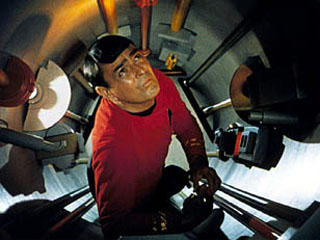
    In the immortal words of the man pictured, "She cannae take it Captain!"

    Wednesday, March 02, 2011

    Ashton's bureaucratic empire


    This is the complex spider's web that constitutes Catherine Ashton's new EU Foreign Office. A larger version of the organisation chart is available here. Make what sense of it you can.

    Hat-tip "Migrants at sea"

    The EU's fisheries policy gets battered


    If there ever was a competition for the worst EU policy, the Common Fisheries Policy would probably end up on top. The policy simply has to go.

    So it's encouraging that the EU’s Fisheries Commissioner Maria Damanaki yesterday did the right thing and called for an end to the CFP-mandated practice of throwing back dead fish overboard if fishermen's quotas have been exceeded:

    "I consider discarding of fish unethical, a waste of natural resources and a waste of fishermen's effort. But I would like to go further – since our stocks are declining, these figures are not justifiable anymore. If we continue with our policy, then we will soon face a situation where the production capacity of marine ecosystems is at risk”.

    This is of course hardly a revelation; groups from across society and the political spectrum have been warning about the economic, social and environmental catastrophe that is the CFP for a long time.

    To give only a couple of examples of what Europe's fishing industry has come to under the CFP :

    · 80% of Europe’s fisheries are considered to be overexploited or in danger of collapse

    · 1.3 million tonnes of seafood are thrown back every year in the North Atlantic alone, including two out of every three haddock caught to the west of Scotland

    · The value of fish that thrown back every year by the Scottish fishing fleet alone was estimated at £40m, resulting in higher prices for consumers.

    Momentum against the CFP is building, and the recent “Fish Fight” campaign fronted by TV chef Hugh Fearnley-Whittingstall has brought the issue to a much wider audience, helping to put pressure on the EU for reform. While Damanaki’s pledge is good news, this time it must be followed by concrete action. After all one her predecessors, Joe Borg, called the discards policy “morally wrong” and pledged root-and-branch reform back in 2007, but to no avail.

    The common sense void in which the CFP exists is a big reason why hostility to the EU is growing, exemplifying Brussels’ painful inability to reform its policies as the circumstances around it changes (on this one, it's not the Commission's fault as a handful member states, most importantly Spain, continue to block reform). It is so detested that it even managed to unite such diverse groups as climate change sceptic Conservative MPs and Greenpeace activists.

    Although dumping the discards policy will not solve all Europe’s fishing problems, it's certainly the right place to start.

    Tuesday, March 01, 2011

    The Charter of Fundamental Rights: It's alive!

    Today’s ECJ ruling on insurance premiums, which will mean insurers can no longer offer different products and prices to men and women based on their sex from December 2012 (since that constitutes discrimination in the ECJ's eyes), has thrown up an interesting discussion about the Lisbon’s Treaty Charter of Fundamental Rights. It has passed under the radar of the media, which understandably have focused on the consumer angle.

    The discussion on the Charter could appear boring but it’s actually very important.

    This is because the UK negotiated a protocol on the Charter when the Lisbon Treaty was agreed, amid concerns that the Charter would take on a life of its own and impact on British rights legislation in ways that were deemed disproportionate or detrimental, either directly or indirectly. In fact, the protocol was one of the reasons cited by the previous government in support of not giving people a referendum on the Lisbon Treaty.

    The Protocol states that the Charter “does not extend” the ability of the ECJ to find that UK law is inconsistent with the rights and principles elucidated in the Charter. Originally, the UK Government claimed to have an ‘opt-out’ from the Charter, but this was never accurate. Indeed then Europe Minister Jim Murphy eventually admitted: “It is clear that the UK does not have an opt-out on the Charter of Fundamental Rights.”

    That’s history, unfortunately, but what isn’t history is today’s ruling. It’s clear that the ruling bases a significant chunk of its reasoning on the Charter of Fundamental Rights. It’s also clear that the ruling will have direct impact on the UK. In fact, the ruling will have a disproportionately large impact on the UK given that Britain is home to Europe’s largest insurance industry.

    But despite drawing heavily from the Charter, there are no references to opt-outs for the UK in the ECJ’s ruling, or protocols or anything else. None.

    And just to set this straight – in the ruling, the ECJ does base its reasoning on the Charter. The 2004 Gender Directive is the main driving force, but the Charter provides plenty of ammunition as well. Over on his Economist blog, Bagehot claims that we’re “not quite correct to say that the ruling was based on the Charter of Fundamental Rights, from which Britain supposedly has an opt-out. The court instead looked at a 2004 Gender Directive...”

    This is just wrong. Looking at the full text of the ruling, it becomes clear that the ECJ rules that the insurance industry’s derogation from the Gender Directive is incompatible with both the spirit of the Directive itself AND articles 21 (non-discrimination) and 23 (equality between men and women) of the Charter of Fundamental Rights. Clauses 17 and 32 of the ruling put this beyond doubt:
    “17. Articles 21 and 23 of the Charter state, respectively, that any discrimination based on sex is prohibited and that equality between men and women must be ensured in all areas. Since recital 4 to Directive 2004/113 expressly refers to Articles 21 and 23 of the Charter, the validity of Article 5(2) of that directive must be assessed in the light of those provisions (see, to that effect, Joined Cases C 92/09 and C 93/09 Volker und Markus Schecke and Eifert [2010] ECR I 0000, paragraph 46).”
    And,
    “32 Such a provision, which enables the Member States in question to maintain without temporal limitation an exemption from the rule of unisex premiums and benefits, works against the achievement of the objective of equal treatment between men and women, which is the purpose of Directive 2004/113, and is incompatible with Articles 21 and 23 of the Charter.”
    Now, we can argue about whether the Charter is creating "new legal rights" or is in fact the ultimate basis of the ruling (as opposed to the Gender Directive) . But this only shows why the UK's protocol on the Charter never was credible. Anyone who can read can see for himself that the Charter is inspiring the ECJ to rule the way it does on gender-based insurance premiums - which in turn has a huge impact on the UK.

    In other words, the Charter is alive and well - also in Britain.

    A blueprint for doing nothing?


    ‘Enhanced economic co-ordination in the euro area’ is the long winded title for the new watered down version of the Franco-German ‘pact for competitiveness’ - the blueprint for saving the eurozone (well...).

    Following the massive hostility towards the initial proposals the pact was pawned off onto Herman Van Rompuy, the European Council president, in an attempt to find a compromise. The result is a four page document that outlines some nice ideas but, scratch the surface, and it has very little substance.

    The pact focuses on: fostering competitiveness, fostering employment and enhancing the sustainability of public finances. It feels as if we've heard this before, i.e. the Lisbon Agenda (or the new Europe 2020 strategy, same difference) with a pinch of the original Stability & Growth Pact.

    All admirable aims and definitely issues which need to be tackled, especially if the eurozone is to avoid a similar crisis in the near future.

    In most areas the actual policy specifics (specifics being pretty much every aspect of the policy other than the general overarching aim) will be left to member states, bringing into question the actual need for this document at all. Between the new macroeconomic monitoring and the increasing acceptance in member states for the need to enhance competitiveness on the national scale, what value is this pact supposed to add in real life? The lukewarm reception it received seems to support this, and casts further doubts over the chances of an agreement which contains something new and convincing being produced at the March summits.

    An interesting question is how the German Bundestag and Bundesrat will respond to a proposal which quite clearly give national government quite a bit of discretion in defining their own caps on debt levels and wage setting arrangements.

    At best the new pact looks to be a set of guidelines for member states to follow and to show a unified approach. That is fair enough, but it should not be treated as more.

    Combining everything that is wrong with the EU's judicial system

    Over on Conservative Home, we take a look at today's ECJ ruling on insurance premiums, we argue:
    This morning, the European Court of Justice ruled to scrap the insurance industry's opt-out from the EU's 2004 Gender Directive, which will mean insurers can no longer offer different products and prices to men and women based on their sex from December 2012.

    This may appear like an everyday consumer story, but it's not. In fact, it's difficult to find an example which better illustrates why EU judges need to be reined in and David Cameron needs to revisit his election promise to limit the jurisdiction of the ECJ and the application of the Charter of Fundamental Rights, entailed in the infamous Lisbon Treaty.

    Of the two European courts - the ECJ in Luxembourg and the European Court of Human Rights in Strasbourg (ECHR) - the former is clearly the one with the most influence. On occasion, the ECHR rules on highly symbolic and emotionally charged issues such as prisoners' right to vote - rulings which rightly get a lot of attention. But the influence of the ECJ creeps in to a whole range of areas, striking deep into British society and the economy, from working time for junior doctors to the governance of the UK's most important national industry - the City of London.

    The ECJ's ruling this morning combines virtually everything that is wrong with the EU's judicial system. And there's a lot going on. Here goes:

    Unnecessary cost of EU laws to individual consumers: Open Europe estimates that the insurance industry will have to raise nearly £1 billion extra to cover itself against the uncertainties created by the ruling - a large chunk of which is likely to be passed on to individual consumers. Moreover, taking motor insurance as an example, a 17 year old female driver will now have to pay an extra £4,300 in insurance premiums by the time she reaches the age of 26 as a consequence of the ruling. In a worst case scenario, women drivers' cumulative insurance costs between the ages of 17 and 26 could increase by as much as £9,300. Young male drivers would on average save an estimated £3,250 over the same period of time (despite displaying riskier behaviour behind the wheel), but the cost to consumers taken as a whole will clearly increase (and men will in turn lose out on their pensions, as a consequence of the ruling).

    The unintended consequences of EU laws: Just as was the case with the Working Time Directive - which the ECJ has extended on eight separate occasions, imposing a huge cost on the NHS and the UK economy - the ruling shows how an EU law can change in the most unpredictable way after the UK government has signed up to it (lesson: don't sign up to EU laws without first thinking through all possible unintended consequences).

    The EU's endemic democratic deficit: No one in the UK ever objected to the practice of charging men and women different insurance premiums, not individuals, not consumer groups, not UK judges and certainly not democratically elected MPs. And yet, this practice has been scrapped by judges that no one ever voted for, based on a case brought before the courts in a different country (Belgium).

    Human rights legislation out of control: The ECJ argued that using gender to differentiate between male and female insurance policies is in violation of EU law on human rights, meaning that despite the fact that roughly 95% of driving offences causing death or injury are committed by young men, the judges could rule that - perversely - taking such evidence into account violates young men's rights. Is this really what human rights law should be about?

    The blurring of the line between the ECJ, the Commission and the ECHR: In its ruling, the ECJ made references to both the European Convention on Human Rights, overseen by the Council of Europe (and not an EU institution) and the EU's Charter of Fundamental Rights. This sounds techy, but illustrates the complex web of European human rights law that is now in the hands of European judges at both the Council of Europe's ECHR in Strasbourg and the EU's ECJ in Luxembourg.

    In other words, the case law of the ECJ and the ECHR is becoming progressively more blurred as EU judges continually make references to the European Convention on Human Rights in their rulings. In a lecture last year, the Lord Chief of Justice Lord Judge noted that, "The [EU's] European Court of Justice is beginning to acquire jurisdiction over matters that would normally be regarded as matters not for Luxembourg but for Strasbourg." This hugely confusing fudge raises a range of questions about accountability.

    The UK government does NOT have an opt-out from the Lisbon Treaty's Charter of Fundamental Rights: Do you remember the claims that the UK had won an "opt-out" from the Lisbon Treaty's Charter of Fundamental Rights (supposedly one of the Labour Government's "red lines" on the Lisbon Treaty and an alleged reason why the promised referendum wasn't called)? Well, as we've argued again and again, there never was such an opt-out and this case clearly illustrates why. The Court draws heavily from the Charter in its ruling - and there's no question whatsoever of the UK not being affected by it. In fact, it impacts on the UK the most, as it is home to Europe's largest insurance industry.

    The Conservative election manifesto promised to negotiate a firm opt-out from the Charter before Coalition politics became one of the new realities of life. It also promised to tackle virtually all the other problems so clearly illustrated by this ruling. The Coalition has taken some positive steps on EU reform, but how much longer can they dodge this key issue?